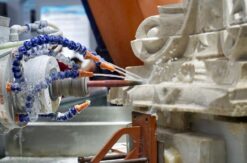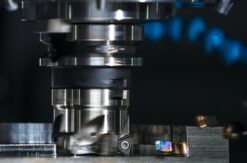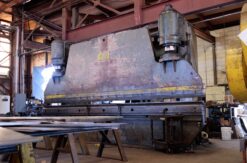
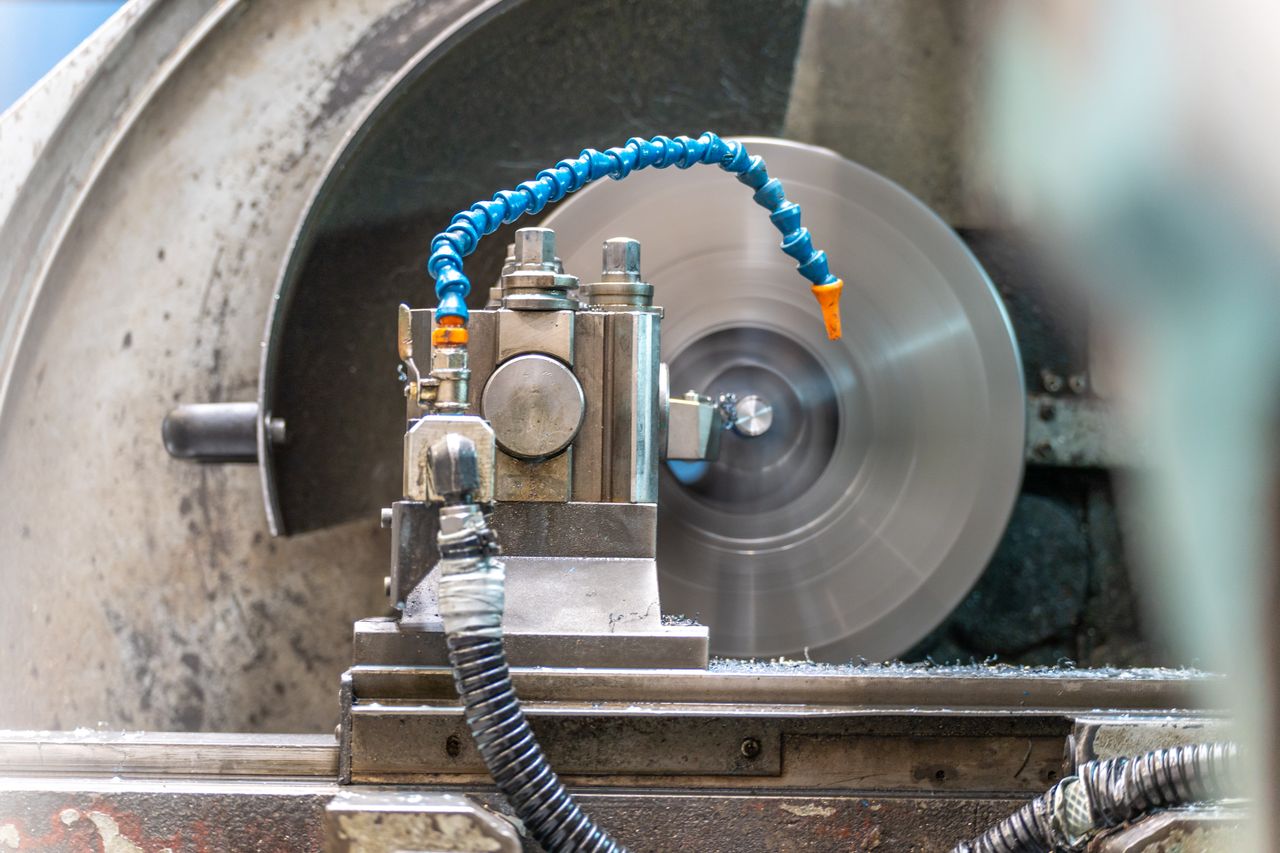
Texas machine shop equipment is in high demand from Southwest Machine Technologies customers across the state — from Houston to El Paso, the Panhandle to the Gulf Coast.
Texas machine shop equipment demand is climbing fast in 2026 as the state’s manufacturing sector enters one of the most concentrated growth periods in modern U.S. history. First, the Federal Reserve Bank of Dallas reports above-average production readings. Second, reshoring has added more than 40,000 manufacturing jobs to the state. Third, Texas Instruments alone has committed $60 billion to new semiconductor capacity. For shop owners across Texas, these forces are reshaping the kind of work coming in.
However, the boom is uneven across sectors and regions. For instance, some shops are turning away business. Meanwhile, others struggle to fill quote backlogs. Additionally, the operating environment carries real headwinds. In particular, these include labor shortages, tariff pressure, and rising capital costs. Therefore, understanding the landscape is the first step to deciding where to invest.
Reading the Dallas Fed Numbers
The Federal Reserve Bank of Dallas conducts a monthly survey of Texas factory activity. In short, it gives manufacturers a near-real-time read on conditions across the state. The February 2026 Texas Manufacturing Outlook Survey showed a production index of 12.5. Notably, capacity utilization climbed five points to 11.8. New orders held steady at 11.1. In addition, shipments came in well above the long-run average. All of these readings signal expansion.
March showed some softening, however. The production index fell to 6.8 amid tariff uncertainty and geopolitical disruption. The future production index held strong at 35.7. This indicates that Texas manufacturers expect increased activity over the next six months. One machinery manufacturer told the survey that “the floodgates have opened” in 2026.
That sentiment is showing up in capital spending decisions. Survey respondents in machinery, fabricated metal, and transportation equipment have reported increased equipment purchases. Backlogs are growing across these segments. Furthermore, hiring intentions remain positive even as national manufacturing employment data softens.
Semiconductor Investment Reshapes Texas Machine Shop Equipment Demand
The biggest single driver of 2026 Texas manufacturing growth is semiconductors. Specifically, Texas Instruments announced a $60 billion plan to build seven semiconductor fabs across Texas and Utah. Indeed, this is the largest single-company investment in U.S. chip manufacturing history. The Sherman, Texas mega-site alone accounts for up to $40 billion of that total. Moreover, it provides 1.3 million square feet of cleanroom space.
These fabs will produce chips for Apple, Ford, Medtronic, NVIDIA, and SpaceX. Furthermore, TI began volume production at its first new 300mm Sherman fab in late 2025. The company is rapidly expanding capacity from there. Each fab generates downstream demand for precision machined parts, fabricated equipment housings, custom tooling, fixtures, and ongoing maintenance services.
For example, the Texas CHIPS Act, signed in 2023, established the Texas Semiconductor Innovation Fund. The fund has now awarded grants for 17 projects. In total, these projects represent nearly $6 billion in capital investment. Specifically, in January 2026 alone, Governor Abbott announced a $15.2 million grant to Tekscend Photomask in Round Rock supporting a $223 million expansion. Additionally, the state awarded $12 million to Texas Tech for a new nanotechnology laboratory in Lubbock.
This pulls entire supplier ecosystems into Texas. Specialty chemicals and materials suppliers have announced production facility expansions in Killeen. Similarly, Applied Materials and Tokyo Electron build semiconductor manufacturing equipment inside Texas. Each new supplier facility represents additional demand for Texas machine shop equipment, parts, and maintenance services.
Reshoring Brings Production Back to Texas
Beyond semiconductors, Texas is leading the broader U.S. reshoring wave. According to the Office of the Texas Governor’s Advanced Manufacturing program, Texas hosts more than 730 automotive manufacturing facilities. The state has seen a 48 percent increase in automotive manufacturing output over the past decade. Additionally, Texas ranks number two nationally for automotive exports.
The reshoring data confirms the broader trend. In fact, Texas added more than 40,200 manufacturing jobs through reshoring in 2025. Indeed, that figure represents nearly 23 percent of all positions created through reshoring nationwide. Major investments include $65 billion from Samsung and $5.5 billion from Tesla. Furthermore, Foxconn announced a new facility in Houston, and Wistron is building in Dallas. Notably, both companies are targeting late 2026 production ramp-ups.
Moreover, electric vehicle production has emerged as a particularly important demand driver. For instance, Tesla’s Austin Gigafactory continues to expand. The site supports production of vehicles, batteries, and components. Furthermore, traditional automakers like General Motors and Toyota maintain large Texas operations. Of course, each EV produced contains substantially more electric motors than a comparable internal combustion vehicle. As a result, this drives parallel demand for precision parts and assembly tooling that Texas job shops increasingly serve.
Each new fab, plant, and assembly line generates downstream demand for fabricated metal components, precision parts, and ongoing maintenance services. Production technology and heavy machinery is one of the state’s four target advanced manufacturing clusters. This category includes valve and fitting manufacturing, ball and roller bearing production, and the fabricated metal work that Texas shops perform daily.
Diversified Demand Across Energy, Aerospace, and Defense
Texas manufacturing diversity is a major strength of the state’s industrial base. For example, beyond automotive and semiconductors, the energy sector continues to drive steady equipment demand. Oil and gas operators need specialized equipment, valves, fittings, and pressure vessels. Similarly, the state’s wind and solar buildout generates ongoing orders for fabricated structural components.
Aerospace and defense round out the demand picture. For instance, Texas hosts NASA’s Johnson Space Center, 15 active military installations, and the Army Futures Command headquarters. In addition, major operations from leading commercial space firms anchor the state’s aerospace ecosystem. Of course, each of these sectors requires precision machined parts. Many of those parts come from Texas job shops that serve multiple end markets.
The geographic spread is significant. The Gulf Coast supports petrochemicals and energy equipment. Dallas-Fort Worth anchors aerospace, defense, and semiconductor packaging. Austin houses chip manufacturing and electronics. San Antonio hosts aerospace and automotive. The Panhandle and Permian Basin drive oil and gas equipment demand. Finally, El Paso supports cross-border manufacturing with Mexico. Each region has shops that need different equipment to compete in their local markets.
Pressure Points Shape Texas Machine Shop Equipment Decisions
The Texas manufacturing surge is not without challenges. Section 232 metal tariffs doubled to 50 percent in June 2025. The administration then restructured them again in April 2026 to apply to the full value of imported steel, aluminum, and copper products. These changes have raised input costs significantly across the fabrication base. A closer look at How New Section 232 Tariffs Are Reshaping Texas Fabrication Shops in 2026 shows how these rules are creating both pressure and opportunity for domestic shops.
At the same time, manufacturers report ongoing difficulty finding skilled machinists, welders, and CNC operators. National manufacturing employment growth has slowed even as project pipelines expand. Therefore, productivity per worker is more important than ever. A deeper look at the labor reality is available in Texas Machine Shops Confront the CNC Machinist Shortage with Smarter Equipment Strategy.
Texas Machine Shop Equipment Strategy: What It Takes to Compete in 2026
The shops winning new work in 2026 share a common pattern. In short, they have invested in modern milling centers, turning machines, and fabrication equipment rather than waiting for the labor market to ease. For example, modern five-axis CNC machines let one operator manage multiple spindles. Likewise, updated turning centers reduce setup time and improve part complexity capability. Above all, quality fabrication equipment expands the work a shop can quote.
Beyond mills and lathes, fabrication-focused shops are investing in press brakes, plasma cutting tables, fiber laser cutters, and updated welding systems. Of course, the mix depends on the customer base. For example, shops serving oil and gas need heavy-duty cutting and forming. By contrast, aerospace work requires tight-tolerance machining. Meanwhile, semiconductor suppliers expect clean, repeatable precision work. In short, there is no single right answer for Texas machine shop equipment investment in 2026. Ultimately, the right answer depends on which customers a shop wants to win.
However, equipment alone is not enough. In fact, parts availability and maintenance support matter just as much. Especially, this is true for shops running production at capacity. For example, a breakdown that takes two weeks to resolve can cost a shop a major customer. Therefore, reliable supply relationships are essential to running the kind of operation today’s Texas customers expect.
Southwest Machine Technologies: Equipping Texas Manufacturing Growth
Southwest Machine Technologies serves machine and fabrication shops from Houston to El Paso, the Panhandle to the Gulf Coast. The company supplies the machinery, parts, and maintenance solutions Texas manufacturers need to compete in a fast-changing industrial landscape.
Our Services Include:
- Milling Machines — CNC and manual mills for precision parts production
- Turning Machines — Lathes and turning centers for diverse Texas manufacturing applications
Ready to expand your shop’s capacity? Contact Southwest Machine Technologies to discuss how the right machinery investment positions your operation to win work in the 2026 manufacturing surge.
Works Cited
“Texas Manufacturing Outlook Survey.” Federal Reserve Bank of Dallas, www.dallasfed.org/research/surveys/tmos. Accessed 18 May 2026.
“Advanced Manufacturing.” Office of the Texas Governor, gov.texas.gov/business/page/advanced-manufacturing. Accessed 18 May 2026.