Open post

Cutting Tool and Insert Selection: The Tooling Decisions That Decide Your Cost Per Part

Southwest Machine Technologies | Houston, TX

A new milling or turning center is the part of the shop everyone photographs. The cutting tool spinning inside it is the part that actually determines whether a job makes money. Across most Texas machine shops, the cost of inserts, end mills, and drills is treated as a line item to be minimized rather than a variable to be engineered—and that habit quietly bleeds margin on every part that crosses the floor. The machine sets the ceiling on what is possible; the tooling decides how much of that ceiling you actually capture.

The economics start with a relationship machinists have understood for a century. Cutting speed and tool life are inversely linked through Taylor’s tool life equation, and the trade is steep: push the speed up to cut faster and the tool wears out dramatically sooner. A peer-reviewed tool-life study built on Taylor’s model confirms that higher cutting speeds shorten tool life on a predictable curve, which means the “fastest” settings are rarely the cheapest once tooling cost and change-over time are counted. The right cutting speed is an optimization, not a maximum.

Carbide Grade and Coating Are Not Interchangeable

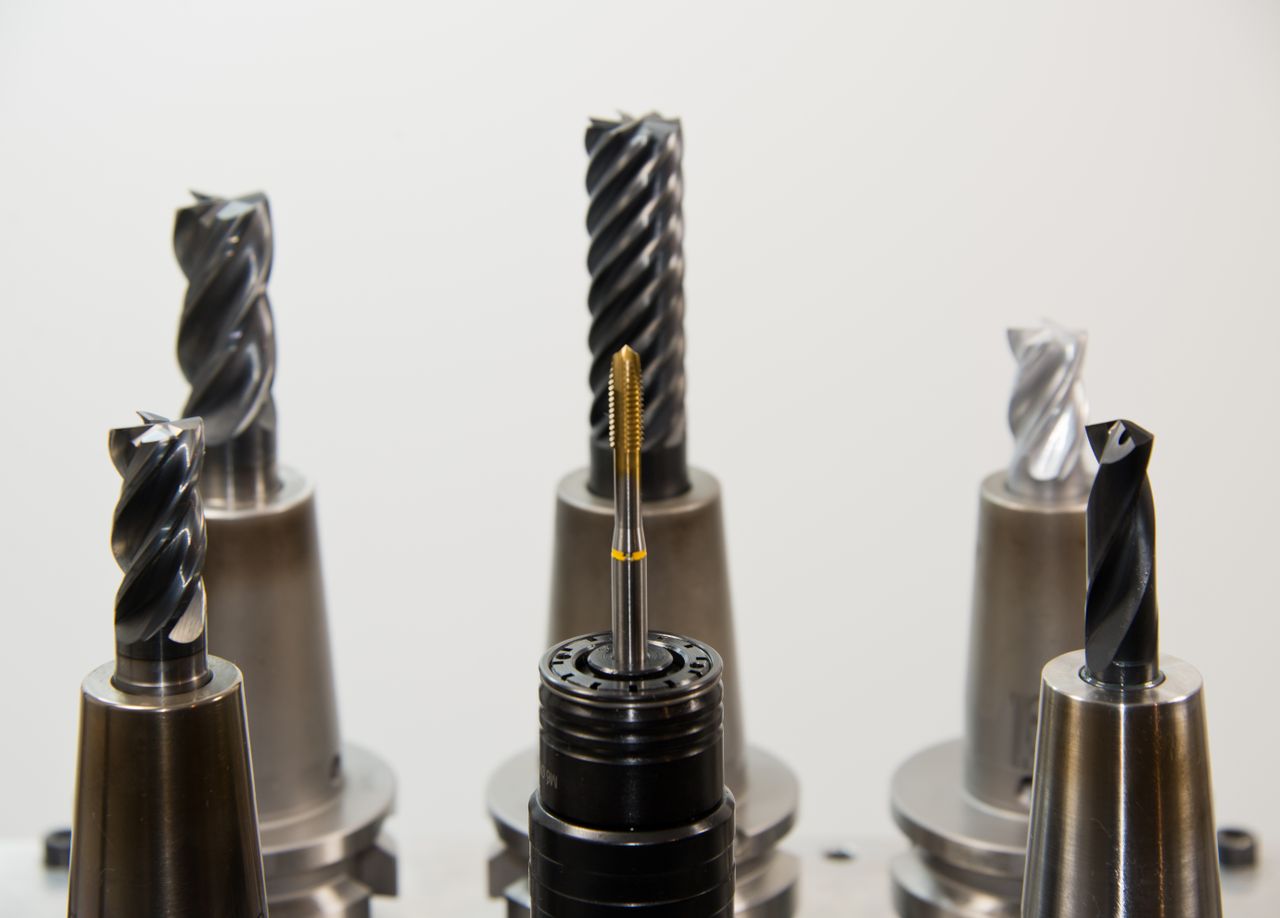
The single biggest tooling lever is matching the insert to the workpiece material. A coated carbide insert that excels in mild steel can fail quickly in stainless or a nickel alloy, and an uncoated tool that works on aluminum has no business in hardened steel. Research on turning stainless steels found large durability differences between insert grades and coatings under identical conditions—the best-performing insert dramatically outlasted the worst on the same material. Picking an insert by price alone, without regard to substrate and coating, is how a shop ends up changing tools three times as often as it should.

Coatings matter because they attack different failure modes. Titanium-based coatings raise hardness and heat resistance; aluminum-oxide layers protect against the high temperatures of fast steel cutting; specialized coatings resist the built-up edge that plagues stainless and gummy materials. The geometry matters too—nose radius, rake angle, and chipbreaker design change cutting forces, surface finish, and how a chip evacuates. None of this shows up on a purchase order that lists only “carbide insert,” which is exactly why so many shops leave performance on the table.

Tool Life Is a Cost Calculation, Not a Guess

Every tool change costs money twice: the price of the replacement edge and the minutes of spindle time lost stopping, indexing, and re-touching off. On a busy machine those minutes are the expensive part. A premium insert that costs more per edge but doubles the number of parts between changes—and holds size longer so fewer parts drift out of tolerance—can be far cheaper per finished part than the bargain insert it replaced. The only way to know is to track parts-per-edge and change-over time, not spool price.

This is where tooling and the rest of the process connect. The forces a tool generates feed straight into the workpiece and the way it is held, which is why tooling decisions and [PLACEHOLDER: CNC Workholding and Fixturing — How the Setup, Not the Spindle, Decides Your Tolerances] are best considered together. A sharp, correctly matched tool lowers cutting force, which reduces deflection and chatter—improving both tool life and part accuracy at the same time.

Matching Tooling to the Machine and the Job

Modern milling and turning centers can run at speeds and feeds that older tooling simply cannot survive, and conversely, the right modern tooling can unlock capability a shop already owns but isn’t using. High-speed spindles want balanced, high-quality holders; rigid turning centers can push tougher grades harder; multi-axis work rewards tooling chosen for reach and clearance, not just cutting. Buying an advanced machine and feeding it commodity tooling is like buying a sports car and filling it with the cheapest fuel that will combust.

For Texas shops competing for energy, aerospace, and precision work, the practical discipline is to treat tooling as part of the process plan, not an afterthought. Match substrate and coating to the material, choose geometry for the operation, optimize speed for cost rather than raw rate, and measure tool life in parts-per-edge. The shops that do this consistently turn the same machines into more profit than competitors running identical iron with whatever insert was cheapest that week.

Building a Tooling Strategy Instead of a Tooling Drawer

The shops that get the most out of their tooling stop treating it as a drawer of consumables and start treating it as a managed strategy. That begins with standardizing on a smaller, better-understood set of inserts and holders rather than accumulating dozens of one-off grades nobody remembers the purpose of. A tighter, well-chosen lineup means operators learn each tool deeply, inventory is simpler, and the shop can negotiate better pricing on the grades it actually uses in volume. Variety for its own sake is a hidden cost, not a capability.

Data is the other half of the strategy. Tracking parts-per-edge, surface finish trends, and the operations where tools fail early turns tooling from a guessing game into a feedback loop. A shop that knows a particular insert reliably produces four hundred parts before it drifts can schedule changes proactively, quote jobs accurately, and spot when a new material or a worn spindle is quietly shortening tool life. Without that data, tooling problems hide inside scrap rates and missed delivery dates where they are hard to diagnose and easy to blame on the wrong cause.

Supplier relationships matter more than shops expect. Tooling manufacturers and distributors employ application engineers whose entire job is matching tools to jobs, and they will often run trials on a shop’s actual parts at no cost. A shop that engages that expertise—rather than ordering by part number out of habit—frequently discovers a grade or geometry that cuts cycle time or doubles tool life on a bread-and-butter job. In a competitive Texas market, that kind of incremental edge, repeated across every recurring part, compounds into real margin.

Southwest Machine Technologies: Precision Machining Solutions for Texas

Southwest Machine Technologies helps Texas shops match the right milling and turning machines to the work they win—so the capability built into the machine is capability your tooling and process can actually use.

Our Machine Tool Solutions Include:

  • Milling Machines — Vertical and horizontal machining centers for Texas precision and production work
  • Turning Machines — CNC lathes and turning centers for cylindrical and multi-axis part production
  • Fabrication Machines — Cutting and forming equipment for sheet and plate fabrication

Ready to get more out of your floor? Contact Southwest Machine Technologies to talk through the right machine and process for your Texas shop.

Frequently Asked Questions

How do I choose the right carbide insert grade?

Start with the workpiece material, not the price. Match the substrate and coating to what you are cutting—steel, stainless, cast iron, aluminum, or a high-temperature alloy each favor different grades. Then refine geometry (nose radius, rake, chipbreaker) for the operation. An insert chosen for material and operation will almost always out-earn one chosen for lowest unit cost.

Why does cutting faster wear tools out so quickly?

Because tool life and cutting speed are inversely related through Taylor’s tool life equation, and the curve is steep. A modest speed increase can cut tool life sharply, since higher speed means more heat at the cutting edge. The fastest settings are rarely the most profitable once tooling cost and tool-change time are included.

Is premium tooling worth the higher price?

Often, yes—when measured per finished part rather than per insert. A premium edge that lasts longer and holds size reduces both tooling spend and the spindle time lost to tool changes, and it scraps fewer out-of-tolerance parts. Track parts-per-edge and change-over time to see the real cost; the cheaper insert frequently loses.

Does tooling affect part accuracy, not just cost?

Yes. A sharp, correctly matched tool generates lower cutting forces, which reduces workpiece deflection and chatter and improves surface finish and dimensional consistency. Worn or mismatched tools push harder, vibrate more, and drift out of tolerance faster, so tooling is part of the accuracy conversation, not separate from it.

Works Cited

Wojciechowski, Stanisław, et al. “Tribological Aspects of Cutting Tool Wear during the Turning of Stainless Steels.” Materials, vol. 13, no. 1, 2020, pmc.ncbi.nlm.nih.gov/articles/PMC6981806/. Accessed 14 June 2026.

Zhang, Xi, et al. “A Tool Life Prediction Model Based on Taylor’s Equation for High-Speed Ultrasonic Vibration Cutting Ti and Ni Alloys.” Coatings, vol. 12, no. 10, 2022, www.mdpi.com/2079-6412/12/10/1553. Accessed 14 June 2026.
Related Articles

Open post

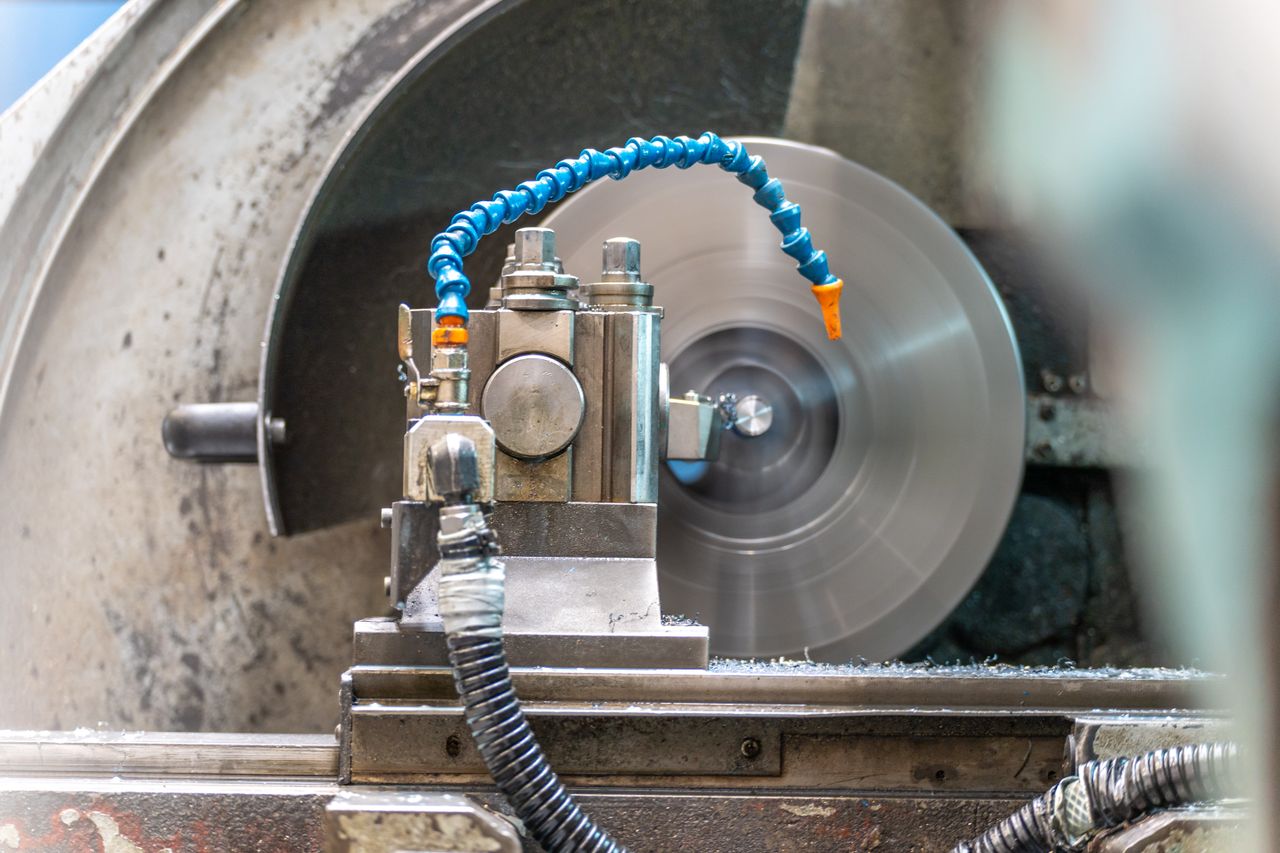
CNC Workholding and Fixturing: How the Setup, Not the Spindle, Decides Your Tolerances

Southwest Machine Technologies | Houston, TX

Shops shopping for accuracy tend to look at the spindle, the way axis resolution, and the control. But a large share of dimensional errors never originate in the machine at all—they originate in how the part was held. Workholding is the quiet variable that decides whether an accurate machine produces accurate parts, and it is the one most often left to whatever vise or fixture happened to be on the shelf. The spindle gets the credit and the blame; the fixture usually deserves both.

The physics is unforgiving. A workpiece has six degrees of freedom, and workholding has to control all of them without crushing the part. Clamp too little and cutting forces push the part, causing chatter and mislocation; clamp too hard and the part deforms under the clamp, then springs back out of tolerance after it is released. Research on fixturing is explicit that localized elastic deformation at the workpiece-fixture contacts significantly affects part accuracy. The clamp that feels reassuringly tight to an operator is often the reason a thin-walled part measures fine in the fixture and wrong on the bench.

The 3-2-1 Principle and Why Over-Constraint Hurts

The foundation of good workholding is the 3-2-1 locating principle: three points establish the primary datum plane, two define a secondary plane, and one locates the last axis, fully constraining the part with the minimum necessary contact. The discipline is in the word minimum. Over-constraining a workpiece—adding redundant locators or clamps in a well-meant attempt to make it more rigid—introduces internal stress and distortion that machine away invisibly, then reappear as a warped part when the clamps come off.

Locating off the right datums matters as much as the number of points. If the fixture references different surfaces than the print dimensions are called from, every measurement inherits an error before the spindle even turns. Good fixturing makes the part’s datums and the fixture’s reference surfaces the same, so the machine is cutting from the same zero the inspector measures from. When that alignment is missing, parts can be machined perfectly to the wrong reference and fail inspection for reasons no spindle upgrade will fix.

Clamping Force Is a Calculation, Especially for Thin Walls

The hardest workholding problems are thin-walled and flexible parts—common in energy, aerospace, and precision work across Texas. Here clamping force has to be high enough to resist cutting loads but low enough to avoid deforming the part, a balance that research treats as a formal optimization problem. A study of fixture optimization in turning thin-wall components showed that analyzing clamping configurations against predicted deflection and chatter is what makes it possible to hold tolerance and keep the cut stable. For these parts, “clamp it tight and hope” is not a strategy; it is a scrap generator.

Workholding also governs how cutting forces flow into the part, which ties it directly to tooling. A sharp, correctly matched tool lowers the force the fixture has to resist, so workholding and [PLACEHOLDER: Cutting Tool and Insert Selection — The Tooling Decisions That Decide Your Cost Per Part] are coupled problems—improving one eases the other. The same logic that makes bending a math problem makes workholding one, a theme shared with [PLACEHOLDER: Press Brake Tonnage and Springback — Why Bending Math Makes or Breaks a Fab Shop].

Workholding Is What Makes Automation Pay

There is a productivity dimension too. Repeatable, quick-change workholding is what lets a shop load the next part in seconds instead of re-indicating for minutes, and it is the foundation of any unattended or lights-out strategy. A machine cannot run reliably overnight if every part has to be dialed in by hand; the fixture has to deliver the same zero, part after part, without an operator. In that sense workholding is not just an accuracy tool but a capacity tool—the difference between a machine that runs while the lights are off and one that sits idle waiting for a setup.

For Texas shops, the lesson is to give workholding the same scrutiny as the machine itself. Locate off the right datums, constrain with the 3-2-1 discipline, calculate clamping force instead of cranking it, and invest in repeatable fixturing for the parts that run often. The payoff is accuracy that holds, cycles that shorten, and machines that can finally run the way their spec sheets promised.

Choosing the Right Workholding for the Job

Workholding is not one decision but a spectrum, and matching the method to the job is where shops gain or lose efficiency. A simple vise is fast and flexible for prismatic parts and short runs; dedicated fixtures pay for themselves on parts that run often by cutting setup to seconds; vacuum and magnetic systems hold flat or thin parts without the point loads that deform them; and soft jaws machined to the part profile spread clamping force and locate repeatably. Reaching for the same vise on every job is convenient, but it leaves accuracy and cycle time on the table for the parts that deserve a purpose-built solution.

Volume and tolerance together should drive the choice. A one-off bracket does not justify a custom fixture, but a part that runs weekly in quantity absolutely does, because the fixture’s cost is amortized across every repeat while its repeatability protects every shipment. Tight-tolerance and thin-walled parts move the calculus further toward engineered workholding, since the cost of scrap and rework on those parts dwarfs the cost of holding them correctly. The question is never just “will this hold the part” but “what does the right hold save across the life of this job.”

Modular and quick-change systems bridge the gap for shops with high part variety. Standardized bases, pallets, and locating systems let a shop build repeatable setups without a dedicated fixture for every part, swapping components in minutes instead of re-indicating by hand. For a Texas job shop juggling energy, aerospace, and precision work across short runs, that flexibility is often the difference between a machine that changes over quickly and one that loses its mornings to setup. Workholding strategy, in other words, is capacity strategy.

Southwest Machine Technologies: Precision Machining Solutions for Texas

Southwest Machine Technologies helps Texas shops pair the right milling and turning machines with workholding strategies that actually hold tolerance—so the accuracy you bought shows up in the parts, not just the brochure.

Our Machine Tool Solutions Include:

  • Milling Machines — Vertical and horizontal machining centers for Texas precision and production work
  • Turning Machines — CNC lathes and turning centers for cylindrical and multi-axis part production
  • Fabrication Machines — Cutting and forming equipment for sheet and plate fabrication

Ready to get more out of your floor? Contact Southwest Machine Technologies to talk through the right machine and process for your Texas shop.

Frequently Asked Questions

What is the 3-2-1 locating principle?

It is the standard method for fully constraining a part with minimum contact: three points establish the primary datum plane, two points define a secondary plane, and one point locates the final axis. Together they control all six degrees of freedom without over-constraining, which keeps the part stable while avoiding the internal stress that redundant locators introduce.

Can clamping a part too hard cause defects?

Yes. Excessive clamping force deforms the workpiece while it is held; the part is machined in that distorted state and then springs back out of tolerance once the clamps release. This is especially severe on thin-walled and flexible parts, where clamping force has to be calculated to resist cutting loads without deforming the part.

Why do parts measure right in the fixture but wrong off the machine?

Two common causes: the part was clamped hard enough to deform, so it relaxes out of tolerance when released; or the fixture located off different surfaces than the print datums, building in an error before cutting began. Both are workholding problems, not spindle problems, and no machine upgrade corrects them.

How does workholding affect automation and lights-out machining?

Repeatable, quick-change workholding lets a part load to the same zero every time without manual indicating, which is the prerequisite for unattended and lights-out running. Without it, every part needs an operator to dial in, so the machine cannot run reliably overnight regardless of how capable the machine itself is.

Works Cited

Liu, Haibo, et al. “Fixturing Technology and System for Thin-Walled Parts Machining: A Review.” Frontiers of Mechanical Engineering, vol. 17, no. 4, 2022, link.springer.com/content/pdf/10.1007/s11465-022-0711-5.pdf. Accessed 14 June 2026.

Campatelli, Gianni, et al. “Fixture Optimization in Turning Thin-Wall Components.” Machines, vol. 7, no. 4, 2019, www.mdpi.com/2075-1702/7/4/68. Accessed 14 June 2026.

Related Articles

Open post

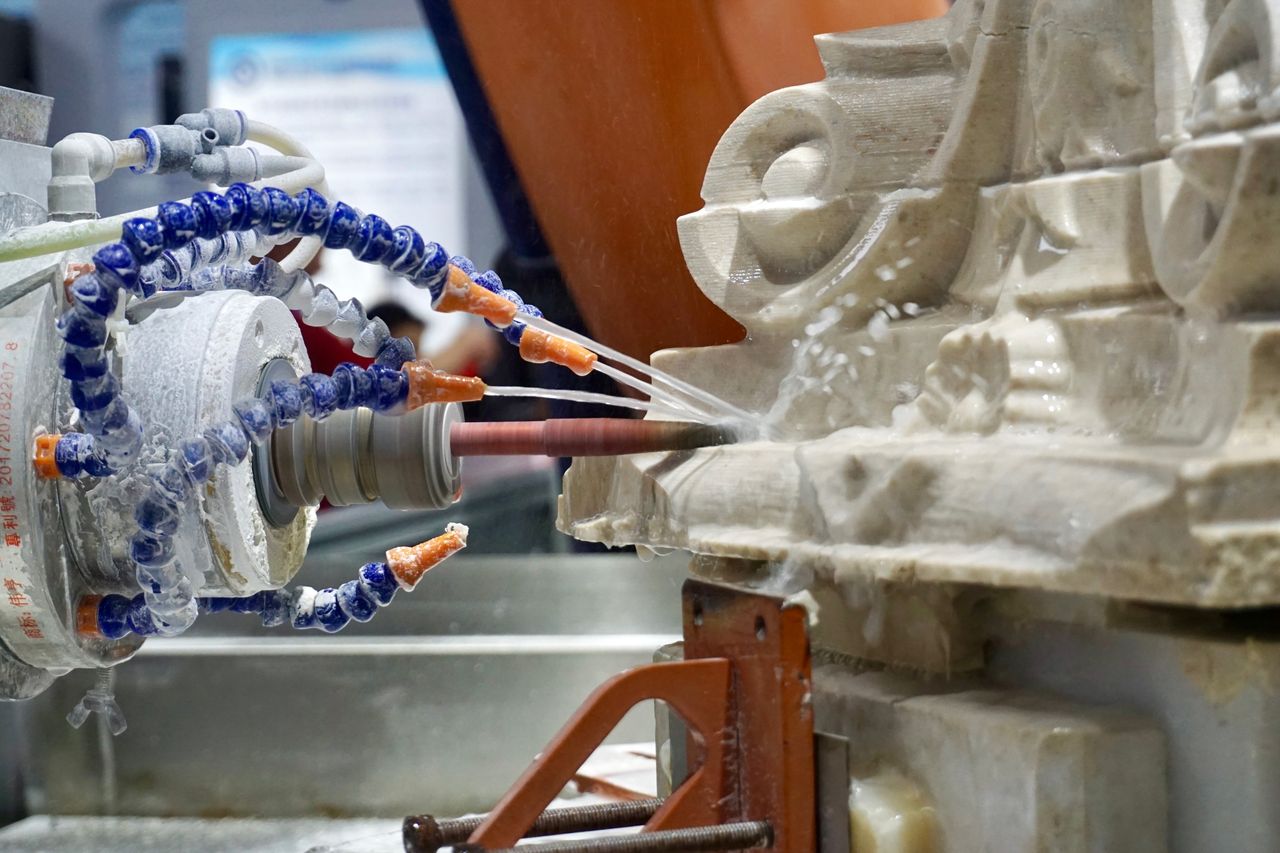
Press Brake Tonnage and Springback: Why Bending Math Makes or Breaks a Fab Shop

Southwest Machine Technologies | Houston, TX

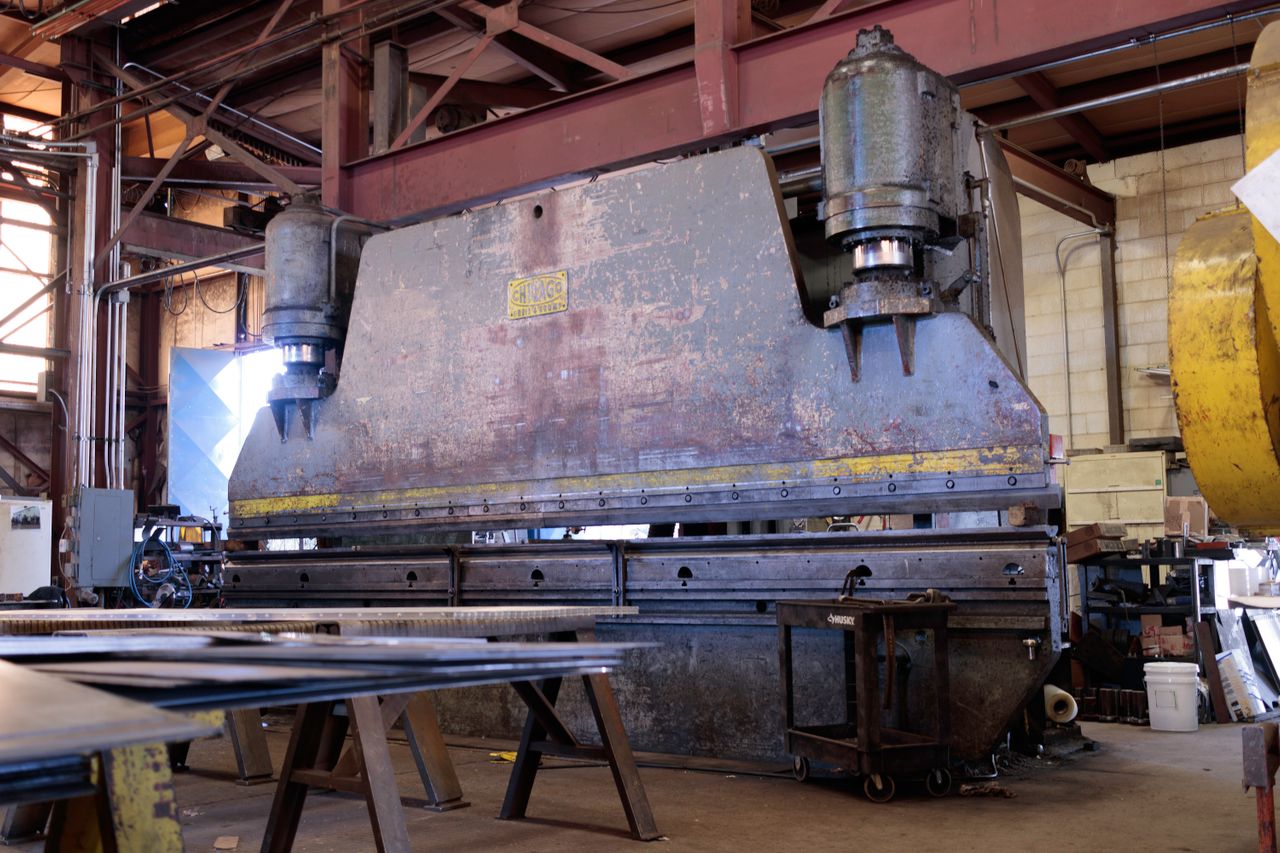
Texas fabrication shops have invested heavily in cutting—fiber laser, tube laser, waterjet—but the part rarely ships flat. Sooner or later it has to be bent, and the press brake is where a clean blank becomes a finished part or an expensive mistake. More than any other operation on the fab floor, bending punishes guesswork. Get the tonnage and springback math wrong and you stall the ram, crack tooling, or ship parts that are a degree or two out and get rejected at assembly.

The first trap is tonnage. The force required to bend a part is not a single number; it scales with material thickness, bend length, the die opening, and the strength of the specific alloy. A standard rule of thumb sizes the V-die opening at roughly six to ten times material thickness, and research on bending processes confirms that die opening, thickness, and bend angle govern the force and punch travel required. Switch from air bending to bottoming or coining and the force multiplies several times over—which is exactly how an operator using an air-bending chart for a coining job stalls a brake that was never overloaded, just mis-calculated.

Springback: The Part Fights Back

The second trap is springback. Sheet metal behaves like a stiff spring: bend it to ninety degrees and the moment the ram lifts, it relaxes open by a degree or more. The amount depends on the material and the geometry, and it is not small. A finite-element study of V-bending in high-strength aluminum found that bend radius was the single most influential factor on springback, followed by material thickness. Harder and higher-strength alloys spring back more, which is why a program that nails mild steel can miss the angle entirely on stainless or aerospace-grade aluminum.

This is the part that surprises shops moving into higher-value work. The same brake, the same tooling, and the same nominal angle produce different finished parts depending on the alloy, because each material has its own elastic recovery. Bottoming and coining reduce springback by forcing the material to conform to the tooling, but they do so at the cost of dramatically higher tonnage and faster tool wear. There is no free angle—only trade-offs that have to be calculated before the ram moves.

Why the Machine and the Math Have to Match

These two traps are why bending capability is a function of the machine and the operator’s math together, not the machine alone. A brake has to have the tonnage for the worst-case job it will see, the control sophistication to compensate for springback through overbend or angle measurement, and tooling matched to the material and radius. The same discipline that governs cutting-tool selection in milling and turning applies here, which is why bending and [PLACEHOLDER: Cutting Tool and Insert Selection — The Tooling Decisions That Decide Your Cost Per Part] are two sides of the same process-control coin—both reward shops that calculate instead of guess.

Modern CNC press brakes close much of the gap by integrating material databases, angle measurement, and springback compensation into the control, letting the machine apply the correct overbend on the first stroke. But the technology assumes the operator understands what it is doing. A shop that treats the brake as a calculator—feeding it correct material data and verifying against tonnage charts—gets repeatable parts. A shop that treats it as a crusher eventually finds the limits of its tooling the hard way.

What This Means for Texas Fabricators

As Texas fab shops chase energy, structural, and precision contracts, forming is increasingly where the margin lives, because anyone can buy a laser but not everyone can bend to tolerance repeatably. The shops that win treat bending as an engineering problem: they size tonnage for the real material, plan for springback by alloy, and choose the forming method—air, bottoming, or coining—deliberately rather than by habit. That discipline turns a press brake from a bottleneck into a competitive advantage.

Tooling, Dies, and the Limits of the Machine

Tonnage and springback are only part of the bending equation; the tooling that delivers the force matters just as much. Punch and die selection—radius, V-opening, and material—determines not only the bend that results but how much of the brake’s rated capacity is actually usable. Pushing a tight radius through a narrow die multiplies the force required and concentrates it on tooling that may not be rated for it, which is how shops crack dies on jobs the machine’s tonnage rating suggested were well within reach. The die opening is a force decision before it is a geometry decision.

Tooling wear quietly changes the math over time. A worn punch radius or a die that has been hammered through thousands of bottoming cycles no longer produces the angle the program expects, and the shop chases the drift with overbend tweaks that mask the real cause. Treating press brake tooling as a maintained asset—inspected, measured, and replaced on a schedule—keeps the bending math predictable. Tooling that is allowed to degrade turns a calculable process back into trial and error, one shim at a time.

Machine capacity has to be matched to the worst-case job, not the average one. A brake sized comfortably for thin mild steel will stall or overload the moment a shop wins a contract for thicker plate or a high-strength alloy, and bottoming or coining those materials can demand several times the air-bending force. Sizing a press brake for the hardest, thickest, shortest-radius work a shop realistically expects to bid—rather than the jobs it runs today—is what prevents a capability gap from becoming a turned-away order or a damaged machine.

Operator skill ties the whole system together. Even a well-sized brake with sharp tooling and a sophisticated control produces bad parts when the person running it does not understand why the numbers matter. The shops that bend reliably invest in training their operators to read tonnage charts, recognize when a job calls for air bending versus bottoming, and anticipate springback by material rather than discovering it after the part is rejected. Technology narrows the margin for error, but it does not remove the need for someone on the floor who understands the forces at work. In bending more than almost any other operation, the difference between a profitable shop and a scrap-prone one is knowledge applied before the ram descends, not adjustments made after it lifts.

Southwest Machine Technologies: Precision Machining Solutions for Texas

Southwest Machine Technologies helps Texas fabricators match press brakes and fabrication equipment to the materials and tolerances they actually run—so tonnage, tooling, and springback control line up with the work instead of fighting it.

Our Machine Tool Solutions Include:

  • Milling Machines — Vertical and horizontal machining centers for Texas precision and production work
  • Turning Machines — CNC lathes and turning centers for cylindrical and multi-axis part production
  • Fabrication Machines — Cutting and forming equipment for sheet and plate fabrication

Ready to get more out of your floor? Contact Southwest Machine Technologies to talk through the right machine and process for your Texas shop.

Frequently Asked Questions

How do I calculate press brake tonnage?

Tonnage scales with material thickness, bend length, the V-die opening, and the strength of the specific alloy—then it is multiplied further if you bottom or coin instead of air bend. Use a tonnage chart or calculator for the real material and method, and never apply air-bending numbers to a bottoming or coining job, which can require several times the force.

What causes springback in bending?

Springback is the elastic recovery of the metal after the ram lifts—the part relaxes slightly open. It is driven mainly by bend radius and material thickness, and higher-strength alloys spring back more. Because it varies by material, the same program and tooling can hit the angle on mild steel and miss it on stainless or high-strength aluminum.

How do shops compensate for springback?

The common approaches are overbending past the target angle so the part relaxes to spec, or switching to bottoming or coining, which force the material to conform to the tooling and reduce recovery—at the cost of much higher tonnage and faster tool wear. Modern CNC brakes integrate material data and angle measurement to apply the right overbend automatically.

Why does my press brake stall on a part it should handle?

Usually because the tonnage was mis-calculated, most often by applying air-bending numbers to a bottoming or coining operation, which can require several times the force. Springback also creates non-linear force spikes near the bottom of the stroke. Verifying the method and the material against a tonnage chart before bending prevents most stalls and tooling damage.

Works Cited

Amaral, Rui L., et al. “Application of Machine Learning to Bending Processes and Material Identification.” Metals, vol. 11, no. 9, 2021, www.mdpi.com/2075-4701/11/9/1418. Accessed 14 June 2026.

“Springback Behavior of AA 7075-T6 Alloy in V-Shaped Bending.” Applied Sciences, vol. 15, no. 10, 2025, www.mdpi.com/2076-3417/15/10/5509. Accessed 14 June 2026.

Related Articles

Open post

How Section 232 Tariffs Are Reshaping Texas Fabrication Shops in 2026

Section 232 tariffs are pushing Southwest Machine Technologies customers to invest in domestic fabrication capacity across the state.

Section 232 tariffs took a major step forward in April 2026. Specifically, the White House restructured how steel, aluminum, and copper tariffs apply to imported finished products. Furthermore, the new framework took effect on April 6, 2026. Therefore, Texas fabrication shops now face a fundamentally changed competitive landscape. Above all, the rules reward domestic fabrication capacity over imported finished goods.

The implications run deep. First, tariffs now apply to the full customs value of imports. Second, they cover derivative products substantially made of these metals. Third, they create real opportunities for U.S. shops capable of taking on reshored work. As a result, Texas fabricators are rethinking equipment investments, staffing strategies, and customer mixes through the rest of 2026 and into 2027.

How Section 232 Tariffs Got Here

The current regime traces back to the first-term tariffs on steel and aluminum imports. Of course, those tariffs originally targeted only the metal portion of imported goods. However, that approach allowed importers to shift costs to non-metal components. As a result, the system effectively undercut domestic producers competing against subsidized foreign metal.

In February 2025, the administration eliminated most country-specific exemptions. Then in June 2025, the steel and aluminum rates jumped to 50 percent. Furthermore, copper joined the list in July 2025 at the same 50 percent rate. By the end of 2025, the United States had become the third-largest steel producer in the world according to the White House fact sheet. Moreover, new steel plants are now under construction in West Virginia, Arkansas, and South Carolina.

For Texas fabricators, this trajectory matters. Specifically, every tariff increase changes the calculation between buying imported fabricated parts and producing them domestically. Therefore, the cumulative effect of Section 232 tariffs over 2024 to 2026 has been profound.

The April 2026 Restructuring Explained

The April 2, 2026 proclamation shifted everything. Specifically, Section 232 tariffs now apply to the full customs value of derivative products, not just the metal content. As a result, importers can no longer reduce duties by emphasizing the non-metal portion of finished goods.

The new rate structure is straightforward. For example, articles made entirely of aluminum, steel, or copper pay a flat 50 percent on full value. Likewise, derivative products substantially made of these metals pay 25 percent. Furthermore, metal-intensive industrial equipment pays 15 percent through December 2027. Additionally, products made abroad with American steel, aluminum, and copper pay a reduced 10 percent rate.

There are some carve-outs. Notably, products with 15 percent or less metal content are no longer subject to Section 232 tariffs. In addition, civil aircraft parts retain exceptions under certain trade agreements. However, the broader scope means many products previously below the tariff threshold now fall within reach. Therefore, the import cost of fabricated parts has climbed sharply across most categories.

How Section 232 Tariffs Are Hitting Texas Fabrication Shops

The broader Texas manufacturing context is covered in Texas Machine Shop Equipment Demand Surges in 2026 as Manufacturing Boom Lands. In short, the state was already seeing massive demand growth. Now, the tariff changes have added pressure on top of that surge.

For Texas fabricators, three effects matter most. First, customers who previously imported fabricated parts are reaching out for domestic alternatives. Second, customers who already buy domestic are placing larger orders to lock in capacity. Third, shops are quoting at higher margins because the alternative is now more expensive.

Of course, this is not pure good news. For instance, shops that import raw steel, aluminum, or copper to fabricate downstream face higher input costs themselves. Furthermore, supply chains for specialty alloys remain fragile. Likewise, lead times on certain steel grades have stretched out as domestic mills run at capacity.

Which Texas Industries Feel the Section 232 Tariffs Most

Oil and gas operations across the Permian Basin face significant exposure. Specifically, valves, fittings, and pressure vessels often involve imported components. As a result, well-pad fabrication work is shifting toward shops with the right equipment for thicker plate and pipe work.

Automotive suppliers in the Dallas-Fort Worth corridor and around Austin are also reshaping their sourcing. For example, Tesla’s Austin operations and the broader EV supply chain require precision fabricated parts in volume. Therefore, suppliers are evaluating whether to expand U.S. fabrication capacity or pay higher import costs.

Aerospace and defense work along the I-35 and I-10 corridors faces a more nuanced picture. In some cases, civil aircraft parts retain exemptions. However, military and dual-use programs see higher costs on imported fabricated assemblies. Meanwhile, semiconductor packaging and equipment work at the Sherman fab and Round Rock facilities depends heavily on precision fabricated enclosures, frames, and tooling. As a result, demand for Texas-based fabrication has expanded across all four major industry clusters.

New Opportunities for Domestic Fabricators

The April 2026 changes create concrete opportunities for Texas fabrication shops. Specifically, customers who were importing finished parts are now seeking domestic suppliers. As a result, quote requests are up across the state. Furthermore, customers are willing to accept slightly longer lead times to lock in domestic supply at predictable cost.

For example, distribution and warehousing customers that buy fabricated racking and material handling equipment are bringing work back to U.S. shops. Likewise, energy infrastructure projects are sourcing more components domestically. In addition, government procurement rules increasingly favor U.S.-fabricated parts. Above all, the trend lines favor shops investing in capacity now.

However, capturing the opportunity requires capability. Specifically, customers will not move work to shops that cannot match imported product quality. Therefore, equipment that produces consistent results at competitive cost is the price of entry.

Equipment Strategy in the Section 232 Tariffs Era

The right equipment mix depends on the work coming in. For instance, oil and gas customers need heavy press brakes, plasma cutting tables capable of thick plate, and welding systems that handle pipe and pressure vessel work. By contrast, semiconductor and electronics customers need precision laser cutting and forming with extremely tight tolerances.

Most Texas fabricators benefit from a balanced approach. Specifically, modern fiber laser cutters provide flexibility across material types and thicknesses. Likewise, programmable press brakes reduce setup time between jobs. Furthermore, automated material handling lets shops run multiple machines with smaller crews. As a result, the same workforce produces substantially more output.

In addition, Section 232 tariffs include the 15 percent reduced rate on metal-intensive industrial equipment through 2027. Notably, this rate helps fabricators acquiring imported production equipment now. Therefore, the window for equipment investment is favorable through the end of next year.

Workforce Pressure Compounds the Equation

The equipment story does not stand alone. In fact, workforce constraints amplify every equipment decision. The full picture appears in The Texas CNC Machinist Shortage Is Reshaping Shop Equipment Decisions in 2026. In short, Texas shops cannot simply hire more machinists to meet demand. Therefore, the equipment that lets a smaller crew produce more becomes the dominant capacity lever.

For Texas fabricators, the tariff-driven demand surge collides directly with this labor reality. As a result, shops that win new work in 2026 are the ones investing in equipment that multiplies what each machinist can do.

Compliance Documentation Matters More Now

The April 2026 proclamation also tightens enforcement. Specifically, U.S. Customs and Border Protection now requires more detailed documentation for derivative product valuations. Furthermore, the Department of Justice is prioritizing False Claims Act enforcement against tariff evasion. As a result, importers face real liability exposure for misclassified entries. According to the International Trade Administration, major U.S. steel producers have applauded the strengthened enforcement framework.

For Texas fabricators, this enforcement environment matters in two ways. First, customers are more cautious about importing fabricated parts that might trigger compliance scrutiny. Second, domestic fabrication eliminates compliance risk entirely. Therefore, the regulatory uncertainty itself drives work toward U.S. shops.

Southwest Machine Technologies: Equipping Texas Fabricators for the Tariff Era

Southwest Machine Technologies supplies fabrication shops across Texas with the equipment needed to compete in the new Section 232 tariffs environment. From basic press brakes to advanced fiber laser systems, we match equipment to the work in front of you. Furthermore, our stock specials provide cost-effective options for shops scaling capacity to capture new domestic demand.

Our Services Include:

Ready to compete in the new tariff era? Contact Southwest Machine Technologies to discuss how the right fabrication equipment can position your shop for the work coming in.

Works Cited

“Fact Sheet: President Donald J. Trump Strengthens Tariffs on Steel, Aluminum, and Copper Imports.” The White House, 2 Apr. 2026, www.whitehouse.gov/fact-sheets/2026/04/fact-sheet-president-donald-j-trump-strengthens-tariffs-on-steel-aluminum-and-copper-imports/. Accessed 18 May 2026.

“What They Are Saying: President Trump Strengthens U.S. Steel, Aluminum, and Copper Industries with Historic Action.” International Trade Administration, U.S. Department of Commerce, www.trade.gov/press-release/what-they-are-saying-president-trump-strengthens-us-steel-aluminum-and-copper. Accessed 18 May 2026.

Related Articles

Open post

The Texas CNC Machinist Shortage Is Reshaping Shop Equipment Decisions in 2026

Texas CNC machinist shortage pressure is pushing Southwest Machine Technologies customers to rethink equipment strategy across every shop floor in the state.

Texas CNC machinist shortage pressure is hitting shop owners harder than at any point in modern memory. The U.S. Bureau of Labor Statistics counts 299,500 machinists in the national workforce as of 2024. Specifically, employment is projected to remain effectively flat through 2034. Meanwhile, Texas reshores tens of thousands of new manufacturing jobs every year. Furthermore, major semiconductor and automotive employers are racing to staff facilities opening in 2026 and 2027.

The math is brutal for Texas shop owners. First, production demand is climbing fast. Second, the median machinist is 46.9 years old. Third, replacement workers are not arriving fast enough. Therefore, equipment strategy is becoming the dominant lever for shops that want to keep up.

The Numbers Behind the Texas CNC Machinist Shortage

According to the BLS Occupational Outlook Handbook, roughly 34,200 openings for machinists and tool and die makers are projected each year through 2034. Notably, virtually all of these openings come from retirements and transfers to other occupations. In other words, very few come from net job growth.

In addition, Deloitte and The Manufacturing Institute project up to 2.1 million unfilled manufacturing roles nationally by 2030. Therefore, the shortage is structural, not cyclical. For example, tool and die maker positions are projected to decline 11 percent over the decade. As a result, pressure on the remaining skilled workforce keeps intensifying.

The wage data tells the same story. Specifically, the median machinist wage was $56,150 in 2024. Top earners cleared $78,000. Likewise, transportation equipment specialists reached $60,000-plus. Once benefits are added, total compensation per machinist approaches $90,000 to $100,000 annually. Therefore, equipment investments that let one machinist run multiple machines pay back faster than ever before.

Furthermore, wage pressure is accelerating. For instance, manufacturing hourly earnings crossed $30 per hour for production workers in early 2026 — the first time on record. As a result, shops competing on wages alone are losing ground every quarter. Above all, the labor cost trend favors capital equipment investment over headcount expansion.

Why the Texas CNC Machinist Shortage Hits Hardest

Texas added more than 40,200 manufacturing jobs through reshoring in 2025. Indeed, that figure leads all states. For example, Foxconn announced a Houston facility. Wistron is building in Dallas. Furthermore, Texas Instruments is hiring across its Sherman fab expansion. In addition, Samsung, Tesla, and a wave of suppliers are pulling from the same regional pool of machinists, CNC programmers, and setup technicians.

The broader context for this demand surge is covered in Texas Machine Shop Equipment Demand Surges in 2026 as Manufacturing Boom Lands. In short, Dallas-Fort Worth has seen demand outstrip supply for controls and automation roles tied to semiconductor packaging and testing. Meanwhile, smaller shops without dedicated training programs or corporate recruitment infrastructure cannot compete against billion-dollar fabs offering signing bonuses.

Reshoring has been particularly intense in Texas. In fact, the state captured nearly 23 percent of all reshored manufacturing positions nationwide in 2025. Of course, every one of those new positions needs to be filled from the same statewide labor market. As a result, mid-size Texas shops are losing skilled workers to larger employers. Meanwhile, those same shops struggle to replace them.

How Texas Shops Are Responding with Equipment

The shops winning new work in 2026 share a common pattern. In short, they have invested in modern equipment that multiplies what each machinist can produce. For example, modern five-axis CNC machines eliminate manual workpiece rotation. As a result, one operator can manage multiple mills simultaneously rather than babysitting a single spindle.

Conversational programming software has been another high-impact investment. Specifically, it reduces the months of training previously required to get a new hire productive on complex setups. Likewise, tool presetters cut downtime and scrap. Furthermore, automated bar feeders, robotic load and unload systems, and probing cycles let trained machinists run more spindles without proportional headcount.

Beyond mills and lathes, fabrication-focused shops are investing in press brakes, plasma cutting tables, fiber laser cutters, and updated welding systems. Of course, the right mix depends on the customer base. For instance, oil and gas work needs heavy-duty cutting and forming. By contrast, aerospace work requires tight-tolerance machining. Meanwhile, semiconductor suppliers expect clean, repeatable precision work.

Equipment Strategy That Beats the Texas CNC Machinist Shortage

The economics of capital equipment have shifted significantly. For example, a machinist now costs $90,000 to $100,000 in total compensation. Against that benchmark, capital equipment that lets one machinist run three machines instead of one pays back faster than at any point in the last decade.

Furthermore, the right equipment can pull double duty during turnover. For instance, a five-axis machine with intuitive controls is easier to staff than a complex manual lathe. Likewise, a CNC turning center with auto-loading capability runs continuously through lunch breaks and partial shifts. As a result, total shop output stays steady even when staffing fluctuates.

In addition, equipment that handles tighter tolerances opens up higher-margin work. Specifically, aerospace and medical device contracts pay premiums for precision capability. Therefore, equipment investments that move a shop into more demanding work also tend to reduce dependence on commodity pricing. Above all, they reduce the high-volume staffing that commodity work requires.

Why the Texas CNC Machinist Shortage Will Persist

The BLS Employment Projections program shows total manufacturing employment growing more slowly than the overall economy through 2034. Of course, new federal Pell Grant eligibility for short-term CNC, industrial maintenance, and robotics training programs took effect on July 1. As a result, this change opens federal funding to thousands of learners enrolled in programs under 15 weeks.

Likewise, community colleges and state workforce boards are scaling apprenticeships and pre-apprenticeships in parallel. These pipeline improvements matter for the long term. However, they take years to deliver fully proficient machinists. For example, apprenticeship programs commonly run three to four years. Specifically, accelerated CNC programmer programs can require 4,000 hours of structured training over two years.

Texas-specific training programs reflect this gap. For instance, Texas State Technical College received a Texas Semiconductor Innovation Fund grant in early 2026 to expand its accelerated 10-week semiconductor technician program. Likewise, community colleges across the state are adding CNC, welding, and industrial maintenance tracks. Of course, these graduates need years of shop experience before they handle complex setups independently. Meanwhile, the demand pipeline keeps growing.

In short, equipment delivers capacity now. By contrast, training delivers capacity later. Therefore, Texas shops planning their 2026 production targets cannot wait for the pipeline to fill. Above all, the shortage will outlast every shop that fails to adapt.

Section 232 Tariffs Add Urgency to the Equipment Calculation

The April 2026 restructuring of steel, aluminum, and copper tariffs has further accelerated the equipment calculation. Specifically, the tariffs make imported finished metal goods more expensive. As a result, they create new opportunities for domestic fabricators. The full impact is covered in How New Section 232 Tariffs Are Reshaping Texas Fabrication Shops in 2026.

For Texas shops, the immediate effect is more inbound work. Furthermore, there is more pressure to deliver it on time. In other words, customer demand is there. Meanwhile, the capacity question is whether the shop has the equipment to convert that demand into delivered parts.

Beyond Equipment: Parts and Maintenance Support Matter

Equipment alone is not enough, however. In fact, parts availability and maintenance support matter just as much. Especially, this is true for shops running production at capacity. For example, a breakdown that takes two weeks to resolve can cost a shop a major customer.

Therefore, reliable supply relationships are essential. Specifically, shops outside major metro areas need a partner who can deliver parts and service quickly. In short, the right equipment investment is only the start. Above all, the right support relationship is what keeps that investment producing.

Southwest Machine Technologies: Equipping Texas Shops Through the Shortage

Southwest Machine Technologies helps machine and fabrication shops across Texas address workforce constraints by deploying the right machinery for the work in front of them. From basic mills to multi-axis turning centers, we match equipment to the actual production challenges Texas shops face in 2026.

Our Services Include:

  • Milling Machines — Modern CNC mills that let trained operators run more parts per shift
  • Fabrication Machines — Equipment that expands shop capacity without expanding headcount

Need to do more with the team you have? Contact Southwest Machine Technologies to discuss how strategic equipment investment can address your workforce constraints in 2026.

Works Cited

“Machinists and Tool and Die Makers.” Occupational Outlook Handbook, U.S. Bureau of Labor Statistics, 28 Aug. 2025, www.bls.gov/ooh/production/machinists-and-tool-and-die-makers.htm. Accessed 18 May 2026.

“Employment Projections Home Page.” U.S. Bureau of Labor Statistics, www.bls.gov/emp. Accessed 18 May 2026.

Related Articles

Open post

Texas Machine Shop Equipment Demand Surges in 2026 as Manufacturing Boom Lands

Texas machine shop equipment is in high demand from Southwest Machine Technologies customers across the state — from Houston to El Paso, the Panhandle to the Gulf Coast.

Texas machine shop equipment demand is climbing fast in 2026 as the state’s manufacturing sector enters one of the most concentrated growth periods in modern U.S. history. First, the Federal Reserve Bank of Dallas reports above-average production readings. Second, reshoring has added more than 40,000 manufacturing jobs to the state. Third, Texas Instruments alone has committed $60 billion to new semiconductor capacity. For shop owners across Texas, these forces are reshaping the kind of work coming in.

However, the boom is uneven across sectors and regions. For instance, some shops are turning away business. Meanwhile, others struggle to fill quote backlogs. Additionally, the operating environment carries real headwinds. In particular, these include labor shortages, tariff pressure, and rising capital costs. Therefore, understanding the landscape is the first step to deciding where to invest.

Reading the Dallas Fed Numbers

The Federal Reserve Bank of Dallas conducts a monthly survey of Texas factory activity. In short, it gives manufacturers a near-real-time read on conditions across the state. The February 2026 Texas Manufacturing Outlook Survey showed a production index of 12.5. Notably, capacity utilization climbed five points to 11.8. New orders held steady at 11.1. In addition, shipments came in well above the long-run average. All of these readings signal expansion.

March showed some softening, however. The production index fell to 6.8 amid tariff uncertainty and geopolitical disruption. The future production index held strong at 35.7. This indicates that Texas manufacturers expect increased activity over the next six months. One machinery manufacturer told the survey that “the floodgates have opened” in 2026.

That sentiment is showing up in capital spending decisions. Survey respondents in machinery, fabricated metal, and transportation equipment have reported increased equipment purchases. Backlogs are growing across these segments. Furthermore, hiring intentions remain positive even as national manufacturing employment data softens.

Semiconductor Investment Reshapes Texas Machine Shop Equipment Demand

The biggest single driver of 2026 Texas manufacturing growth is semiconductors. Specifically, Texas Instruments announced a $60 billion plan to build seven semiconductor fabs across Texas and Utah. Indeed, this is the largest single-company investment in U.S. chip manufacturing history. The Sherman, Texas mega-site alone accounts for up to $40 billion of that total. Moreover, it provides 1.3 million square feet of cleanroom space.

These fabs will produce chips for Apple, Ford, Medtronic, NVIDIA, and SpaceX. Furthermore, TI began volume production at its first new 300mm Sherman fab in late 2025. The company is rapidly expanding capacity from there. Each fab generates downstream demand for precision machined parts, fabricated equipment housings, custom tooling, fixtures, and ongoing maintenance services.

For example, the Texas CHIPS Act, signed in 2023, established the Texas Semiconductor Innovation Fund. The fund has now awarded grants for 17 projects. In total, these projects represent nearly $6 billion in capital investment. Specifically, in January 2026 alone, Governor Abbott announced a $15.2 million grant to Tekscend Photomask in Round Rock supporting a $223 million expansion. Additionally, the state awarded $12 million to Texas Tech for a new nanotechnology laboratory in Lubbock.

This pulls entire supplier ecosystems into Texas. Specialty chemicals and materials suppliers have announced production facility expansions in Killeen. Similarly, Applied Materials and Tokyo Electron build semiconductor manufacturing equipment inside Texas. Each new supplier facility represents additional demand for Texas machine shop equipment, parts, and maintenance services.

Reshoring Brings Production Back to Texas

Beyond semiconductors, Texas is leading the broader U.S. reshoring wave. According to the Office of the Texas Governor’s Advanced Manufacturing program, Texas hosts more than 730 automotive manufacturing facilities. The state has seen a 48 percent increase in automotive manufacturing output over the past decade. Additionally, Texas ranks number two nationally for automotive exports.

The reshoring data confirms the broader trend. In fact, Texas added more than 40,200 manufacturing jobs through reshoring in 2025. Indeed, that figure represents nearly 23 percent of all positions created through reshoring nationwide. Major investments include $65 billion from Samsung and $5.5 billion from Tesla. Furthermore, Foxconn announced a new facility in Houston, and Wistron is building in Dallas. Notably, both companies are targeting late 2026 production ramp-ups.

Moreover, electric vehicle production has emerged as a particularly important demand driver. For instance, Tesla’s Austin Gigafactory continues to expand. The site supports production of vehicles, batteries, and components. Furthermore, traditional automakers like General Motors and Toyota maintain large Texas operations. Of course, each EV produced contains substantially more electric motors than a comparable internal combustion vehicle. As a result, this drives parallel demand for precision parts and assembly tooling that Texas job shops increasingly serve.

Each new fab, plant, and assembly line generates downstream demand for fabricated metal components, precision parts, and ongoing maintenance services. Production technology and heavy machinery is one of the state’s four target advanced manufacturing clusters. This category includes valve and fitting manufacturing, ball and roller bearing production, and the fabricated metal work that Texas shops perform daily.

Diversified Demand Across Energy, Aerospace, and Defense

Texas manufacturing diversity is a major strength of the state’s industrial base. For example, beyond automotive and semiconductors, the energy sector continues to drive steady equipment demand. Oil and gas operators need specialized equipment, valves, fittings, and pressure vessels. Similarly, the state’s wind and solar buildout generates ongoing orders for fabricated structural components.

Aerospace and defense round out the demand picture. For instance, Texas hosts NASA’s Johnson Space Center, 15 active military installations, and the Army Futures Command headquarters. In addition, major operations from leading commercial space firms anchor the state’s aerospace ecosystem. Of course, each of these sectors requires precision machined parts. Many of those parts come from Texas job shops that serve multiple end markets.

The geographic spread is significant. The Gulf Coast supports petrochemicals and energy equipment. Dallas-Fort Worth anchors aerospace, defense, and semiconductor packaging. Austin houses chip manufacturing and electronics. San Antonio hosts aerospace and automotive. The Panhandle and Permian Basin drive oil and gas equipment demand. Finally, El Paso supports cross-border manufacturing with Mexico. Each region has shops that need different equipment to compete in their local markets.

Pressure Points Shape Texas Machine Shop Equipment Decisions

The Texas manufacturing surge is not without challenges. Section 232 metal tariffs doubled to 50 percent in June 2025. The administration then restructured them again in April 2026 to apply to the full value of imported steel, aluminum, and copper products. These changes have raised input costs significantly across the fabrication base. A closer look at How New Section 232 Tariffs Are Reshaping Texas Fabrication Shops in 2026 shows how these rules are creating both pressure and opportunity for domestic shops.

At the same time, manufacturers report ongoing difficulty finding skilled machinists, welders, and CNC operators. National manufacturing employment growth has slowed even as project pipelines expand. Therefore, productivity per worker is more important than ever. A deeper look at the labor reality is available in Texas Machine Shops Confront the CNC Machinist Shortage with Smarter Equipment Strategy.

Texas Machine Shop Equipment Strategy: What It Takes to Compete in 2026

The shops winning new work in 2026 share a common pattern. In short, they have invested in modern milling centers, turning machines, and fabrication equipment rather than waiting for the labor market to ease. For example, modern five-axis CNC machines let one operator manage multiple spindles. Likewise, updated turning centers reduce setup time and improve part complexity capability. Above all, quality fabrication equipment expands the work a shop can quote.

Beyond mills and lathes, fabrication-focused shops are investing in press brakes, plasma cutting tables, fiber laser cutters, and updated welding systems. Of course, the mix depends on the customer base. For example, shops serving oil and gas need heavy-duty cutting and forming. By contrast, aerospace work requires tight-tolerance machining. Meanwhile, semiconductor suppliers expect clean, repeatable precision work. In short, there is no single right answer for Texas machine shop equipment investment in 2026. Ultimately, the right answer depends on which customers a shop wants to win.

However, equipment alone is not enough. In fact, parts availability and maintenance support matter just as much. Especially, this is true for shops running production at capacity. For example, a breakdown that takes two weeks to resolve can cost a shop a major customer. Therefore, reliable supply relationships are essential to running the kind of operation today’s Texas customers expect.

Southwest Machine Technologies: Equipping Texas Manufacturing Growth

Southwest Machine Technologies serves machine and fabrication shops from Houston to El Paso, the Panhandle to the Gulf Coast. The company supplies the machinery, parts, and maintenance solutions Texas manufacturers need to compete in a fast-changing industrial landscape.

Our Services Include:

  • Milling Machines — CNC and manual mills for precision parts production
  • Turning Machines — Lathes and turning centers for diverse Texas manufacturing applications

Ready to expand your shop’s capacity? Contact Southwest Machine Technologies to discuss how the right machinery investment positions your operation to win work in the 2026 manufacturing surge.

Works Cited

“Texas Manufacturing Outlook Survey.” Federal Reserve Bank of Dallas, www.dallasfed.org/research/surveys/tmos. Accessed 18 May 2026.

“Advanced Manufacturing.” Office of the Texas Governor, gov.texas.gov/business/page/advanced-manufacturing. Accessed 18 May 2026.

Related Articles

Open post

Selecting the Perfect CNC Machine for Your Austin Business

For manufacturers and fabricators in Austin, having the right CNC (Computer Numerical Control) machine is pivotal to ensuring precision, efficiency, and scalability in production. The vibrant industrial scene in Austin, coupled with its tech-savvy workforce, demands a careful approach when selecting a CNC machine. Here’s how you can make an informed decision:

Define Your Manufacturing Requirements

First and foremost, assess what you need the CNC machine to do. Are you working primarily with a specific type of metal, composites, or perhaps wood? The material will influence the type of CNC machine you should consider, such as milling machines for metals or CNC routers for wood. Also, think about the complexity of the parts you’re aiming to produce and the volume of production expected.

Establish a Budget

CNC machines in Austin can vary widely in price based on their capabilities and size. Set a budget that not only considers the upfront cost but also encompasses ongoing expenses like machine maintenance, tooling, software upgrades, and operator training. Having a clear budget will help guide your choices and prevent overspending.

Evaluate Space Constraints

Space is a premium, especially in busy industrial zones of Austin. It’s vital to choose a CNC machine that fits within your existing workspace without requiring extensive rearrangements. Remember that larger machines, while capable of handling bigger projects, also need more room for operation and maintenance.

Research Local Vendors and Service Providers

Buying from a local Austin vendor can offer numerous benefits, such as lower shipping costs, faster delivery, and easier access to after-sales service and support. Make a point to visit these vendors, examine the machines up close, and discuss customization options that might be available to better meet your specific needs.

Check for Support and Warranty Offers

Support and warranty are key factors in protecting your investment. Inquire about the level of technical support provided, whether it includes on-site repairs, and the duration and inclusiveness of the warranty. Local Austin suppliers might also offer extended warranties or service contracts that can provide additional peace of mind.

Inspect Software Compatibility

The CNC machine’s controller and the software used to design and manufacture parts are critical to its operation. Some machines come with proprietary software, while others are compatible with popular CAD/CAM programs. Ensure the software is intuitive and meets your company’s technology standards.

Participate in Demonstrations and Training

Take advantage of any demonstrations offered by vendors in Austin. Watching a CNC machine operate can give you a clearer idea of its performance and suitability for your applications. Additionally, ask about training programs to ensure that your team can utilize the machine to its fullest potential from the start.

Utilize Reviews and Network Recommendations

Tap into the local Austin manufacturing community for insights. Online reviews, discussions with peers in industry forums, and recommendations from other businesses that have made similar purchases can guide your decision-making process.
Selecting the right CNC machine for your business in Austin involves a thorough understanding of your needs, careful financial planning, and a solid grasp of the local industrial resources. By following these steps, you can ensure that your investment enhances your production capabilities and contributes to your business’s success.

Open post

How to Choose the Right CNC Machine in San Antonio

When it comes to precision machining, CNC (Computer Numerical Control) machines are indispensable tools in manufacturing. Whether you’re a small workshop or a large industrial manufacturer in San Antonio, selecting the right CNC machine can dramatically influence both the quality and efficiency of your production. Here are some tips to help you make the best choice:

Understand Your Needs

Before diving into the market, it’s crucial to understand what you need from a CNC machine. Consider the types of materials you will be working with (metal, wood, plastic, etc.), the complexity of the parts you’re planning to manufacture, and your production volume. Different types of CNC machines, such as mills, lathes, and routers, are better suited for different tasks and materials.

Set Your Budget

CNC machines can vary significantly in price, from a few thousand dollars for basic models to hundreds of thousands for the most advanced ones. Determine your budget by considering both the initial investment and the long-term operating costs, including maintenance, parts, and the necessary software updates.

Choose the Right Size

Space can be a significant constraint in San Antonio workshops. Ensure the CNC machine you choose fits comfortably in your available space without disrupting your existing workflow. Additionally, the size of the machine will often dictate the size of the workpiece it can handle.

Consider Local Suppliers

Purchasing from a local supplier in San Antonio can have several advantages. It can reduce shipping costs and delivery times and make it easier to receive service and support. Visit suppliers in person to inspect the quality of the CNC machines and establish a direct relationship, which can be beneficial for after-sales support and sourcing parts.

Check Technical Support and Warranty

Good technical support and a solid warranty can save you significant money and headaches in the long run. Verify what kind of support is offered by the supplier, whether there are additional costs for it, and the duration and coverage of the warranty.

Look at Software and Controls

The software that operates a CNC machine is as crucial as the machine’s physical components. Some machines come with proprietary software, while others might be compatible with various CAD/CAM software. Ensure the software is user-friendly and capable of performing the tasks you need.

Attend Demos and Training

Before making a final decision, see if you can attend a demo of the CNC machine in action. Many suppliers in San Antonio will offer demonstrations to show the capabilities of their equipment. Also, inquire about training sessions for your staff to ensure they can operate the machine efficiently and safely.

Read Reviews and Seek Recommendations

Learn from the experiences of others. Online forums, review sites, and recommendations from other local manufacturers can provide insights into the reliability and performance of different CNC machines and suppliers in San Antonio.
Choosing the right CNC machine is a critical decision that affects the efficiency and quality of your manufacturing processes. By carefully evaluating your needs, budget, and the options available, you can find a CNC machine in San Antonio that meets your production requirements and supports the growth of your business.

Open post

The Evolution of Milling: From Traditional to Advanced Techniques

Introduction

Milling is a fundamental process in manufacturing, used to produce a wide range of components and products. Over the years, milling techniques have evolved significantly, from traditional manual methods to advanced computer-controlled techniques. In this article, SWMT explores the evolution of milling techniques, from traditional to advanced methods.

Traditional Milling Techniques

Traditional milling techniques have been used for centuries to produce a variety of components and products. These techniques involve the use of manual or semi-automatic machinery to remove material from a workpiece.

Overview of traditional milling techniques

Traditional milling techniques typically involve the use of:

  • Manual milling machines: These machines are operated by hand, with the operator controlling the movement of the cutting tool.
  • Semi-automatic milling machines: These machines are partially automated, with some aspects of the milling process controlled by the machine.

Limitations of traditional milling methods

While traditional milling methods have been widely used for many years, they come with several limitations, including:

  • Limited accuracy and precision: Traditional milling methods are often less accurate and precise than more advanced techniques.
  • Slow production speeds: Traditional milling methods can be time-consuming, resulting in longer production times and reduced productivity.
  • Limited versatility: Traditional milling methods may not be suitable for machining complex geometries or difficult-to-machine materials.

Introduction of Advanced Milling Techniques

In recent years, there has been a significant shift towards the use of advanced milling techniques, driven by advances in technology and the need for increased efficiency and productivity.

Emergence of CNC milling

One of the most significant advancements in milling technology has been the introduction of Computer Numerical Control (CNC) milling machines. CNC milling machines are controlled by computer programs, allowing for precise control over the milling process.

Advantages of advanced milling techniques over traditional methods

Advanced milling techniques offer several advantages over traditional methods, including:

  • Greater accuracy and precision: Advanced milling techniques allow for tighter tolerances and higher levels of precision than traditional methods.
  • Increased productivity: Advanced milling techniques are often faster and more efficient than traditional methods, resulting in shorter production times and increased productivity.
  • Greater versatility: Advanced milling techniques can be used to machine a wide range of materials and geometries, making them suitable for a variety of applications.

Key Advancements in Milling Technology

In recent years, there have been several key advancements in milling technology that have revolutionized the industry.

High-speed milling

High-speed milling involves the use of cutting tools with higher cutting speeds and feed rates than traditional milling techniques. This results in faster material removal rates and shorter production times.

Multi-axis milling

Multi-axis milling machines are capable of machining complex geometries in a single setup, reducing the need for multiple operations and minimizing error. This results in higher levels of accuracy and precision.

Trochoidal milling

Trochoidal milling is a high-efficiency milling technique that involves the use of circular toolpaths to remove material from a workpiece. This results in shorter cycle times and reduced tool wear.

Benefits of Advanced Milling Techniques

The adoption of advanced milling techniques offers several benefits for manufacturers, including:

  • Increased efficiency and productivity: Advanced milling techniques allow for faster material removal rates and shorter production times, resulting in increased efficiency and productivity.
  • Improved accuracy and precision: Advanced milling techniques offer higher levels of accuracy and precision than traditional methods, resulting in higher-quality parts and reduced scrap.
  • Cost-effectiveness: While the initial investment in advanced milling technology may be higher than traditional methods, the long-term cost savings due to increased productivity and reduced scrap can result in significant cost savings over time.

Exploring the Role of Southwest Machine Technology

One company that specializes in providing advanced milling solutions is Southwest Machine Technology. With a reputation for quality and innovation, Southwest Machine Technology offers a range of products and services designed to meet the needs of manufacturers.

Introduction to Southwest Machine Technology

Southwest Machine Technology is a leading provider of advanced milling solutions for the manufacturing industry. With a focus on quality and innovation, Southwest Machine Technology is committed to helping manufacturers achieve higher levels of efficiency, productivity, and quality.

Range of advanced milling solutions offered

Some of the advanced milling solutions offered by Southwest Machine Technology include:

  • CNC milling machines: Southwest Machine Technology offers a range of CNC milling machines designed to meet the needs of a variety of industries.
  • High-speed milling technology: Southwest Machine Technology’s high-speed milling technology allows for faster material removal rates and shorter production times.
  • Multi-axis milling machines: Southwest Machine Technology’s multi-axis milling machines are capable of machining complex geometries in a single setup, reducing the need for multiple operations and minimizing error.

Customer success stories

Southwest Machine Technology has helped numerous manufacturers achieve higher levels of efficiency, productivity, and quality. Here are just a few examples:

  • A leading automotive manufacturer was able to reduce production times by 30% and increase productivity by 25% after implementing advanced milling solutions from Southwest Machine Technology.
  • A supplier of aerospace components saw a 20% increase in productivity and a 15% reduction in production costs after partnering with Southwest Machine Technology.

Implementing Advanced Milling Techniques

Transitioning from traditional to advanced milling techniques requires careful planning and execution. Here are some steps to consider:

  • Assess current milling processes: Identify areas where improvements can be made and determine the best advanced milling techniques to address them.
  • Select the right milling solutions: Consider factors such as accuracy, precision, and cost-effectiveness when selecting advanced milling techniques.
  • Implement improvements effectively: Work with a trusted partner like Southwest Machine Technology to ensure that advanced milling techniques are implemented effectively and produce the desired results.

Case Studies

Real-world examples of companies benefiting from advanced milling techniques

  • A leading automotive manufacturer was able to reduce production times by 30% and increase productivity by 25% after implementing advanced milling solutions from Southwest Machine Technology.
  • A supplier of aerospace components saw a 20% increase in productivity and a 15% reduction in production costs after partnering with Southwest Machine Technology.

Future Trends in Milling Technology

Looking ahead, several trends are likely to shape the future of milling technology, including:

  • Advances in materials science: Advances in materials science are likely to result in the development of new cutting tool materials with enhanced performance and durability.
  • Digitalisation: The integration of digital technologies into milling machines is expected to revolutionize the industry, with the advent of smart milling machines and digital tool management systems.
  • Automation: Automation is expected to play an increasingly important role in milling operations, with the development of robotic milling systems and automated tool-changing systems.

Conclusion

In conclusion, the evolution of milling techniques from traditional to advanced methods has revolutionized the manufacturing industry. By embracing advanced milling technology, manufacturers can achieve higher levels of efficiency, productivity, and quality, leading to increased competitiveness and profitability.

Open post CNC Turning in Texas - Visual depiction of Mastering Precision: Turning Solutions

Precision in Practice: Turning Solutions Unveiled

In the world of manufacturing, precision is paramount. Whether producing components for the automotive, aerospace, or medical industries, achieving the highest levels of accuracy and repeatability is essential. One area where precision is particularly critical is in turning solutions. In this article, we’ll explore the importance of precision in manufacturing and unveil the turning solutions offered by Southwest Machine Technology.

Understanding Turning Solutions

Turning is a machining process that involves the removal of material from a rotating workpiece using a cutting tool. Turning solutions encompass a variety of techniques and technologies aimed at achieving the highest levels of precision and accuracy.

What are turning solutions?

Turning solutions refer to the various techniques and technologies used to optimize the turning process. These solutions may include the use of advanced machinery, tooling, and software systems to achieve the desired results.

Types of turning processes

There are several types of turning processes, including:

  • CNC turning: Computer Numerical Control (CNC) turning allows for precise control over the turning process, resulting in higher accuracy and repeatability.
  • Swiss turning: Swiss turning is a specialized form of turning that is particularly well-suited for small, complex parts.
  • Multi-axis turning: Multi-axis turning allows for the machining of complex geometries in a single setup, reducing the need for multiple operations and minimizing error.

Significance of turning in manufacturing

Turning is a critical process in the manufacturing industry, used to produce a wide range of components and products. From simple shafts and bushings to complex aerospace components, turning plays a vital role in the production of precision-engineered parts.

Challenges in Achieving Precision

While turning solutions offer significant benefits, they also come with their own set of challenges. Some common challenges faced in achieving precision in manufacturing include:

  • Complexity: The manufacturing process can be highly complex, with multiple variables to consider.
  • Tolerances: Meeting tight tolerances can be challenging, particularly for complex parts with intricate geometries.
  • Tool wear: Tool wear can lead to dimensional inaccuracies and surface finish issues, impacting product quality.

Impact of imprecise machining processes

Imprecise machining processes can have a significant impact on a company’s bottom line. From increased production costs to reduced product quality, the consequences of imprecise machining can be far-reaching.

Benefits of Precision Machining

Despite the challenges, the benefits of precision machining are substantial. Some of the key benefits include:

  • Increased accuracy and repeatability: Precision machining results in parts that meet or exceed tight tolerances, ensuring consistency and reliability.
  • Cost-effectiveness: By reducing scrap and rework, precision machining can result in significant cost savings over time.
  • Improved product quality: Precision machining produces parts with superior surface finish and dimensional accuracy, resulting in higher-quality products that meet or exceed customer expectations.

Key Factors for Achieving Precision

To achieve optimal results, several key factors must be considered:

  • High-quality equipment and tools: Investing in high-quality turning equipment and tooling is essential for achieving precise results.
  • Skilled workforce: Trained and experienced operators are crucial for maximizing the efficiency of turning processes.
  • Quality control measures: Implementing robust quality control measures ensures that parts meet the required specifications and tolerances.

Exploring Turning Solutions

Recent advancements in turning technology have made it possible to achieve higher levels of precision than ever before. From advanced CNC turning centres to innovative tooling solutions, there are a variety of options available for achieving precision in turning.

Advanced turning technologies

  • CNC turning centres: CNC turning centres allow for precise control over the turning process, resulting in higher accuracy and repeatability.
  • High-speed turning: High-speed turning techniques allow for faster material removal rates, resulting in shorter cycle times and increased productivity.
  • Multi-axis turning: Multi-axis turning allows for the machining of complex geometries in a single setup, reducing the need for multiple operations and minimizing error.

Innovative approaches to precision machining

In addition to advances in technology, there are also innovative approaches to precision machining that can yield significant results. These may include:

  • Toolpath optimization: Optimizing the toolpath can reduce cycle times and improve surface finish, resulting in higher-quality parts.
  • Process monitoring: Real-time monitoring of the turning process allows for early detection of issues and enables corrective action to be taken before they escalate.
  • Automation: Automating the turning process can reduce the need for manual intervention, resulting in higher throughput and lower labour costs.

Case studies highlighting successful implementation

To illustrate the benefits of turning solutions, let’s take a look at some real-world examples:

  • Case Study 1: Automotive Component Manufacturer
    • By implementing advanced CNC turning techniques, a leading automotive component manufacturer was able to reduce cycle times by 30% and improve product quality.
  • Case Study 2: Aerospace Parts Supplier
    • A supplier of aerospace parts implemented high-speed turning technology, resulting in a 20% increase in productivity and a 15% reduction in production costs.

Turning Solutions by Southwest Machine Technology

One company that specializes in providing turning solutions is Southwest Machine Technology. With a reputation for quality and innovation, Southwest Machine Technology offers a range of products and services designed to achieve the highest levels of precision in turning.

Introduction to Southwest Machine Technology

Southwest Machine Technology is a leading provider of turning solutions for the manufacturing industry. With a focus on quality and innovation, Southwest Machine Technology is committed to helping companies achieve the highest levels of precision and productivity.

Turning solutions offered by Southwest Machine Technology

Some of the turning solutions offered by Southwest Machine Technology include:

  • CNC turning centres: Southwest Machine Technology offers a range of CNC turning centres designed to meet the needs of a variety of industries.
  • High-speed turning machines: Southwest Machine Technology’s high-speed turning machines are capable of achieving cutting speeds of up to 40,000 RPM, resulting in faster cycle times and higher productivity.
  • Custom machining solutions: Southwest Machine Technology specializes in providing custom machining solutions to meet the unique needs of its customers.

Customer success stories

Southwest Machine Technology has helped numerous companies achieve the highest levels of precision and productivity. Here are just a few examples:

  • Customer 1: A leading automotive manufacturer was able to increase productivity by 25% and reduce production costs by 20% after implementing turning solutions from Southwest Machine Technology.
  • Customer 2: A supplier of precision machined parts saw a 30% increase in productivity and a 15% reduction in production costs after partnering with Southwest Machine Technology.

Steps to Implement Turning Solutions

Implementing turning solutions effectively requires careful planning and execution. Here are some steps to consider:

  • Assess current machining processes: Identify areas where improvements can be made and determine the best turning solutions to address them.
  • Identify areas for improvement: Whether it’s reducing cycle times, improving surface finish, or increasing throughput, there are numerous opportunities for optimization.
  • Implementing turning solutions effectively: Work with a trusted partner like Southwest Machine Technology to ensure that turning solutions are implemented effectively and produce the desired results.

Case Studies

Real-world examples of precision machining using turning solutions

  • Case Study 1: Automotive Component Manufacturer
    • By implementing advanced CNC turning techniques, a leading automotive component manufacturer was able to reduce cycle times by 30% and improve product quality.
  • Case Study 2: Aerospace Parts Supplier
    • A supplier of aerospace parts implemented high-speed turning technology, resulting in a 20% increase in productivity and a 15% reduction in production costs.

Future Trends in Turning Solutions

Looking ahead, several trends are likely to shape the future of turning solutions:

  • Emerging technologies: Advances in materials science, automation, and artificial intelligence are likely to drive further innovation in turning technology.
  • Industry 4.0: The integration of digital technologies into the manufacturing process is expected to revolutionize the way turning solutions are implemented and managed.
  • Sustainability: As environmental concerns become increasingly important, there is likely to be a greater emphasis on sustainable turning solutions that minimize waste and energy consumption.

Conclusion

In conclusion, precision machining is essential for achieving the highest levels of accuracy and repeatability in manufacturing. By investing in advanced technologies and partnering with companies like Southwest Machine Technology, manufacturers can achieve higher levels of precision, reduce costs, and improve product quality.


Scroll to top