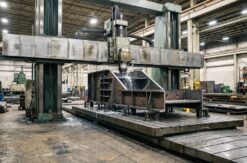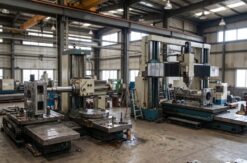
A bridge mill arrives on a lowboy. Getting it from the trailer to a running spindle is a construction project. Shops that treat it as a delivery lose weeks.
The requirements are knowable months ahead. Work through them before the purchase order goes out. The alternative is a machine that sits crated while an electrician gets scheduled.
Start with the floor
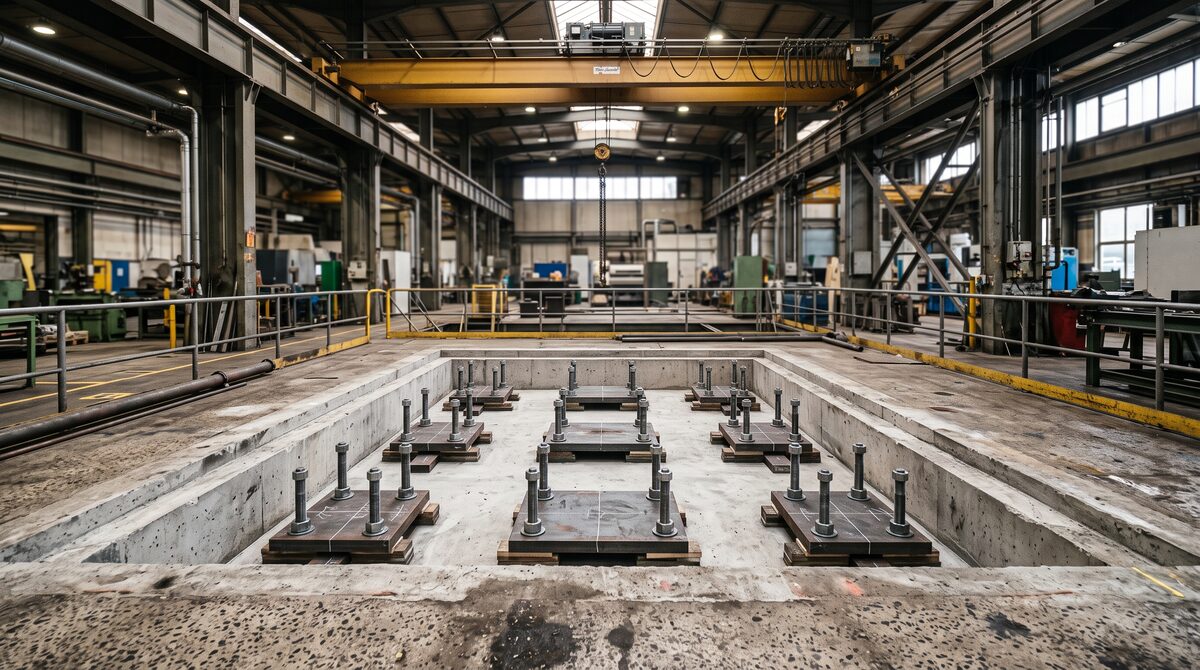
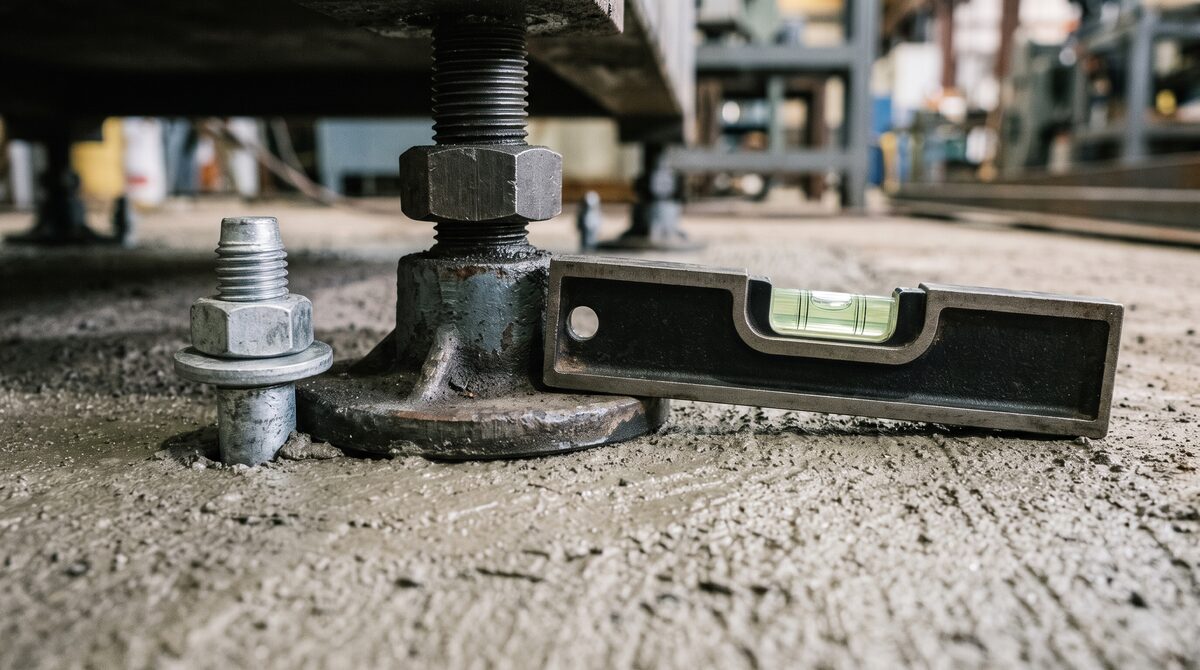
Foundation comes first because it cannot be fixed later without moving the machine. A double column machining center concentrates substantial weight across a footprint. Load reaches the slab through leveling pads rather than spreading evenly.
Three numbers matter. Slab thickness and reinforcement. Soil bearing capacity underneath. Whether the manufacturer specifies an isolated pad rather than the existing floor.
That last point catches shops off guard. Set a machine on a slab shared with forklift traffic and a press brake, and it picks up vibration through the concrete. Finish problems on long cuts follow. Isolation joints exist for a reason.
Get the foundation drawing from the manufacturer and hand it to a structural engineer before you commit. Core samples cost a fraction of a slab pour.
Then the lift
Moving the machine inside and onto its pad takes clear height, door width, and rated lifting capacity along the whole path.
Overhead crane requirements sit under federal regulation. OSHA’s overhead and gantry crane standard requires a crane’s rated load to be plainly marked on each side. Where a crane has more than one hoisting unit, each hoist carries its own marking. Rerating after a modification calls for a qualified engineer or the manufacturer to check the crane and its supporting structure.
The standard also sets a minimum clearance of three inches overhead and two inches laterally between crane and obstructions. On a tall machine moving under an existing runway, three inches disappears quickly.
Two practical steps follow. Verify your crane’s marked rated load against the heaviest single lift in the install. That lift is often the bridge or a column rather than the assembled machine. Confirm the rigging plan against actual door and beam heights, measured rather than remembered.
Power is the long pole in Texas
Large machines want three-phase service, and many shops discover their existing service will not carry the addition.
Utility timelines are the problem. Electricity demand in Texas is climbing steeply. Hourly peak load in ERCOT reached a record 91.1 gigawatts on July 22, 2026, roughly 6 percent above the previous record set in August 2023. Load growth on that scale absorbs utility engineering capacity, and transformer availability has been tight.
Start the service conversation early. Call your utility before the machine ships rather than after it lands. Ask specifically about transformer lead time, not only about the service upgrade.
Inside the building, plan for the disconnect, conduit runs, and any required transformer pad. A licensed electrician sizes all of it from the manufacturer’s electrical specification, which should arrive with the machine documentation.
Air, coolant, and chips
Large machines generate volume that smaller ones do not. A high-pressure through-spindle coolant system needs tank capacity and filtration. Chip handling needs a plan that does not involve a shovel.
Compressed air demand rises too. Check your compressor’s actual delivered volume at the required pressure rather than its nameplate horsepower.
Chip conveyors need somewhere to discharge. A hopper location that works on paper sometimes blocks the aisle a forklift needs.
Material flow around the machine
Large machines change how the shop moves. Raw stock arrives heavier, and finished parts leave heavier. Both need a path that does not cross the aisle a forklift uses all day.
Plan the staging area before the pad is poured. A part waiting for the spindle needs floor space near the machine, on dunnage rated for its weight. Shops that skip this end up staging in the receiving bay and adding a crane move to every job.
Operator access matters as well. Leave room to reach the control, the tool changer, and the coolant tank without climbing over a fixture.
A realistic sequence
Order the work rather than reacting to it. Confirm the foundation requirement and have it engineered. Book the electrical work with a date, not an intention. Schedule rigging against measured clearances. Arrange install and operator training with whoever is supplying the machine.
Build in cure time. A new isolated pad needs days before it carries load, and that window sits on the critical path whether or not anyone planned for it. Add a receiving inspection to the list as well. Checking the crate against the packing list on arrival is far easier than discovering a missing item during commissioning.
Matching the machine to the part comes first in all of this. We covered that in how to match a bridge mill or boring mill to the part. The demand side sits in large part machining and where the Texas work is coming from.
One last item belongs on the checklist. Confirm who performs the installation and who trains your operators, in writing, before the machine ships. A large machine running at half its capability because nobody learned the control is the most expensive outcome available.
This article is general industry information and is not a substitute for manufacturer operating documentation, OSHA guidance, or a qualified technician’s assessment of your specific equipment.
Southwest Machine Technologies: Machine Tools for Texas Shops
Southwest Machine Technologies is the exclusive Texas dealer for Smart Machine Tools and HNK, working with machine and fabrication shops from Houston to El Paso. Our technicians install every SMART and HNK machine we sell, with no third party, and train operators on the machine, the control, and daily operation.
Our Equipment Includes:
- SMART Bridge Mills — SMART Linear and BoxWay double column machining centers
- Locations Served — service and support across all 254 Texas counties
Planning an install window?
Talk to us about your part and we will walk the foundation, power, and rigging requirements with you.
Works Cited
- United States, Department of Labor, Occupational Safety and Health Administration. “1910.179 — Overhead and Gantry Cranes.” Occupational Safety and Health Administration, www.osha.gov/laws-regs/regulations/standardnumber/1910/1910.179. Accessed 17 Aug. 2026.
- United States, Energy Information Administration. “Hourly Peak Load in ERCOT Set a New Record, Exceeding 91 GW on July 22.” Today in Energy, U.S. Energy Information Administration, Aug. 2026, www.eia.gov/todayinenergy/detail.php?id=67906.