Texas CNC machinist shortage pressure is pushing Southwest Machine Technologies customers to rethink equipment strategy across every shop floor in the state.
Texas CNC machinist shortage pressure is hitting shop owners harder than at any point in modern memory. The U.S. Bureau of Labor Statistics counts 299,500 machinists in the national workforce as of 2024. Specifically, employment is projected to remain effectively flat through 2034. Meanwhile, Texas reshores tens of thousands of new manufacturing jobs every year. Furthermore, major semiconductor and automotive employers are racing to staff facilities opening in 2026 and 2027.
The math is brutal for Texas shop owners. First, production demand is climbing fast. Second, the median machinist is 46.9 years old. Third, replacement workers are not arriving fast enough. Therefore, equipment strategy is becoming the dominant lever for shops that want to keep up.
The Numbers Behind the Texas CNC Machinist Shortage
According to the BLS Occupational Outlook Handbook, roughly 34,200 openings for machinists and tool and die makers are projected each year through 2034. Notably, virtually all of these openings come from retirements and transfers to other occupations. In other words, very few come from net job growth.
In addition, Deloitte and The Manufacturing Institute project up to 2.1 million unfilled manufacturing roles nationally by 2030. Therefore, the shortage is structural, not cyclical. For example, tool and die maker positions are projected to decline 11 percent over the decade. As a result, pressure on the remaining skilled workforce keeps intensifying.
The wage data tells the same story. Specifically, the median machinist wage was $56,150 in 2024. Top earners cleared $78,000. Likewise, transportation equipment specialists reached $60,000-plus. Once benefits are added, total compensation per machinist approaches $90,000 to $100,000 annually. Therefore, equipment investments that let one machinist run multiple machines pay back faster than ever before.
Furthermore, wage pressure is accelerating. For instance, manufacturing hourly earnings crossed $30 per hour for production workers in early 2026 — the first time on record. As a result, shops competing on wages alone are losing ground every quarter. Above all, the labor cost trend favors capital equipment investment over headcount expansion.
Why the Texas CNC Machinist Shortage Hits Hardest
Texas added more than 40,200 manufacturing jobs through reshoring in 2025. Indeed, that figure leads all states. For example, Foxconn announced a Houston facility. Wistron is building in Dallas. Furthermore, Texas Instruments is hiring across its Sherman fab expansion. In addition, Samsung, Tesla, and a wave of suppliers are pulling from the same regional pool of machinists, CNC programmers, and setup technicians.
The broader context for this demand surge is covered in Texas Machine Shop Equipment Demand Surges in 2026 as Manufacturing Boom Lands. In short, Dallas-Fort Worth has seen demand outstrip supply for controls and automation roles tied to semiconductor packaging and testing. Meanwhile, smaller shops without dedicated training programs or corporate recruitment infrastructure cannot compete against billion-dollar fabs offering signing bonuses.
Reshoring has been particularly intense in Texas. In fact, the state captured nearly 23 percent of all reshored manufacturing positions nationwide in 2025. Of course, every one of those new positions needs to be filled from the same statewide labor market. As a result, mid-size Texas shops are losing skilled workers to larger employers. Meanwhile, those same shops struggle to replace them.
How Texas Shops Are Responding with Equipment
The shops winning new work in 2026 share a common pattern. In short, they have invested in modern equipment that multiplies what each machinist can produce. For example, modern five-axis CNC machines eliminate manual workpiece rotation. As a result, one operator can manage multiple mills simultaneously rather than babysitting a single spindle.
Conversational programming software has been another high-impact investment. Specifically, it reduces the months of training previously required to get a new hire productive on complex setups. Likewise, tool presetters cut downtime and scrap. Furthermore, automated bar feeders, robotic load and unload systems, and probing cycles let trained machinists run more spindles without proportional headcount.
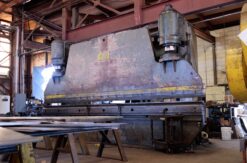
Beyond mills and lathes, fabrication-focused shops are investing in press brakes, plasma cutting tables, fiber laser cutters, and updated welding systems. Of course, the right mix depends on the customer base. For instance, oil and gas work needs heavy-duty cutting and forming. By contrast, aerospace work requires tight-tolerance machining. Meanwhile, semiconductor suppliers expect clean, repeatable precision work.
Equipment Strategy That Beats the Texas CNC Machinist Shortage
The economics of capital equipment have shifted significantly. For example, a machinist now costs $90,000 to $100,000 in total compensation. Against that benchmark, capital equipment that lets one machinist run three machines instead of one pays back faster than at any point in the last decade.
Furthermore, the right equipment can pull double duty during turnover. For instance, a five-axis machine with intuitive controls is easier to staff than a complex manual lathe. Likewise, a CNC turning center with auto-loading capability runs continuously through lunch breaks and partial shifts. As a result, total shop output stays steady even when staffing fluctuates.
In addition, equipment that handles tighter tolerances opens up higher-margin work. Specifically, aerospace and medical device contracts pay premiums for precision capability. Therefore, equipment investments that move a shop into more demanding work also tend to reduce dependence on commodity pricing. Above all, they reduce the high-volume staffing that commodity work requires.
Why the Texas CNC Machinist Shortage Will Persist
The BLS Employment Projections program shows total manufacturing employment growing more slowly than the overall economy through 2034. Of course, new federal Pell Grant eligibility for short-term CNC, industrial maintenance, and robotics training programs took effect on July 1. As a result, this change opens federal funding to thousands of learners enrolled in programs under 15 weeks.
Likewise, community colleges and state workforce boards are scaling apprenticeships and pre-apprenticeships in parallel. These pipeline improvements matter for the long term. However, they take years to deliver fully proficient machinists. For example, apprenticeship programs commonly run three to four years. Specifically, accelerated CNC programmer programs can require 4,000 hours of structured training over two years.
Texas-specific training programs reflect this gap. For instance, Texas State Technical College received a Texas Semiconductor Innovation Fund grant in early 2026 to expand its accelerated 10-week semiconductor technician program. Likewise, community colleges across the state are adding CNC, welding, and industrial maintenance tracks. Of course, these graduates need years of shop experience before they handle complex setups independently. Meanwhile, the demand pipeline keeps growing.
In short, equipment delivers capacity now. By contrast, training delivers capacity later. Therefore, Texas shops planning their 2026 production targets cannot wait for the pipeline to fill. Above all, the shortage will outlast every shop that fails to adapt.
Section 232 Tariffs Add Urgency to the Equipment Calculation
The April 2026 restructuring of steel, aluminum, and copper tariffs has further accelerated the equipment calculation. Specifically, the tariffs make imported finished metal goods more expensive. As a result, they create new opportunities for domestic fabricators. The full impact is covered in How New Section 232 Tariffs Are Reshaping Texas Fabrication Shops in 2026.
For Texas shops, the immediate effect is more inbound work. Furthermore, there is more pressure to deliver it on time. In other words, customer demand is there. Meanwhile, the capacity question is whether the shop has the equipment to convert that demand into delivered parts.
Beyond Equipment: Parts and Maintenance Support Matter
Equipment alone is not enough, however. In fact, parts availability and maintenance support matter just as much. Especially, this is true for shops running production at capacity. For example, a breakdown that takes two weeks to resolve can cost a shop a major customer.
Therefore, reliable supply relationships are essential. Specifically, shops outside major metro areas need a partner who can deliver parts and service quickly. In short, the right equipment investment is only the start. Above all, the right support relationship is what keeps that investment producing.
Southwest Machine Technologies: Equipping Texas Shops Through the Shortage
Southwest Machine Technologies helps machine and fabrication shops across Texas address workforce constraints by deploying the right machinery for the work in front of them. From basic mills to multi-axis turning centers, we match equipment to the actual production challenges Texas shops face in 2026.
Our Services Include:
- Milling Machines — Modern CNC mills that let trained operators run more parts per shift
- Fabrication Machines — Equipment that expands shop capacity without expanding headcount
Need to do more with the team you have? Contact Southwest Machine Technologies to discuss how strategic equipment investment can address your workforce constraints in 2026.
Works Cited
“Machinists and Tool and Die Makers.” Occupational Outlook Handbook, U.S. Bureau of Labor Statistics, 28 Aug. 2025, www.bls.gov/ooh/production/machinists-and-tool-and-die-makers.htm. Accessed 18 May 2026.
“Employment Projections Home Page.” U.S. Bureau of Labor Statistics, www.bls.gov/emp. Accessed 18 May 2026.