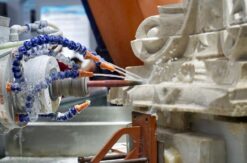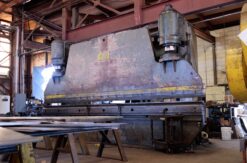

Section 232 tariffs are pushing Southwest Machine Technologies customers to invest in domestic fabrication capacity across the state.
Section 232 tariffs took a major step forward in April 2026. Specifically, the White House restructured how steel, aluminum, and copper tariffs apply to imported finished products. Furthermore, the new framework took effect on April 6, 2026. Therefore, Texas fabrication shops now face a fundamentally changed competitive landscape. Above all, the rules reward domestic fabrication capacity over imported finished goods.
The implications run deep. First, tariffs now apply to the full customs value of imports. Second, they cover derivative products substantially made of these metals. Third, they create real opportunities for U.S. shops capable of taking on reshored work. As a result, Texas fabricators are rethinking equipment investments, staffing strategies, and customer mixes through the rest of 2026 and into 2027.
How Section 232 Tariffs Got Here
The current regime traces back to the first-term tariffs on steel and aluminum imports. Of course, those tariffs originally targeted only the metal portion of imported goods. However, that approach allowed importers to shift costs to non-metal components. As a result, the system effectively undercut domestic producers competing against subsidized foreign metal.
In February 2025, the administration eliminated most country-specific exemptions. Then in June 2025, the steel and aluminum rates jumped to 50 percent. Furthermore, copper joined the list in July 2025 at the same 50 percent rate. By the end of 2025, the United States had become the third-largest steel producer in the world according to the White House fact sheet. Moreover, new steel plants are now under construction in West Virginia, Arkansas, and South Carolina.
For Texas fabricators, this trajectory matters. Specifically, every tariff increase changes the calculation between buying imported fabricated parts and producing them domestically. Therefore, the cumulative effect of Section 232 tariffs over 2024 to 2026 has been profound.
The April 2026 Restructuring Explained
The April 2, 2026 proclamation shifted everything. Specifically, Section 232 tariffs now apply to the full customs value of derivative products, not just the metal content. As a result, importers can no longer reduce duties by emphasizing the non-metal portion of finished goods.
The new rate structure is straightforward. For example, articles made entirely of aluminum, steel, or copper pay a flat 50 percent on full value. Likewise, derivative products substantially made of these metals pay 25 percent. Furthermore, metal-intensive industrial equipment pays 15 percent through December 2027. Additionally, products made abroad with American steel, aluminum, and copper pay a reduced 10 percent rate.
There are some carve-outs. Notably, products with 15 percent or less metal content are no longer subject to Section 232 tariffs. In addition, civil aircraft parts retain exceptions under certain trade agreements. However, the broader scope means many products previously below the tariff threshold now fall within reach. Therefore, the import cost of fabricated parts has climbed sharply across most categories.
How Section 232 Tariffs Are Hitting Texas Fabrication Shops
The broader Texas manufacturing context is covered in Texas Machine Shop Equipment Demand Surges in 2026 as Manufacturing Boom Lands. In short, the state was already seeing massive demand growth. Now, the tariff changes have added pressure on top of that surge.
For Texas fabricators, three effects matter most. First, customers who previously imported fabricated parts are reaching out for domestic alternatives. Second, customers who already buy domestic are placing larger orders to lock in capacity. Third, shops are quoting at higher margins because the alternative is now more expensive.
Of course, this is not pure good news. For instance, shops that import raw steel, aluminum, or copper to fabricate downstream face higher input costs themselves. Furthermore, supply chains for specialty alloys remain fragile. Likewise, lead times on certain steel grades have stretched out as domestic mills run at capacity.
Which Texas Industries Feel the Section 232 Tariffs Most
Oil and gas operations across the Permian Basin face significant exposure. Specifically, valves, fittings, and pressure vessels often involve imported components. As a result, well-pad fabrication work is shifting toward shops with the right equipment for thicker plate and pipe work.
Automotive suppliers in the Dallas-Fort Worth corridor and around Austin are also reshaping their sourcing. For example, Tesla’s Austin operations and the broader EV supply chain require precision fabricated parts in volume. Therefore, suppliers are evaluating whether to expand U.S. fabrication capacity or pay higher import costs.
Aerospace and defense work along the I-35 and I-10 corridors faces a more nuanced picture. In some cases, civil aircraft parts retain exemptions. However, military and dual-use programs see higher costs on imported fabricated assemblies. Meanwhile, semiconductor packaging and equipment work at the Sherman fab and Round Rock facilities depends heavily on precision fabricated enclosures, frames, and tooling. As a result, demand for Texas-based fabrication has expanded across all four major industry clusters.
New Opportunities for Domestic Fabricators
The April 2026 changes create concrete opportunities for Texas fabrication shops. Specifically, customers who were importing finished parts are now seeking domestic suppliers. As a result, quote requests are up across the state. Furthermore, customers are willing to accept slightly longer lead times to lock in domestic supply at predictable cost.
For example, distribution and warehousing customers that buy fabricated racking and material handling equipment are bringing work back to U.S. shops. Likewise, energy infrastructure projects are sourcing more components domestically. In addition, government procurement rules increasingly favor U.S.-fabricated parts. Above all, the trend lines favor shops investing in capacity now.
However, capturing the opportunity requires capability. Specifically, customers will not move work to shops that cannot match imported product quality. Therefore, equipment that produces consistent results at competitive cost is the price of entry.
Equipment Strategy in the Section 232 Tariffs Era
The right equipment mix depends on the work coming in. For instance, oil and gas customers need heavy press brakes, plasma cutting tables capable of thick plate, and welding systems that handle pipe and pressure vessel work. By contrast, semiconductor and electronics customers need precision laser cutting and forming with extremely tight tolerances.
Most Texas fabricators benefit from a balanced approach. Specifically, modern fiber laser cutters provide flexibility across material types and thicknesses. Likewise, programmable press brakes reduce setup time between jobs. Furthermore, automated material handling lets shops run multiple machines with smaller crews. As a result, the same workforce produces substantially more output.
In addition, Section 232 tariffs include the 15 percent reduced rate on metal-intensive industrial equipment through 2027. Notably, this rate helps fabricators acquiring imported production equipment now. Therefore, the window for equipment investment is favorable through the end of next year.
Workforce Pressure Compounds the Equation
The equipment story does not stand alone. In fact, workforce constraints amplify every equipment decision. The full picture appears in The Texas CNC Machinist Shortage Is Reshaping Shop Equipment Decisions in 2026. In short, Texas shops cannot simply hire more machinists to meet demand. Therefore, the equipment that lets a smaller crew produce more becomes the dominant capacity lever.
For Texas fabricators, the tariff-driven demand surge collides directly with this labor reality. As a result, shops that win new work in 2026 are the ones investing in equipment that multiplies what each machinist can do.
Compliance Documentation Matters More Now
The April 2026 proclamation also tightens enforcement. Specifically, U.S. Customs and Border Protection now requires more detailed documentation for derivative product valuations. Furthermore, the Department of Justice is prioritizing False Claims Act enforcement against tariff evasion. As a result, importers face real liability exposure for misclassified entries. According to the International Trade Administration, major U.S. steel producers have applauded the strengthened enforcement framework.
For Texas fabricators, this enforcement environment matters in two ways. First, customers are more cautious about importing fabricated parts that might trigger compliance scrutiny. Second, domestic fabrication eliminates compliance risk entirely. Therefore, the regulatory uncertainty itself drives work toward U.S. shops.
Southwest Machine Technologies: Equipping Texas Fabricators for the Tariff Era
Southwest Machine Technologies supplies fabrication shops across Texas with the equipment needed to compete in the new Section 232 tariffs environment. From basic press brakes to advanced fiber laser systems, we match equipment to the work in front of you. Furthermore, our stock specials provide cost-effective options for shops scaling capacity to capture new domestic demand.
Our Services Include:
- Fabrication Machines — Equipment that expands Texas shop capacity for tariff-driven reshoring work
- SWMT Stock Specials — Available equipment ready to ship for shops scaling now
Ready to compete in the new tariff era? Contact Southwest Machine Technologies to discuss how the right fabrication equipment can position your shop for the work coming in.
Works Cited
“Fact Sheet: President Donald J. Trump Strengthens Tariffs on Steel, Aluminum, and Copper Imports.” The White House, 2 Apr. 2026, www.whitehouse.gov/fact-sheets/2026/04/fact-sheet-president-donald-j-trump-strengthens-tariffs-on-steel-aluminum-and-copper-imports/. Accessed 18 May 2026.
“What They Are Saying: President Trump Strengthens U.S. Steel, Aluminum, and Copper Industries with Historic Action.” International Trade Administration, U.S. Department of Commerce, www.trade.gov/press-release/what-they-are-saying-president-trump-strengthens-us-steel-aluminum-and-copper. Accessed 18 May 2026.