Southwest Machine Technologies | Houston, TX
Texas manufacturing entered 2026 with momentum. The Federal Reserve Bank of Dallas’s February 2026 Texas Manufacturing Outlook Survey reported solid production demand in the first half of the year, with machinery manufacturers describing their strongest order books in years — and fabrication shops among the most active buyers of new capital equipment in the state. That activity is not evenly distributed across technologies. One category is pulling significantly more investment than any other: fiber laser cutting machines.
The shift is structural, not cyclical. Texas fabricators serving energy infrastructure, structural steel, agricultural equipment, industrial machinery, and the Gulf Coast’s heavy manufacturing base are under simultaneous pressure to cut faster, waste less material, and hit tighter tolerances than plasma, oxy-fuel, or older CO2 systems can reliably deliver. Fiber laser technology resolves all three pressures at once — and 2026 is the year that has pushed that business case from compelling to urgent for shops still running conventional cutting lines.
What Is Driving Fiber Laser Investment Across Texas
The global laser cutting machine market is projected to nearly double over the next decade, growing from approximately $6.9 billion in 2025 to $14.3 billion by 2035. The U.S. market is forecast to grow at a 6.5 percent CAGR over the same period, driven by demand from aerospace, agricultural equipment, HVAC manufacturing, and contract metal fabrication — all sectors with significant concentration across Texas’s 254 counties. Within that broader market, fiber laser systems now account for the largest revenue share of any laser technology, reflecting a broad industry consensus that fiber is the performance and cost-efficiency standard for metal cutting.
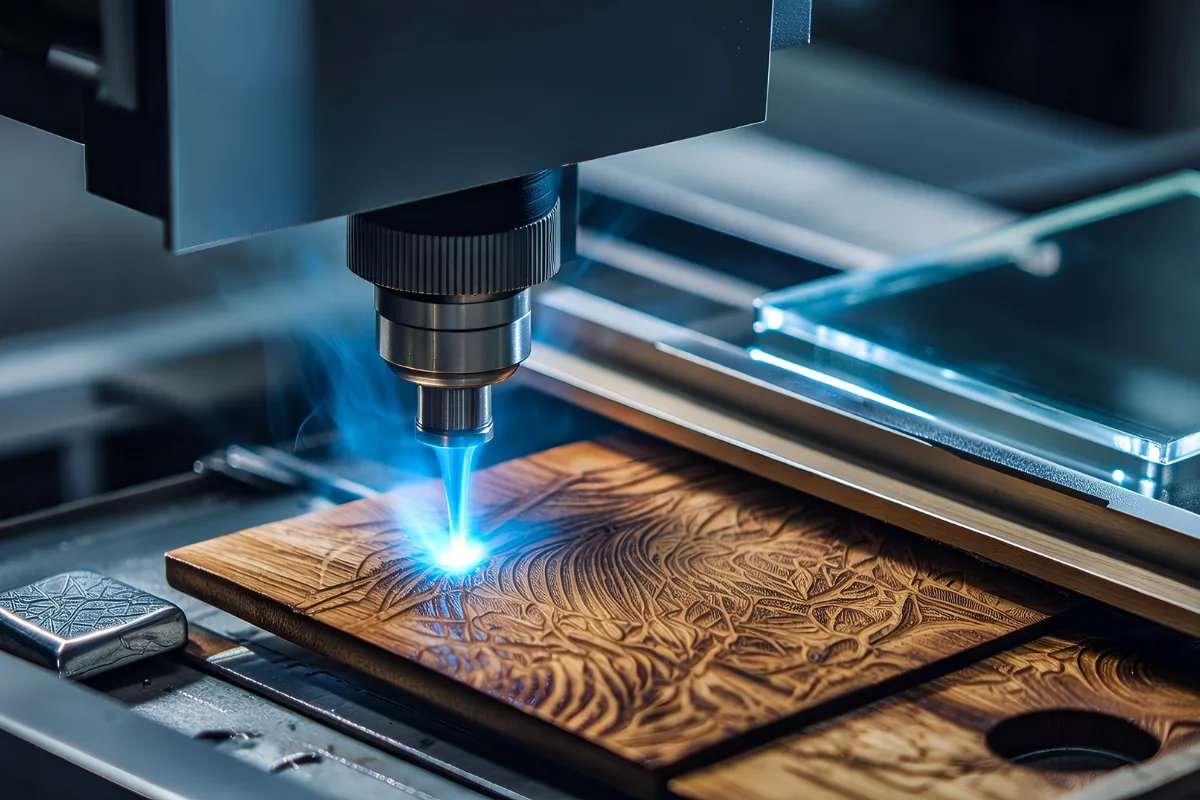
The reasons are not difficult to understand. Fiber laser machines cut at speeds two to five times faster than CO2 systems on the same material thickness. They require no laser gas and have dramatically lower maintenance requirements because the beam is generated by solid-state optical components rather than a gas medium that degrades over time. Operating costs per part fall, uptime rises, and cut quality — measured by edge smoothness, kerf width, and heat-affected zone — consistently exceeds what older cutting technologies produce on steel, stainless, aluminum, brass, and copper.
For Texas fabricators running multiple shifts on high-volume part families, those differences compound into serious competitive advantages. A shop running a 10kW or 20kW fiber laser against a competitor still on a 4kW CO2 machine is not just cutting faster — it is winning jobs the competitor cannot quote profitably, holding tolerances the competitor cannot guarantee, and processing material thicknesses the competitor’s equipment cannot reach. The capital investment pays back through captured capacity, not just reduced operating cost.
The reshoring dynamic accelerating across Texas manufacturing amplifies this further. As explored in Tube Laser Cutting in Texas: Why Round, Square, and Rectangular Profiles Are the New Competitive Frontier, structural and industrial fabricators who have historically sourced cut tube components offshore are bringing that work back — and they need flat sheet and tube laser capability to handle it domestically.
Flat Sheet Fiber Lasers: Power, Table Size, and the Right Specification
For most Texas fabrication shops, the sheet laser decision involves three intersecting variables: table size, resonator power, and automation level. Each determines which part families the machine can handle profitably and at what volume.
Table configurations of 5’x10′, 6’x12′, and 8’x20′ cover the majority of sheet metal applications from light gauge HVAC components to heavy plate structural work. The 8’x20′ format in particular opens access to full-size plate processing for energy and industrial customers — a significant market in Texas — without requiring the material to be cut down before loading. Shops processing large format parts regularly can eliminate pre-cutting steps and their associated labor and handling costs entirely.
Resonator power selection follows the material matrix. At 3kW to 6kW, a fiber laser cuts thin to mid-gauge carbon steel, stainless, and aluminum at speeds that make short-run and prototype work economical. At 10kW to 20kW, the same machine processes material thicknesses that previously required plasma or oxy-fuel — but with laser-quality edges that require minimal or no secondary finishing. The 20kW range in particular is accelerating adoption in Texas’s heavy industrial sector, where thick carbon steel is the primary feedstock and edge quality directly affects downstream weld quality and assembly fit.
Auto shuttle table systems eliminate the downtime between part removal and sheet loading that limits productivity on manual-exchange machines. On a high-volume shop floor running twelve-hour shifts, shuttle automation can recover two or more production hours per day — the equivalent of running a second machine without the capital cost or floor space requirement. Combined with auto-focusing heads that optimize beam parameters in real time as material properties vary across a plate, these systems deliver the kind of consistent output that customer quality systems require.
Why 2026 Is the Inflection Point for Texas Shops
The Fabricators & Manufacturers Association’s 2026 outlook projects fabricated metals production growth of 5.5 percent in 2026 — more than double the 2.19 percent growth projected for 2025 and a sharp reversal of the slight contraction the sector saw in 2024. That growth, combined with the AI-driven boom in power infrastructure and data center construction (both heavy consumers of fabricated steel components), is creating the order volume that makes fiber laser investment justifiable for shops that have been watching the technology for two or three years without pulling the trigger.
The calculation has also become clearer on the cost side. High-power fiber laser systems from manufacturers with U.S.-based service and support infrastructure are now available at price points that mid-size Texas fabricators can finance with manageable payback periods — particularly when evaluated against the ongoing cost of subcontracting laser-cut components, the throughput limitations of their current cutting equipment, and the quality and delivery pressure from customers who have already come to expect laser-quality edges as table stakes.
For shops evaluating this investment, the service and support dimension is as important as the machine specification. A fiber laser system that maximizes uptime requires responsive local support when issues arise — not a shipping container to overseas parts inventory and an international support queue. That reality shapes how smart buyers approach the purchasing decision, which is examined more closely in How Texas Fabrication Shops Should Evaluate a Fiber Laser Purchase in 2026.
Southwest Machine Technologies
Southwest Machine Technologies serves fabrication shops throughout all 254 counties of Texas with high-performance CNC fiber laser cutting machines backed by dependable U.S. service and support.
Our Fiber Laser Offerings Include:
- Dener USA Sheet Fiber Lasers — 5’x10′, 6’x12′, and 8’x20′ tables, 3kW–20kW resonators, auto shuttle table, auto-focusing head, FSCut control
- Dener USA Tube Lasers — 20’–40′ tube processing lengths, 3kW–12kW, 2- and 3-chuck systems, auto loading/unloading, FSCut control
Ready to See What Fiber Laser Can Do for Your Shop? Contact SWMT to request a quote or discuss which system fits your material mix, volume, and budget.
Works Cited
“Texas Manufacturing Sector Growth Remains Solid.” Federal Reserve Bank of Dallas Texas Manufacturing Outlook Survey, Feb. 2026, www.dallasfed.org/research/surveys/tmos/2026/2602. Accessed 26 Mar. 2026.
“2026 Metal Fabrication Forecast: Growth Accelerates in a Divided Economy.” The Fabricator, Fabricators & Manufacturers Association, Dec. 2025, www.thefabricator.com/thefabricator/article/shopmanagement/2026-metal-fabrication-forecast-growth-accelerates-in-a-divided-economy. Accessed 26 Mar. 2026.
Related Articles
- Tube Laser Cutting in Texas: Why Round, Square, and Rectangular Profiles Are the New Competitive Frontier
- How Texas Fabrication Shops Should Evaluate a Fiber Laser Purchase in 2026