Open post Texas manufacturing news today: CNC lathe operator reviewing production data showing capacity surge

Texas Manufacturing Surge Is Reshaping the CNC Turning Capacity Equation

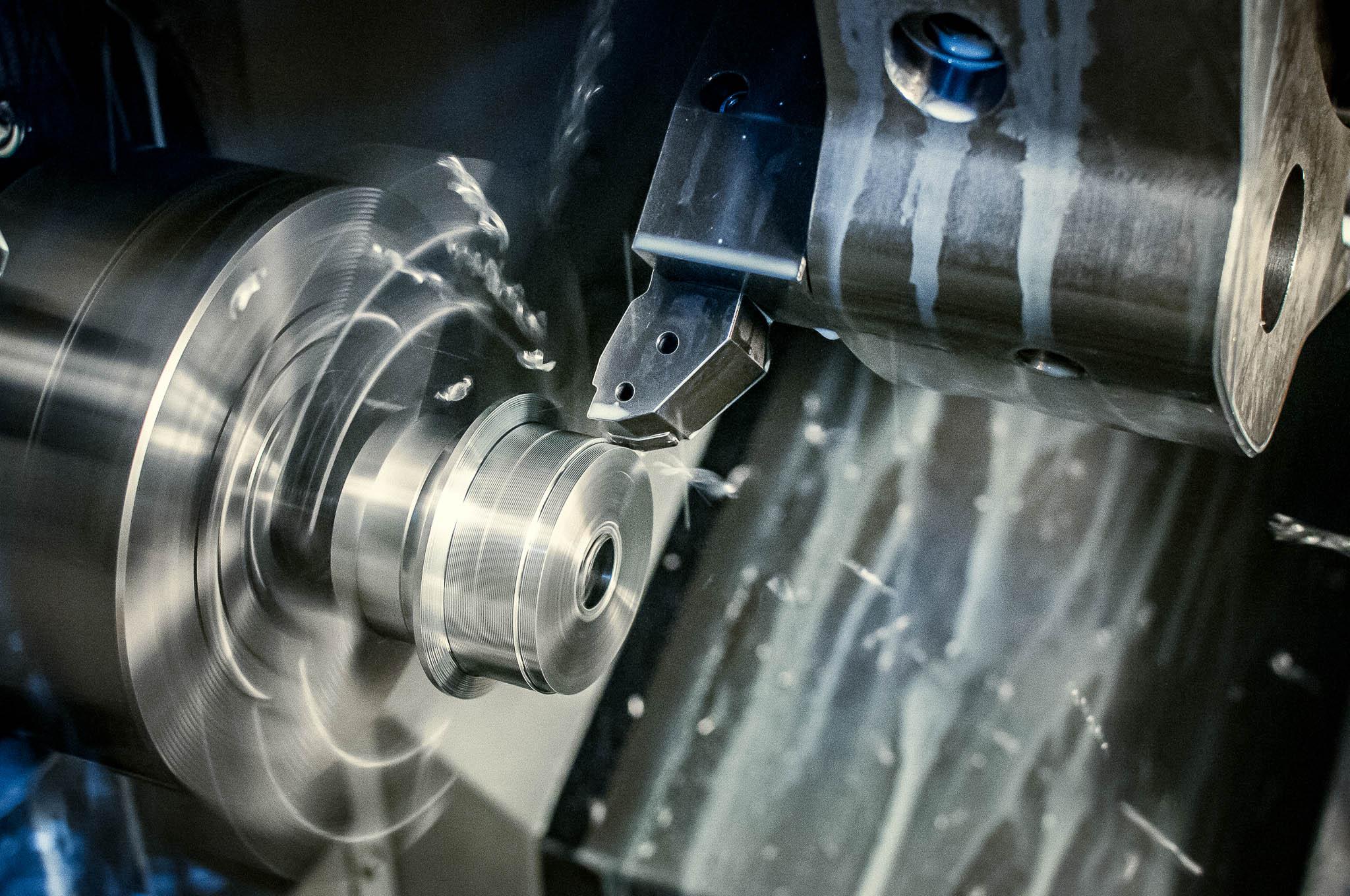
Texas manufacturers are running into a problem that did not exist in this form three years ago: the order book is faster than the spindle is.That’s the headline in Texas manufacturing news today, as most recent Dallas Fed data shows production indices accelerating, capacity utilization jumping, and future capital expenditure plans firming up — all at the same moment that headline reshoring projects, oilfield activity, and Houston-area AI server build-outs are pulling at the same finite supply of CNC turning capacity. For Texas machine shops sizing their next investment, the question has stopped being whether to add turning capability and has become which configuration, on what timeline, and how soon it can be running parts.

This is not a regional anecdote. Texas now has a $2.6 trillion economy — the eighth largest in the world if it stood alone — and the state has earned the Governor’s Cup for leading the U.S. in job-creating relocation and expansion projects for thirteen consecutive years. The headline projects of 2025 and 2026 reach across every category of work that runs through a CNC lathe: a 250,000-square-foot Apple AI server plant slated for Houston, a $450 million Foxconn AI server expansion creating 600 jobs in the Houston region, a $500 million JCB telehandler and aerial-lift plant in San Antonio, a $100 million Eaton transformer expansion in Nacogdoches, and a $65 million TMEIC factory in Waller County. None of those plants make finished parts on day one without a deep, responsive Texas supplier base, and that supplier base runs on turning, milling and fabrication.

What the Dallas Fed Data Actually Shows

The hard numbers are unambiguous. According to the Dallas Fed Texas Manufacturing Outlook Survey released 27 April 2026, the production index jumped 12 points to 19.0 — a reading suggestive of an above-average pace of output expansion. Capacity utilization rose 13 points to 19.8. Shipments climbed 13 points to 15.0. The future production index sat at 34.6, the future capacity utilization index at 37.4, and the future capital expenditures index at 21.6 — all firmly in expansion territory. Wages and benefits stayed elevated at 24.8. One machinery-manufacturing executive summarised the mood directly in the survey comments: ‘Times are good, backlog is building, prices are firm and life is better.’ That is not the language of a sector with idle capacity.

The same data set captures the constraint behind the expansion. The employment index has stayed essentially flat. Hours worked are creeping upward. Capital expenditure plans are firming. The pattern across the survey is the pattern Texas shop managers report individually: more demand, longer hours per existing employee, harder time hiring, and growing willingness to invest in equipment that lifts output without proportionally lifting headcount. CNC turning equipment — particularly multi-axis configurations that combine turning, live tooling, and sub-spindle operations — sits squarely in the middle of that calculation.

Why CNC Turning Sits at the Center of the Texas Story

Turning is not the only story in Texas manufacturing, but it is the operation that quietly determines what a shop can quote. Almost everything that comes off a Texas machine shop floor — oilfield components, defense parts, semiconductor and AI server assemblies, transformer cores, electrical apparatus, agricultural and construction equipment subassemblies — passes through one or more turning operations. When turning capacity is the bottleneck, lead times stretch across every product line that depends on it.

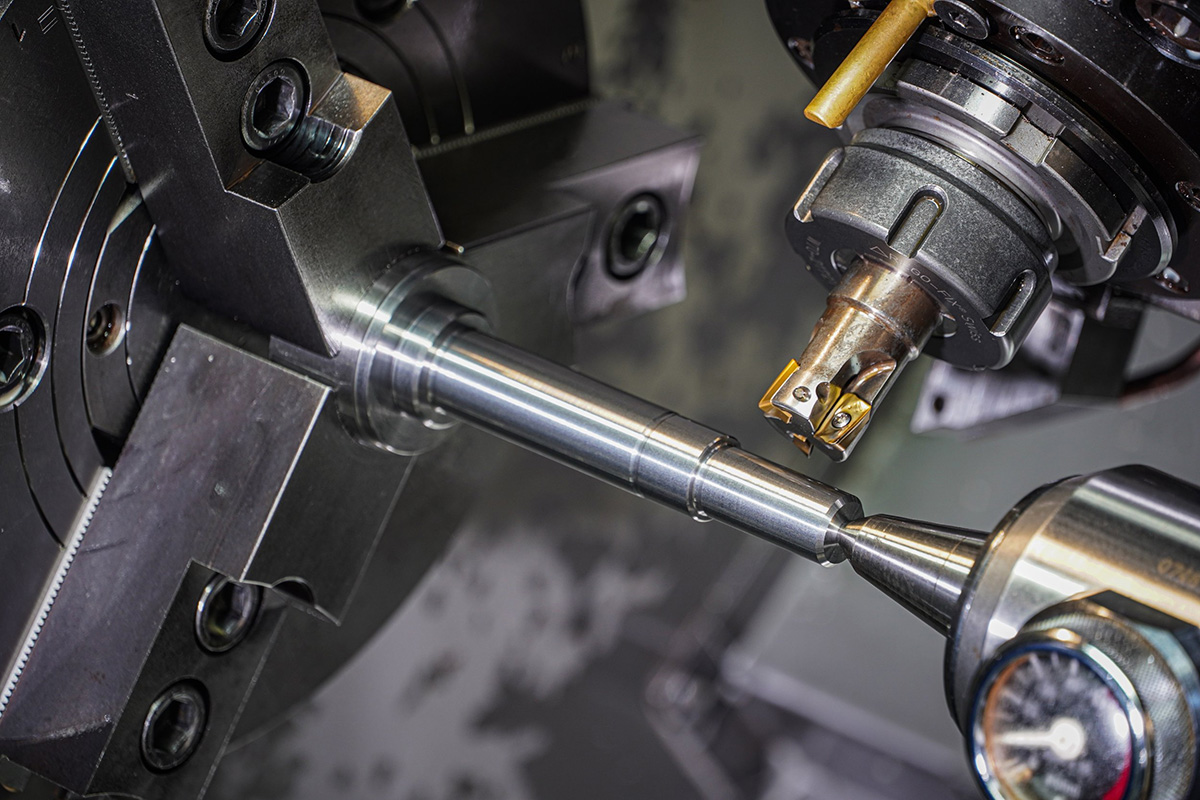
That makes turning the highest-leverage capital decision a shop can make right now. A 2-axis lathe with the right control and torque profile can absorb high-volume bar work that previously had to be subcontracted out. A 3-axis live-tooled lathe can eliminate second operations and cycle times that compound across hundreds of part numbers. A multi-axis sub-spindle and Y-axis lathe can take a part from raw stock to complete in a single setup, freeing both spindle time and operator hours elsewhere on the floor. And a vertical turning center with a large swing can take on heavy industrial parts that smaller shops cannot quote at all. (For how the oil and gas side of the Texas economy is sharpening that demand, see 

Permian and Gulf Coast Demand Is Pulling Texas Shops Toward Bigger Turning Capacity.

The Reshoring Wave Is Real, and It Is Hitting Texas First

The reshoring story has been building for years, but Texas has been absorbing a disproportionate share of it. The Texas Real Estate Research Center at Texas A&M University has documented that approximately one-quarter of all industrial space absorption in the state is now tied to manufacturing — a remarkable concentration given the breadth of the Texas economy. The state’s mix of abundant land, port access, energy availability, and a pro-business regulatory environment has made it the preferred U.S. landing zone for both domestic reshoring and foreign direct investment, with everything from Taiwanese electronics manufacturers to European construction equipment OEMs choosing Texas over the alternatives.

The Houston region alone has captured a wave of Taiwanese investment that would have looked improbable five years ago — Foxconn, Pegatron, and others choosing Houston for U.S. operations. Apple’s AI server announcement adds the same hyperscale-aligned manufacturing pattern that has reshaped Phoenix. Each of these projects creates two layers of supplier demand: the Tier 1 components inside the new plants themselves, and the broader Texas industrial ecosystem that supports them with structural steel, electrical apparatus, fixtures, tooling and finished parts. CNC turning sits inside both layers.

What This Means for Texas Shop Capital Plans

For shop owners and plant managers in Texas, the practical implications are straightforward. First, lead times for new CNC turning equipment are tightening as North American demand absorbs production capacity at the OEM level. Buying decisions made in 2026 are landing on shop floors in 2027 at the earliest for some configurations. Shops that wait for the order book to fully materialise before committing capital are likely to be installing the new machine after the work has already been quoted out to a competitor. That’s a risk no one covering Texas manufacturing news today can afford to ignore.

Second, the right configuration question is harder than it used to be. The Texas demand mix — oilfield parts, semiconductor support tooling, electrical apparatus, AI infrastructure components, defense subassemblies — does not map cleanly onto a single machine class. A shop quoting against this mix needs the right blend of 2-axis bar work, 3-axis live-tooled lathes for second-op elimination, multi-axis sub-spindle machines for complex parts in single setups, and, for shops touching the heavier industrial segment, vertical turning centers that can swing the parts the small lathes cannot. Each of those classes solves a different bottleneck, and getting the mix right is now an engineering decision rather than a procurement one.

Third, the workforce dimension. Texas employment in manufacturing is essentially flat in the Dallas Fed data even as production climbs, which means new capacity has to be added in a form that does not depend on hiring proportional headcount. That requirement strongly favours configurations that consolidate operations in a single setup, reduce changeover time, and allow one operator to oversee multiple spindles. As covered in Texas Skilled Machinist Shortage Is Forcing Shops Toward Multi-Axis CNC Automation, that workforce constraint is reshaping how Texas shops think about turning capacity at the configuration level, not just the dollar level.

What 2026 Looks Like on the Floor

The pattern for the rest of 2026 is becoming clear. Texas manufacturing will keep expanding faster than employment, which means more capacity per worker is the only realistic path to absorbing the demand. Reshoring will keep driving project announcements that ripple through the supplier base for years after the press release. Energy and infrastructure spending will keep pulling on heavy industrial machining capacity. AI server and semiconductor-adjacent manufacturing will keep adding precision work to the mix. And the lathes that get installed in Texas shops over the next twelve months will, in many cases, still be running parts in 2040.

That makes the next CNC turning purchase a decision worth making with the long arc in mind. The shops that come out of this period in a stronger competitive position will be the ones that read the demand mix correctly, sized capacity for the bottleneck rather than the average, and chose configurations that absorb work without absorbing equivalent headcount.

Southwest Machine Technologies: Texas CNC Turning Built for the Job

SWMT is a Houston-based provider of CNC turning, milling and fabrication equipment serving all 254 counties of Texas. We offer Smart Machine Tools, HNK and Fuji Machine America machinery — all FANUC-controlled — backed by a service organisation trained to install, instruct and maintain every machine we sell. From box-way 2-axis lathes to multi-axis sub-spindle and Y-axis configurations and HNK vertical turning centers with swings up to 630 inches, we help Texas shops match capacity to the work.

Our Capabilities Include:

  • CNC Turning Machines — 2-axis, 3-axis live-tooled, multi-axis sub-spindle and Y-axis, and vertical turning centers from Smart Machine Tools and HNK
  • Stock Specials — Available machine inventory ready for installation, training and immediate Texas service support

Sizing Your Next Lathe? Contact SWMT to discuss configuration, lead time and service support for your Texas shop.

Works Cited

Olson, Eric, and Olabosipo Osikominu. “Texas Manufacturing Expansion Strengthens Despite Flat Employment.” Texas Manufacturing Outlook Survey, Federal Reserve Bank of Dallas, 27 Apr. 2026, www.dallasfed.org/research/surveys/tmos/2026/2604. Accessed 30 Apr. 2026.

Torres, Luis B. “Can Texas Win in Reindustrialization?” The 338 Blog, Texas Real Estate Research Center, Texas A&M University, 13 Aug. 2025, trerc.tamu.edu/blog/can-texas-win-in-reindustrialization/. Accessed 30 Apr. 2026.

Related Articles

Open post Texas manufacturing rebound 2026 puts CNC turning centers at the center of Lone Star growth.

Texas Manufacturing Rebounds: Why CNC Turning Centers Are Central to the Lone Star State’s 2026 Growth Strategy

Southwest Machine Technologies: Precision Machining Solutions for Texas

Texas factory floors are humming again. After a turbulent close to 2025 marked by soft orders and tariff uncertainty, the state’s manufacturing sector has snapped back with force in early 2026, posting above-average production expansion and the strongest capacity utilization numbers in months. For machine shops and contract manufacturers across the Lone Star State, this rebound is translating directly into new equipment decisions—and CNC turning centers sit at the center of that investment wave.

The Federal Reserve Bank of Dallas reported in its February 2026 Texas Manufacturing Outlook Survey that the production index held at 12.5, well above the long-run series average, while capacity utilization climbed to 11.8 and new orders remained firmly positive at 11.1. Perhaps most telling, the future production index surged to 34.3, signaling that Texas manufacturers expect a significant ramp-up in output by late summer. Wages and benefits pressures jumped to 31.9, nearly double January’s reading, confirming that the battle for skilled labor is intensifying even as production accelerates.

These numbers matter for anyone running a machine shop in Houston, Dallas-Fort Worth, San Antonio, or the Gulf Coast corridor. When orders rise and labor stays tight, shops must extract maximum productivity from every spindle hour available. That equation increasingly favors modern 2-axis CNC turning centers equipped with rigid box way construction, intuitive FANUC controls, and the torque to handle aggressive material removal rates across the steel, aluminum, and exotic alloys Texas manufacturers encounter daily.

A State Built for Manufacturing Momentum

Texas did not arrive at this moment by accident. The state’s manufacturing advantages are structural: no corporate income tax, the nation’s largest roadway and freight network, thirty-five foreign trade zones, and a workforce exceeding 15.5 million people—the youngest and fastest-growing labor pool in the country. Governor Abbott has repeatedly characterized “Made in Texas” as a global brand, and the data supports the claim. Texas has held the title of top exporting state for twenty-three consecutive years, and construction spending on manufacturing facilities has nearly tripled since 2020.

The current rebound is amplified by reshoring momentum. Over three trillion dollars in reshoring-related manufacturing investments have been announced across the United States since early 2025, driven by tariff pressures and federal incentives like permanent 100-percent bonus depreciation for new machinery. Texas, with its deep-water ports and energy infrastructure, is capturing a disproportionate share of that capital. Machine shops positioned to take on the resulting work—precision-turned components for energy, aerospace, defense, and automotive sectors—need equipment that can deliver tight tolerances, shift after shift, without the luxury of a fully staffed second crew.

The machinist shortage compounds the urgency. Understanding The Machinist Shortage Is Reshaping Texas Machine Shops—Here’s How Shops Are Fighting Back provides essential context for why equipment decisions matter more than ever. When experienced operators retire faster than new ones enter the trade, the machines themselves must compensate with ease of programming, rigidity under heavy cuts, and reliability that minimizes unplanned downtime.

Why Turning Centers Are Seeing Renewed Demand

Turning operations are foundational to virtually every manufacturing sector thriving in Texas right now. Oil and gas components, valve bodies, hydraulic fittings, aerospace bushings, automotive shafts, and medical device housings all begin on a lathe. The diversity of Texas industry—from Permian Basin energy equipment to Houston-area petrochemical hardware to defense subcontracting around Fort Worth—means shops need turning platforms versatile enough to handle short runs of complex alloys on Monday and long production runs of carbon steel on Thursday.

Modern 2-axis CNC lathes with box way construction meet this demand with a combination of vibration damping, thermal stability, and raw cutting force that slant-bed designs cannot always replicate in heavy-duty applications. Box ways excel in interrupted cuts and large-diameter work where rigidity determines both surface finish quality and tool life. For Texas shops machining tough materials like Inconel for downstream energy clients or 4140 steel for oilfield tools, that rigidity directly affects profitability.

FANUC 0i-TF Plus controls have become a common thread across many of these machines, and for good reason. The fifteen-inch touchscreen interface and Manual Guide i conversational programming lower the barrier for less experienced operators to become productive quickly—an increasingly critical factor when shops cannot find veteran machinists willing to work second shift. Conversational programming allows operators to create simple programs at the control without needing full G-code fluency, effectively expanding the pool of workers who can run the machine productively.

The U.S. Bureau of Labor Statistics projects roughly 34,200 annual openings for machinists over the coming decade, nearly all resulting from retirements and transfers rather than job growth. That replacement math means every Texas shop owner should be thinking about how their equipment choices either ease or worsen the hiring problem. Machines that are difficult to program, unreliable to maintain, or limited in capability shrink an already thin applicant pool.

The Equipment Investment Calculus in 2026

Several converging forces make 2026 a pivotal year for CNC turning center acquisitions across Texas. First, the One Big Beautiful Bill Act’s permanent bonus depreciation provision allows manufacturers to deduct the full cost of new machinery in the year of purchase through 2030. That tax treatment dramatically compresses payback periods and makes capital equipment purchases more attractive relative to leasing or continuing to run aging machines.

Second, reshoring is creating new work that did not exist in Texas shops twelve months ago. Components previously sourced from China, Mexico, or Southeast Asia are being pulled back into domestic supply chains, and turning work represents a significant share of that volume. Shops that invested in capacity before the wave hits will capture contracts that competitors with maxed-out spindle hours cannot.

The broader story of How Reshoring and Tariff Policy Are Driving CNC Equipment Investment Across Texas reveals the scale of this opportunity. From Section 301 duties on Chinese imports to the new Section 122 global surcharge proposals, trade policy is structurally favoring domestic production in ways that may persist for years regardless of which party controls Washington.

Third, the Texas Workforce Commission’s Skills Development Fund and similar state programs provide grants to help employers train workers on new equipment, offsetting some of the ramp-up costs associated with bringing a new turning center online. For shops investing in machines with user-friendly controls and conversational programming, these training dollars stretch further because operators reach competency faster.

The ripple effects extend to maintenance and uptime. Modern turning centers with proven servo systems, hardened and ground box ways, and robust spindle assemblies reduce the unplanned downtime that devastates production schedules when shops are already running thin on labor. When a machine goes down in a fully staffed shop, the operator moves to another station. When a machine goes down in a short-staffed shop, that capacity simply vanishes until the repair is complete. Reliability is not just a maintenance metric—it is a workforce multiplier.

The manufacturers who thrive through the rest of this decade will be those who treat equipment strategy as inseparable from workforce strategy. A capable, reliable, and easy-to-operate turning center does not simply make parts—it makes hiring easier, training faster, and margins wider in an environment where all three matter more than they have in a generation.

Southwest Machine Technologies: Your Texas CNC Equipment Partner

Southwest Machine Technologies (SWMT) provides the highest quality machine tools, service, and support to manufacturers across all 254 Texas counties. With over 125 years of combined team experience and a Houston-area facility, SWMT delivers installation, operator training, and machine maintenance on every product sold.

Our Services Include:

Ready to Upgrade Your Shop? Contact SWMT to discuss which turning center fits your production requirements and how our technicians can get you cutting chips fast.

Works Cited

“Texas Manufacturing Outlook Survey: February 2026.” Federal Reserve Bank of Dallas, 23 Feb. 2026, www.dallasfed.org/research/surveys/tmos/2026/2602. Accessed 24 Feb. 2026.

“Machinists and Tool and Die Makers: Occupational Outlook Handbook.” U.S. Bureau of Labor Statistics, U.S. Department of Labor, www.bls.gov/ooh/production/machinists-and-tool-and-die-makers.htm. Accessed 24 Feb. 2026.

Related Articles


Open post

CNC Turning Solutions Revolutionizing Austin’s Precision Manufacturing Sector

Austin’s manufacturing landscape has undergone dramatic transformation as the city establishes itself as a major hub for precision manufacturing and advanced technology production. The region’s diverse industrial base creates substantial demand for sophisticated turning operations capable of producing high-precision cylindrical components. From aerospace components to medical devices, Austin manufacturers require turning solutions that deliver exceptional accuracy and reliability.

Southwest Machine Technologies provides comprehensive CNC turning machine solutions specifically designed for Austin-area manufacturers seeking to enhance their precision turning capabilities. Our advanced turning systems enable local businesses to meet the demanding requirements of modern manufacturing while maintaining competitive production costs.

Medical Device Industry Precision Requirements

Austin’s rapidly expanding medical device sector demands exceptional precision in turned components used for surgical instruments, implants, and diagnostic equipment. Modern medical applications require surface finishes measured in microinches and dimensional tolerances that exceed conventional manufacturing capabilities. CNC turning machines provide the precision and repeatability needed for FDA-regulated manufacturing environments.

Biocompatible materials including titanium alloys, stainless steel grades, and specialized polymers present unique machining challenges that advanced turning systems address through specialized cutting strategies. Temperature control becomes critical when machining materials that must maintain their metallurgical properties for medical applications. Contamination prevention requires enclosed machining environments and specialized coolant systems.

Aerospace Component Manufacturing Excellence

Central Texas aerospace manufacturers rely on precision turning operations for producing critical flight components including landing gear bushings, hydraulic system components, and engine parts. These applications demand exceptional accuracy and surface finish quality that can only be achieved with advanced CNC turning technology. Aerospace materials including Inconel, Waspaloy, and specialized titanium alloys require precise cutting parameters and tool selection.

Aerospace manufacturing requires comprehensive documentation and traceability that modern turning centers provide through integrated quality control systems. Process monitoring capabilities ensure that machining parameters remain within specification throughout production runs. Advanced turning systems enable single-setup machining of complex aerospace components that would otherwise require multiple operations.

Technology Sector Precision Components

Austin’s thriving technology industry creates significant demand for precision-turned components used in semiconductor manufacturing equipment, data center hardware, and consumer electronics. High-volume production requirements combined with tight tolerances make CNC turning the optimal manufacturing approach for cylindrical technology components. Heat sink production, connector manufacturing, and housing components require the precision that modern turning centers deliver.

Rapid prototyping capabilities enable technology companies to accelerate product development cycles through quick-turn manufacturing of prototype components. Why CNC turning is essential for manufacturing in Texas demonstrates how advanced turning operations support innovation in Austin’s technology sector.

Automotive Industry Applications

Austin’s automotive manufacturing sector utilizes precision turning operations for producing engine components, transmission parts, and suspension system elements. High-volume automotive applications require consistent part quality across thousands of components while maintaining competitive production costs. Modern turning centers provide the productivity and reliability needed for automotive manufacturing schedules.

Electric vehicle component production presents new challenges including lightweight materials and complex geometries that require specialized turning techniques. Battery system components, motor housings, and charging system parts demand precision turning capabilities that can handle diverse material requirements. Advanced turning systems adapt automatically to different materials and cutting conditions.

Energy Sector Manufacturing Demands

Texas energy companies require precision-turned components for oil and gas exploration equipment, renewable energy systems, and power generation applications. Harsh operating environments demand components with exceptional reliability and resistance to corrosion and wear. CNC turning operations produce valve components, pump parts, and drilling equipment elements that meet these demanding requirements.

Renewable energy applications including wind turbine components and solar tracking systems require precision turning of large-diameter components with tight tolerances. Advanced turning centers provide the capacity and accuracy needed for these specialized applications. Material diversity in energy applications requires flexible turning systems capable of handling everything from aluminum to exotic superalloys.

Advanced Turning Center Capabilities

Modern CNC turning centers incorporate multiple axes of motion that enable complex part geometries to be machined in single setups. Live tooling capabilities combine turning and milling operations in single machines, reducing setup times and improving part accuracy. Sub-spindle systems enable complete part machining without manual repositioning, maximizing productivity and precision.

Y-axis capability extends turning center versatility by enabling off-centerline machining operations. This capability allows manufacturers to produce complex parts with holes, slots, and other features that would otherwise require secondary operations. Advanced turning centers can machine complete parts from bar stock with minimal manual intervention.

Precision Spindle Technology

Turning center spindles require exceptional accuracy and power to handle diverse machining applications. High-speed spindles enable efficient machining of aluminum and other non-ferrous materials while maintaining the torque needed for steel and superalloy applications. Spindle bearing technology directly impacts part accuracy and surface finish quality.

Spindle thermal management prevents accuracy degradation during extended production runs. Advanced cooling systems maintain spindle temperature within narrow ranges that preserve dimensional accuracy. Spindle monitoring systems track performance parameters and alert operators to potential maintenance requirements before problems develop.

Workholding Innovation and Flexibility

Effective workholding is fundamental to achieving precision and productivity in turning operations. Hydraulic chuck systems provide uniform clamping pressure that prevents part distortion during machining. Collet systems offer superior concentricity for precision applications while enabling rapid part changeover.

Bar feeding systems enable lights-out manufacturing by automatically feeding material to turning centers without operator intervention. These systems maximize machine utilization while maintaining consistent part quality. Advanced bar feeding systems include material handling capabilities for diverse bar sizes and lengths.

Quality Control Integration

In-process measurement systems provide real-time feedback on part dimensions during machining operations. Touch probe systems enable automatic part setup and dimensional verification without removing components from the turning center. Laser measurement systems provide non-contact inspection of complex geometries and delicate surfaces.

Statistical process control systems monitor turning parameters and part quality to identify trends that could indicate potential problems. Enhancing efficiency tips for effective CNC turning in Texas explains how integrated quality control systems improve manufacturing efficiency and reduce scrap rates.

Advanced Control Systems and Programming

Modern turning centers feature sophisticated CNC control systems with intuitive programming interfaces. Conversational programming capabilities enable operators to create complex part programs without extensive G-code knowledge. 3D simulation and verification prevent programming errors that could damage cutting tools or workpieces.

Adaptive control systems automatically adjust cutting parameters based on real-time feedback from the machining process. These systems optimize tool life and surface finish quality while preventing tool breakage and part defects. Machine learning capabilities enable turning centers to improve performance automatically over time.

Cutting Tool Technology Optimization

Turning operations require specialized cutting tools designed for specific materials and applications. Carbide inserts with advanced coatings provide superior performance in steel and cast iron applications. Ceramic and cermet tools enable high-speed machining of difficult materials including hardened steels and superalloys.

Tool management systems track cutting tool usage and predict when tool changes are required. Automatic tool measurement systems verify tool dimensions and detect wear before it affects part quality. Optimized tool selection and cutting parameters maximize productivity while minimizing tooling costs.

Automation and Robotic Integration

Modern manufacturing operations demand automation systems that maximize equipment utilization and reduce labor costs. Robotic part handling systems integrate with turning centers to provide automated loading and unloading capabilities. These systems enable lights-out manufacturing operations that continue production during non-working hours.

Part sorting and packaging systems integrate with turning operations to provide complete automation from raw material to finished components. Quality control integration ensures that only acceptable parts proceed to packaging and shipment. Automated systems reduce labor costs while improving consistency and productivity.

Material Handling and Chip Management

Efficient material handling systems maximize turning center productivity by minimizing non-productive time. Automatic bar feeders handle material supply while chip conveyors remove machining waste continuously. Proper chip management prevents coolant contamination and reduces maintenance requirements.

Coolant filtration systems maintain cutting fluid quality and extend coolant life significantly. High-pressure coolant delivery improves chip evacuation and extends cutting tool life. Mist collection systems maintain clean working environments and comply with environmental regulations.

Energy Efficiency and Environmental Considerations

Advanced turning centers incorporate energy-efficient technologies that reduce power consumption and environmental impact. Variable frequency drives optimize motor operation based on actual load requirements. Standby modes reduce energy consumption during idle periods while maintaining rapid restart capabilities.

Minimum quantity lubrication systems reduce coolant usage dramatically while maintaining cutting performance. These systems eliminate coolant disposal costs and reduce environmental impact. Energy monitoring systems track power consumption and identify optimization opportunities that reduce operating costs.

Training and Technical Support

Successful turning center implementation requires comprehensive training and ongoing technical support. Operator training programs cover machine operation, programming techniques, and basic maintenance procedures. Advanced training includes optimization techniques and troubleshooting procedures that maximize equipment effectiveness.

Technical support services include remote diagnostics capabilities that enable rapid problem resolution. On-site service support ensures minimal production disruption when maintenance or repairs are required. Parts availability programs maintain adequate inventory to support continuous operation.

Return on Investment Analysis

CNC turning centers deliver measurable return on investment through increased productivity, improved part quality, and reduced operating costs. Higher spindle speeds and advanced tooling reduce cycle times compared to conventional turning operations. Automation capabilities enable extended unmanned operation that maximizes machine utilization rates.

Reduced setup times and improved first-pass quality eliminate costly rework and material waste. Energy efficiency improvements and reduced coolant consumption lower operating costs over the equipment’s operational life. Predictive maintenance capabilities prevent expensive breakdowns and extend equipment life.

Future Technology Integration

Emerging technologies including artificial intelligence and machine learning are being integrated into turning operations to optimize performance automatically. Smart manufacturing systems learn from production data to continuously improve machining efficiency and part quality. Internet of Things connectivity enables remote monitoring and predictive maintenance capabilities.

Additive manufacturing integration enables hybrid processes that combine turning with 3D printing capabilities. These technologies allow manufacturers to produce complex parts that combine conventional machining precision with additive manufacturing flexibility. Future turning systems will incorporate multiple manufacturing processes in integrated platforms.

Ready to enhance your Austin manufacturing capabilities with advanced CNC turning technology? Contact our turning specialists today to discover how modern turning solutions can transform your production operations and deliver superior precision components.

Industry Standards and Compliance Resources

Manufacturing operations must comply with comprehensive industry standards and safety regulations. The Environmental Protection Agency (EPA) provides guidelines for metalworking fluid management and waste disposal that are essential for turning operations. These regulations ensure environmental compliance and worker safety in precision manufacturing environments.

The Food and Drug Administration (FDA) establishes manufacturing standards for medical device components that require precision turning operations. FDA regulations provide comprehensive guidance for quality control systems and documentation requirements that are critical for medical device manufacturing compliance.

Frequently Asked Questions

What types of components are best suited for CNC turning operations in Austin manufacturing?

CNC turning operations excel in producing cylindrical components with complex geometries including shafts, bushings, pins, and threaded parts used across diverse Austin industries. Medical device applications benefit from turning operations that produce surgical instrument components, implant parts, and diagnostic equipment elements requiring exceptional surface finishes and dimensional accuracy. Aerospace manufacturers utilize turning for landing gear components, hydraulic system parts, and engine elements that demand tight tolerances and specialized materials. Technology sector components including heat sinks, connector bodies, and housing elements require the precision and productivity that modern turning centers provide. Automotive applications include engine components, transmission parts, and suspension elements that require high-volume production with consistent quality.

How do modern turning centers handle the diverse materials used in Austin manufacturing?

Advanced CNC turning centers accommodate diverse materials through adaptive machining strategies and specialized cutting tool technology. Aluminum alloys common in aerospace and technology applications machine efficiently at high speeds using sharp carbide tools and flood coolant systems. Stainless steel grades used in medical devices require moderate speeds with positive rake angle tools and high-pressure coolant delivery. Titanium alloys machine best with ceramic or carbide tools at lower speeds with constant surface speed control. Hardened steels used in automotive applications benefit from cubic boron nitride tools and rigid machine construction. Advanced control systems automatically adjust cutting parameters including spindle speed, feed rate, and coolant flow based on material properties and part geometry requirements.

What automation capabilities make turning centers suitable for lights-out manufacturing?

Modern turning centers include comprehensive automation features that enable extended unmanned operation in Austin manufacturing facilities. Bar feeding systems automatically supply material to turning centers without operator intervention, enabling continuous production from bar stock. Robotic part handling systems provide flexible loading and unloading capabilities for complex part geometries and varying production volumes. Tool management systems automatically change cutting tools based on programmed sequences and tool life monitoring. Quality control integration includes in-process measurement systems that verify part dimensions and automatically adjust processes when variations are detected. Chip management systems including conveyors and coolant filtration maintain clean operating conditions during extended production runs.

How do turning centers maintain precision across high-volume production runs?

Precision maintenance during high-volume production requires multiple advanced technologies working together continuously. Thermal compensation systems automatically adjust for machine expansion and thermal growth that occurs during extended operation, maintaining positioning accuracy regardless of temperature variations. Spindle bearing systems utilize precision rolling elements and advanced lubrication systems that maintain accuracy over millions of revolutions. Real-time monitoring systems track cutting forces, vibration levels, and dimensional accuracy to identify potential problems before they affect part quality. Tool wear monitoring systems predict when cutting tools require replacement based on actual cutting conditions rather than predetermined schedules. Statistical process control systems continuously monitor part dimensions and automatically adjust cutting parameters to maintain tolerances throughout production runs.

What training and support services are available for turning center implementation?

Comprehensive training and support services ensure successful turning center implementation in Austin manufacturing operations. Operator training includes hands-on instruction in machine setup, programming techniques, and troubleshooting procedures specific to turning applications. Programming training covers advanced features including live tooling, sub-spindle operation, and multi-axis capabilities. Maintenance training provides instruction in preventive maintenance procedures, cutting tool selection, and basic troubleshooting techniques that maximize equipment uptime. Technical support services include remote diagnostics capabilities that enable rapid problem resolution through internet connectivity. On-site service support provides immediate assistance when complex problems require hands-on troubleshooting. Parts availability programs ensure critical components are readily available to minimize production disruptions during maintenance procedures.


Open post

Achieving Consistent Precision in Turning Operations Through Strategic Machine Selection and Setup

Precision turning operations form the backbone of modern manufacturing, creating critical components that must meet increasingly tight tolerances. Industries from aerospace to medical devices depend on turning machines that deliver repeatable accuracy measured in thousandths of inches. Strategic approaches to precision achievement encompass machine selection, setup procedures, environmental controls, and operational practices.

SW Machine Tech specializes in providing turning machines in Texas that meet the most demanding precision requirements. Our expertise in machine capabilities, application engineering, and precision optimization helps manufacturers achieve consistent results that support quality objectives. Knowledge of precision fundamentals enables informed decisions about equipment investments and operational procedures.

Understanding Precision Requirements and Tolerances

Precision turning involves creating cylindrical features, tapers, and complex geometries within specified dimensional limits. Tolerance requirements vary significantly across industries, with some applications requiring precision measured in millionths of inches. Understanding tolerance stack-up effects and geometric dimensioning principles guides precision turning strategies.

Surface finish requirements often accompany dimensional tolerances creating additional precision challenges. Ra values of 8 microinches or better may be required for critical sealing surfaces or bearing journals. Achieving both dimensional and surface finish requirements simultaneously requires careful attention to cutting parameters and tool selection.

Geometric tolerances including roundness, cylindricity, and concentricity add complexity to precision turning operations. These requirements affect machining strategies, workholding methods, and inspection procedures. Modern turning machines must provide the rigidity and accuracy needed to maintain geometric tolerances throughout production runs.

Machine Tool Selection for Precision Applications

Spindle accuracy represents the foundation of precision turning operations. Spindle runout directly translates to workpiece geometry errors affecting both dimensional accuracy and surface finish. High-precision turning machines feature spindles with runout measured in tenths of thousandths rather than standard industrial tolerances.

Machine rigidity affects both accuracy and surface finish through its influence on cutting forces and vibration. Heavy machine construction, precision ground ways, and robust support structures minimize deflection under cutting loads. These characteristics become increasingly important as precision requirements tighten.

Environmental compensation systems help maintain accuracy despite temperature variations. Thermal growth affects machine geometry creating dimensional errors that can exceed tolerance requirements. Advanced machines include temperature monitoring and automatic compensation to maintain accuracy throughout temperature cycles.

Feedback system resolution determines the smallest incremental movements possible affecting achievable precision. Modern machines feature encoder systems with resolution measured in microinches enabling precise positioning. Closed-loop feedback systems compensate for mechanical variations maintaining positioning accuracy.

Workholding Systems for Precision Turning

Chuck accuracy directly affects workpiece concentricity and dimensional accuracy. Standard production chucks may not provide adequate precision for critical applications. Precision chucks with TIR (Total Indicator Runout) specifications measured in tenths enable consistent part accuracy.

Collet systems provide superior workholding accuracy compared to standard chucks for cylindrical workpieces. Spring collets distribute clamping forces evenly reducing workpiece distortion. ER collet systems offer flexibility for different diameter ranges maintaining precision throughout the size range.

Live center support prevents deflection in long, slender workpieces maintaining dimensional accuracy along the entire length. Dead centers provide stable support but require careful alignment to prevent geometry errors. Tailstock alignment becomes critical for precision applications requiring center support.

Hydraulic workholding systems provide consistent clamping forces reducing workpiece variation between parts. Pneumatic systems offer rapid clamping but may lack force consistency. Manual systems depend on operator technique affecting consistency between setups and operators.

Cutting Tool Selection and Management

Tool geometry selection affects both precision and surface finish in turning operations. Rake angles, relief angles, and nose radius all influence cutting forces and surface generation. Precision applications often require specific tool geometries optimized for accuracy rather than maximum material removal rates.

Cutting tool materials must provide both wear resistance and edge stability for precision applications. Carbide grades designed for finishing operations offer superior edge quality compared to general-purpose grades. Ceramic and diamond tools provide exceptional accuracy for specific applications but require careful application engineering.

Tool holder systems affect both accuracy and repeatability through their influence on tool positioning. Precision tool holders with minimal runout maintain cutting edge position within tight tolerances. Quick-change systems must provide repeatable positioning for consistent results.

Tool wear monitoring prevents accuracy degradation from worn cutting edges. Dimensional inspection, surface finish measurement, and cutting force monitoring all indicate developing tool wear. Predictive tool replacement maintains precision throughout production runs.

Setup Procedures for Precision Achievement

Machine warm-up procedures establish thermal stability preventing accuracy variations during production. Temperature-sensitive machines require extended warm-up periods to achieve stable conditions. Consistent warm-up procedures provide repeatable accuracy from the start of production.

Workpiece setup procedures affect both initial accuracy and consistency throughout production runs. Proper workpiece alignment prevents geometry errors that cannot be corrected through program adjustments. Setup documentation provides consistency between operators and production runs.

Tool offset determination requires precision measurement techniques to establish accurate starting points. Touch-off procedures must account for tool geometry and measurement uncertainties. Consistent offset procedures provide repeatable starting conditions for precision turning.

Program verification prevents costly errors in precision parts. Dry runs, simulation software, and first article inspection all help verify program accuracy before production. Documentation of successful programs provides reference for future production.

Environmental Controls for Precision Maintenance

Temperature control affects both machine accuracy and workpiece dimensions creating challenges for precision turning. Machine thermal growth can exceed tolerance requirements requiring environmental controls or compensation systems. Workpiece thermal expansion affects dimensional accuracy during and after machining.

Vibration control prevents surface finish degradation and dimensional variations in precision turning. External vibration sources including nearby machines, traffic, and building movement can affect precision operations. Isolation systems and vibration monitoring help maintain stable cutting conditions.

Enhancing efficiency tips for effective CNC turning in Texas provides comprehensive guidance on optimizing turning operations for both precision and productivity in demanding manufacturing environments.

Contamination control prevents accuracy problems from chips, coolant contamination, and airborne particles. Clean machining environments support precision operations through reduced contamination effects. Filtration systems and cleanliness protocols maintain optimal conditions.

Humidity control prevents corrosion and dimensional changes in precision workpieces. Metalworking fluids can be affected by humidity variations changing their performance characteristics. Controlled environments provide stable conditions supporting consistent precision results.

Quality Control Integration with Precision Turning

In-process measurement systems enable real-time monitoring of dimensional accuracy preventing scrap production. Touch probes, laser measurement, and contact sensors provide immediate feedback on part dimensions. Automatic adjustment systems can correct for developing errors maintaining precision throughout production runs.

Statistical process control monitors precision trends enabling proactive adjustments before tolerances are exceeded. Control charts track dimensional variations identifying developing problems. SPC implementation requires careful measurement procedures and statistical analysis capabilities.

First article inspection verifies precision capability before committing to production quantities. Comprehensive inspection including dimensional, geometric, and surface finish measurements validates setup procedures. Documentation provides reference for production monitoring.

Calibration programs maintain measurement accuracy supporting precision turning operations. Gage calibration, machine verification, and inspection equipment maintenance all contribute to measurement reliability. Traceability to national standards provides confidence in measurement results.

Advanced Turning Techniques for Precision Applications

Single-point diamond turning achieves exceptional surface finishes and dimensional accuracy for specialized applications. SPDT requires ultra-precision machines and environmental controls but can achieve surface finishes measured in angstroms. These techniques support applications requiring optical quality surfaces.

Multi-axis turning enables complex geometry creation in single setups reducing tolerance stack-up effects. C-axis and Y-axis capabilities allow milling operations within turning cycles. Combined operations can improve both precision and productivity through reduced handling.

Hard turning techniques enable precision machining of hardened materials eliminating grinding operations. Ceramic and CBN tools can machine materials above 60 HRC maintaining precision comparable to grinding. Hard turning often provides better geometric accuracy than grinding operations.

Live tooling integration enables complex operations in single setups supporting precision requirements. Driven tools allow drilling, milling, and threading operations within turning cycles. Integrated operations eliminate workpiece handling reducing accuracy losses from multiple setups.

Measurement and Inspection for Precision Verification

Coordinate measuring machines provide comprehensive dimensional verification for precision turned parts. CMM measurement eliminates human error and provides detailed documentation of part geometry. Programming CMMs for production inspection enables consistent measurement procedures.

Surface finish measurement verifies precision turning capability and tool condition. Ra, Rz, and other surface parameters indicate both process capability and tool wear. Regular surface measurement provides feedback for process optimization.

Roundness measurement verifies geometric accuracy in precision turning operations. Dedicated roundness testers provide higher accuracy than coordinate measuring machines for circular geometry verification. Roundness data helps identify machine and setup problems affecting precision.

Thread measurement requires specialized techniques for precision verification. Thread pitch, lead, and form all affect assembly and function. Optical and mechanical thread measurement systems provide accurate verification of precision thread features.

Troubleshooting Precision Problems

Dimensional variation troubleshooting requires systematic analysis of potential error sources. Machine thermal effects, tool wear, workpiece variation, and setup errors all contribute to dimensional problems. Methodical investigation identifies root causes enabling effective corrective action.

Surface finish problems often indicate tool wear, incorrect cutting parameters, or vibration issues. Poor surface finish can affect both function and appearance requiring careful analysis. Tool condition, cutting parameters, and machine stability all influence surface finish quality.

Geometric errors including taper, roundness, and concentricity problems require analysis of machine condition, setup procedures, and cutting conditions. These problems often indicate fundamental issues requiring systematic correction. Geometric error patterns help identify specific problem sources.

How CNC lathes contribute to precision machining in Texas explores advanced troubleshooting techniques and precision optimization strategies for achieving consistent results in demanding applications.

Implementing Precision Improvement Programs

Precision improvement requires systematic approaches addressing equipment, procedures, and training. Assessment of current capabilities provides baseline information for improvement planning. Gap analysis identifies specific areas requiring attention for precision enhancement.

Training programs improve operator understanding of precision requirements and techniques. Technical training covering measurement, setup procedures, and troubleshooting develops precision-focused skills. Ongoing education maintains current knowledge of precision turning techniques.

Documentation systems capture precision procedures enabling consistent results between operators and production runs. Standard operating procedures, setup sheets, and quality plans provide guidance for precision operations. Documentation updates reflect process improvements and lessons learned.

Continuous improvement programs identify ongoing opportunities for precision enhancement. Regular review of quality data, customer feedback, and process performance guides improvement initiatives. Systematic improvement approaches provide sustained precision advancement.

Creating Your Precision Turning Strategy

Precision turning success requires comprehensive approaches addressing machine capabilities, setup procedures, environmental controls, and quality systems. SW Machine Tech provides expertise in precision turning applications helping manufacturers achieve demanding accuracy requirements.

Our experience with precision applications includes machine selection, application engineering, and ongoing support for precision optimization. We understand that consistent precision requires attention to all aspects of the turning process.

Ready to implement precision turning capabilities that meet your most demanding requirements? Contact SW Machine Tech today to schedule a consultation and begin developing your precision turning strategy.

Industry Resources and Standards

The American Society of Mechanical Engineers (ASME) provides comprehensive standards for dimensional and geometric tolerancing that guide precision machining operations. Their Y14.5 standard for geometric dimensioning and tolerancing establishes industry practices for precision measurement and verification.

The National Institute of Standards and Technology (NIST) offers metrology resources and calibration services that support precision manufacturing operations. Their dimensional metrology laboratory provides traceability standards for precision measurement equipment and procedures.

Frequently Asked Questions

What tolerance capabilities can modern turning machines achieve?

Modern precision turning machines can routinely achieve tolerances of ±0.0001″ (±2.5 microns) for dimensional features and 0.0001″ TIR for geometric tolerances. Ultra-precision machines can achieve tolerances measured in tenths of microinches. Achievable tolerance depends on workpiece size, material, machine condition, and environmental controls. Smaller parts generally achieve tighter tolerances than larger workpieces.

How do I select the right turning machine for precision applications?

Evaluate spindle accuracy, machine rigidity, positioning resolution, and thermal stability when selecting precision turning machines. Consider workpiece size, material types, and tolerance requirements in the selection process. Assess environmental requirements including temperature control and vibration isolation. Request demonstration machining of representative parts to verify precision capabilities before purchase.

What cutting parameters optimize precision in turning operations?

Use conservative cutting parameters emphasizing stability over productivity for precision applications. Reduce cutting speeds and feeds compared to roughing operations to minimize cutting forces and vibration. Select appropriate tool geometry and materials for the specific application. Monitor tool condition closely and replace tools before wear affects precision.

How important is machine warm-up for precision turning?

Machine warm-up is critical for precision turning operations as thermal effects can exceed tolerance requirements. Allow 30-60 minutes warm-up time depending on machine size and thermal characteristics. Establish consistent warm-up procedures including specific machine movements and operating conditions. Monitor machine temperature and dimensional accuracy during warm-up to establish optimal procedures.

What measurement equipment is needed for precision turning verification?

Coordinate measuring machines provide comprehensive dimensional verification for complex geometries. Dedicated roundness testers offer superior accuracy for circular features. Surface finish measurement equipment verifies cutting process capability. Precision indicators, micrometers, and bore gages support production inspection. Select measurement equipment with accuracy at least 10 times better than part tolerances.


Open post

Finding Quality Turning Machines in Dallas Fort Worth: Your Complete Guide to CNC Lathes and Turning Centers

Dallas Fort Worth manufacturers require reliable turning machines to meet growing production demands across aerospace, energy, and medical device industries. The metroplex’s diverse manufacturing base creates specific needs for CNC lathes and turning centers capable of producing precision components efficiently. Finding the right equipment supplier who understands local industry requirements proves critical for maintaining competitive advantages in today’s market.

Southwest Machine Technologies specializes in providing high-quality turning machines to DFW area manufacturers. Our comprehensive inventory includes everything from basic CNC lathes to advanced multi-spindle turning centers from industry-leading brands. We combine equipment expertise with local market knowledge to help manufacturers select turning solutions that match their production requirements and growth objectives.

DFW’s Growing Demand for Turning Machines

The Dallas Fort Worth manufacturing sector continues expanding, driving increased demand for precision turning equipment. Aerospace suppliers in Fort Worth produce critical rotating components for commercial and military aircraft. Energy sector manufacturers throughout the metroplex require turning machines for valve stems, fittings, and drilling components. This growth creates opportunities for machine shops investing in modern turning technology.

Local manufacturers face pressure to reduce lead times while maintaining quality standards. Quick-turn prototype shops need flexible machines capable of efficient small-batch production. Production facilities require reliable equipment running lights-out operations. Meeting these diverse needs demands careful selection of turning machines matched to specific applications.

Regional economic factors favor continued manufacturing growth in North Texas. Available industrial space, favorable business climate, and central location attract new manufacturing operations. Established companies expand capabilities to capture emerging opportunities. This growth trajectory supports investments in quality turning equipment.

Essential Features in Modern Turning Machines

Live tooling capabilities transform basic turning into complete machining centers. Powered tools enable milling, drilling, and tapping operations without secondary setups. This functionality reduces handling, improves accuracy, and shortens delivery times. Modern turning centers with Y-axis capability produce complex parts complete in single operations.

Sub-spindle configurations enable complete part machining without operator intervention. Parts transfer automatically between spindles for backside operations. This capability proves particularly valuable for high-volume production of complex components. Bar feeders extend unattended operation for extended periods.

Control systems determine operator efficiency and programming flexibility. Conversational programming reduces setup time for simple parts. Advanced controls support complex simultaneous operations and tool management. Compatibility with existing programming systems and operator experience guides control selection.

Types of Turning Machines for DFW Manufacturers

Two-axis CNC lathes provide economical solutions for straightforward turning operations. These machines excel at high-volume production of simple parts. Slant-bed designs improve chip evacuation and operator ergonomics. Gang-style tooling enables rapid tool changes for families of parts.

Turning centers with live tooling and Y-axis movement handle complex parts efficiently. These machines combine turning and milling capabilities, reducing setups and improving accuracy. C-axis positioning enables precise angular operations. Multi-turret configurations increase productivity through simultaneous operations.

Swiss-type turning machines specialize in small, precise components common in medical and electronics manufacturing. Guide bushing support enables exceptional length-to-diameter ratios. Simultaneous operations on main and sub-spindles maximize efficiency. These machines particularly benefit Dallas area medical device manufacturers.

Evaluating Turning Machine Specifications

Swing diameter and turning length determine maximum part sizes. Consider current parts plus anticipated future requirements when selecting capacity. Larger machines provide flexibility but require more floor space and power. Right-sizing equipment balances capability with operational costs.

Spindle specifications significantly impact productivity and capability. Maximum RPM determines optimal cutting speeds for various materials. Spindle power affects material removal rates and ability to machine tough alloys. Through-spindle coolant delivery improves chip evacuation and tool life.

Turret specifications influence tool capacity and changeover flexibility. Number of stations determines how many tools remain setup between jobs. VDI or BMT turret styles each offer specific advantages. Quick-change tooling systems reduce setup time between different part families.

Local Support Networks for Turning Equipment

Service technician availability directly impacts equipment uptime and productivity. Local service providers respond quickly to minimize production disruptions. Preventive maintenance programs from nearby technicians keep machines operating optimally. Geographic proximity should factor prominently in equipment supplier selection.

Application engineering support helps optimize turning processes for maximum efficiency. Local engineers understand regional manufacturing challenges and material requirements. Process development assistance proves valuable when entering new markets or tackling difficult materials. This expertise differentiates full-service suppliers from simple equipment dealers.

Training programs conducted locally reduce costs and production disruption. Hands-on instruction using actual parts reinforces learning effectively. Ongoing education keeps operators current with new techniques and technologies. Investment in operator development pays dividends through improved productivity and reduced scrap.

Industry-Specific Turning Requirements

Aerospace manufacturers require turning machines capable of processing titanium and high-temperature alloys. Rigid machine construction minimizes chatter in difficult materials. High-pressure coolant systems improve chip control and tool life. In-process gauging meets strict quality documentation requirements.

Oil and gas suppliers need robust machines for API thread specifications. Large bore capacities accommodate downhole tools and valve components. Steady rest and follow rest support ensures accuracy on long shafts. Thread repair cycles save valuable forgings from scrap.

Medical device producers prioritize precision and cleanliness in turning operations. Swiss-type machines excel at tiny implant components. Automatic bar loaders enable efficient production of bone screws and surgical instruments. Oil-free options prevent contamination in sensitive applications.

Automation Options for Turning Operations

Bar feeders represent the most common automation for turning machines. Magazine-style feeders handle various diameters without changeover. Hydrodynamic feeders support precision ground barstock. Short loaders work well for remnant utilization and special materials.

Robotic loading systems provide flexibility for varied part shapes. Collaborative robots work safely alongside operators. Vision systems accommodate variation in cast or forged blanks. Dual grippers enable continuous operation during part changes.

Gantry loaders offer economical automation for dedicated cells. Simple programming interfaces reduce implementation complexity. Modular designs allow reconfiguration as needs change. These systems provide excellent ROI for stable, high-volume applications.

Financial Considerations for Turning Machine Investments

Total cost of ownership extends beyond initial purchase price. Energy consumption, maintenance requirements, and tooling costs impact long-term expenses. Quality machines from reputable manufacturers typically provide lower operating costs despite higher initial investments.

Financing options help preserve working capital while acquiring needed equipment. Traditional loans, leases, and manufacturer financing each offer specific advantages. Section 179 tax deductions provide immediate benefits for qualifying purchases. Consultation with financial advisors ensures optimal structuring.

Used turning machines can provide excellent value when properly evaluated. Inspection by qualified technicians verifies condition and accuracy. Rebuild or remanufacture options restore performance while saving capital. Careful selection of used equipment enables cost-effective capacity expansion.

Integration with Existing Operations

Compatibility with current workholding and tooling reduces implementation costs. Standard chuck interfaces and tool systems simplify transitions. Common control platforms minimize operator training requirements. Planning for integration prevents costly surprises during installation.

Shop floor layout affects material flow and operator efficiency. Adequate space around machines enables easy maintenance access. Chip conveyor routing requires advance planning. Utility requirements must match facility capabilities.

Quality systems integration ensures new equipment meets certification requirements. Capability studies validate process control for critical features. Documentation systems must accommodate equipment data collection. Advance planning streamlines validation processes.

Making Informed Turning Machine Decisions

Successful turning machine selection requires thorough analysis of current and future needs. Dallas Fort Worth’s diverse manufacturing environment demands equipment flexibility. Taking time to evaluate options thoroughly leads to better long-term outcomes.

Consider vendor relationships as long-term partnerships extending beyond initial purchases. Equipment suppliers should demonstrate commitment to your success through ongoing support. Local presence provides confidence in service availability when needed most.

Industry Standards and Resources

The Precision Machined Products Association (PMPA) provides technical resources and training materials for turning operations. Their guidelines help manufacturers optimize processes and maintain quality standards. Member companies benefit from shared knowledge and best practices.

The National Institute of Standards and Technology offers precision measurement standards critical for turning operations. These references ensure measurement accuracy across different equipment and facilities. Following NIST guidelines supports quality consistency and customer confidence.

Partner with Southwest Machine Technologies for Turning Solutions

Southwest Machine Technologies brings extensive experience serving Dallas Fort Worth manufacturers with quality turning machines. Our comprehensive approach includes needs assessment, equipment selection, financing assistance, and ongoing support. We understand local manufacturing challenges and provide solutions driving operational success.

Our commitment to customer success extends throughout your equipment’s operational life. From installation and training through maintenance and upgrades, we remain your trusted partner. Local inventory of parts and accessories minimizes downtime when service needs arise.

Ready to upgrade your turning capabilities? Contact our experienced team to discuss your requirements and explore our extensive inventory of quality turning machines suited for DFW manufacturers.

Schedule Your Turning Machine Consultation Today

Frequently Asked Questions About Turning Machines in Dallas Fort Worth

What’s the difference between a CNC lathe and a turning center?

CNC lathes typically feature two-axis control for basic turning operations, making them ideal for simple shaft work and high-volume production. Turning centers add live tooling, Y-axis capability, and often sub-spindles for complex parts requiring milling operations. The added capabilities of turning centers reduce setups but come at higher initial costs. Your part complexity and volume determine which configuration provides better value.

How much floor space do I need for a turning machine?

Basic CNC lathes require approximately 80-100 square feet including operator access and chip management. Turning centers with bar feeders need 150-200 square feet minimum. Remember to account for material storage, workbenches, and maintenance access around machines. Overhead clearance of 10-12 feet accommodates most turning machines and allows crane access for maintenance.

What turning machine brands are most popular in DFW?

Okuma enjoys strong popularity among DFW shops for reliability and local support. Mazak Quick Turn series serves many production applications effectively. Haas lathes provide excellent value for startup operations. Swiss-type specialists often choose Citizen or Star machines. Brand selection should prioritize local service availability and application fit over popularity.

How do I determine the right spindle size for my applications?

Spindle bore determines maximum bar diameter you can feed through for production work. Most job shops find 2-3 inch bore adequate for typical work. Chuck size should accommodate your largest parts plus 20-30% for growth. Remember that larger spindles require more power and generate higher operating costs. Match spindle specifications to your actual needs rather than buying maximum capacity.

Should I consider a multi-spindle turning machine?

Multi-spindle machines excel at high-volume production of complex parts requiring multiple operations. They make economic sense when running thousands of pieces monthly. Setup complexity and changeover time make them impractical for job shop environments. Most DFW manufacturers find single-spindle machines with sub-spindles provide better flexibility. Evaluate your product mix and volumes carefully before investing in multi-spindle technology.


Open post

Revolutionizing Precision Turning: The SMART 3-Axis CNC Lathe Series

At Southwest Machine Technologies (SWMT), we are proud to offer our cutting-edge SMART 3-Axis CNC Lathe Series, a lineup that represents the pinnacle of precision, efficiency, and versatility in modern turning operations. As a leading provider of high-quality machine tools and fabrication equipment in Texas, we understand the critical role that advanced turning centers play in today’s competitive manufacturing landscape. The SMART 3-Axis CNC Lathe Series is created to meet and exceed the demanding requirements of various industries, from aerospace to automotive, medical to energy sectors.

Our SMART 3-Axis CNC Lathe Series combines the latest advancements in turning technology with robust engineering to deliver unparalleled performance. Each model in this series is built with precision-ground components and features a rigid construction to guarantee stability during heavy cutting operations. The integration of advanced spindle technology and high-precision linear guideways allows for exceptional accuracy and surface finish quality across a wide range of materials. With options for live tooling and C-axis control, these machines offer the flexibility to perform complex milling operations, reducing the need for secondary machining and improving overall productivity. The SMART 3-Axis CNC Lathe Series is not just a machine; it’s a comprehensive solution created to streamline your production processes and boost the quality of your turned components.

The SMART 3-Axis CNC Lathe Series: Uncompromising Power and Precision

Our SMART 3-Axis CNC Lathe Series comprises a range of robust models, each engineered to deliver exceptional performance, reliability, and cost-effectiveness. This series stands out for its ability to handle complex turning operations with ease, making it an ideal choice for both small job shops and large production facilities.

Key Features of the SMART 3-Axis CNC Lathe Series

Advanced Spindle Technology

Our lathes feature high-performance spindles created for optimal cutting performance and longevity. With various speed and power options available, you can select the perfect configuration for your specific applications.

Rigid Box Way Construction

The box way design provides superior rigidity and vibration dampening, guaranteeing excellent stability during heavy cutting operations. This translates to better surface finishes, extended tool life, and improved overall machining accuracy.

Powerful Milling Capabilities

The addition of a milling spindle transforms these machines into versatile turning centers capable of performing complex milling operations. This eliminates the need for secondary operations, reducing setup times and improving overall productivity.

Large Work Envelope

Generous X, Z, and Y-axis travels allow for the machining of a wide range of part sizes and complexities. The ample work area provides flexibility for various workholding solutions and enables the processing of larger workpieces.

Advanced Turret Design

Our lathes feature high-capacity turrets with quick indexing times, minimizing non-cutting time and maximizing productivity. Options for live tooling stations further boost the machine’s versatility.

Tailstock Options

Programmable tailstocks are available for added support during the machining of long workpieces, guaranteeing optimal stability and accuracy throughout the turning process.

FANUC 0i-MF CNC Control: Precision at Your Fingertips

All SMART 3-Axis CNC Lathes come standard with the state-of-the-art FANUC 0i-MF CNC Control. This advanced control system is the backbone of the machine’s precision and efficiency, offering a perfect blend of user-friendliness and advanced capabilities.

Key Features of the FANUC 0i-MF Control:

User-Friendly Interface: The intuitive display provides easy operation, reducing the learning curve for operators.

Manual Guide i Conversational Programming: This standard feature allows operators to create programs directly at the machine, increasing shop floor efficiency.

Advanced Machining Capabilities: The control supports complex turning and milling operations, crucial for industries requiring high-precision parts.

Customizable Display Screens: Can be fitted to suit specific operator requirements using FANUC Picture.

Network Connectivity: Ethernet ports allow for easy program transfer and machine monitoring capabilities.

Boosting Productivity with Advanced Features

The SMART 3-Axis CNC Lathe Series is equipped with a range of features created to boost productivity and ease of use in demanding manufacturing environments:

Automatic Tool Measurement: Integrated tool measurement systems guarantee accurate tool offsets, reducing setup times and improving part consistency.

Part Probing Capabilities: Optional touch probes allow for in-process measurement and adaptive machining strategies.

Chip Management Systems: Efficiently handle large volumes of chips produced during heavy cutting operations.

Coolant Systems: High-pressure coolant options improve chip evacuation and tool life in challenging materials.

Bar Feeders: Automatic bar feeding systems are available for high-volume production of smaller parts.

Industry Applications

The versatility and robustness of the SMART 3-Axis CNC Lathe Series make it suitable for a wide range of industries:

  • Aerospace: Production of complex turbine components, landing gear parts, and structural elements.
  • Automotive: Manufacturing of transmission shafts, engine components, and precision drivetrain parts.
  • Oil and Gas: Fabrication of valves, fittings, and downhole tools.
  • Medical: Creating implants, surgical instruments, and medical device components.
  • General Machining: Ideal for job shops handling diverse turning and milling projects.

Service and Support

At Southwest Machine Technologies, we believe that our relationship with customers extends far beyond the sale. Our comprehensive service and support package guarantees that your investment in a SMART 3-Axis CNC Lathe pays dividends for years to come.

Our commitment to your success is reflected in our proactive approach to service and support. We offer regular preventive maintenance programs to keep your machine running at peak performance, minimizing unexpected downtime. Our team of experts provides ongoing training and education to make sure your staff stays up-to-date with the latest machining techniques and technologies. We offer remote diagnostics and support, allowing us to quickly address any issues that may arise. With SWMT, you’re not just getting a machine; you’re gaining a long-term partner dedicated to maximizing your productivity and profitability in the competitive world of precision turning.

Installation

Our factory-trained technicians handle every aspect of the installation process. We don’t rely on third-party contractors; our team will be there to fully install and calibrate your machine, guaranteeing it meets our exacting standards from day one.

Training

Our application team provides thorough training on every product we sell. This includes:

  • Detailed machine operation instructions
  • CNC control programming and operation
  • Best practices for day-to-day operations and maintenance

We make sure that your operators are fully equipped to maximize the potential of your new SMART 3-Axis CNC Lathe.

Machine Repair and Maintenance

In the event of a machine issue, we make it our top priority. Our service technicians are on call to:

  • Quickly diagnose problems
  • Perform necessary repairs
  • Get your CNC machine back to optimal operating condition

We understand that downtime is costly, especially in high-production turning environments, and we strive to minimize it at every opportunity.

The SMART 3-Axis CNC Lathe Series Advantage

Choosing a SMART 3-Axis CNC Lathe from Southwest Machine Technologies offers numerous benefits:

  • Unmatched Versatility: Combine turning and milling operations in a single setup.
  • Precision and Reliability: Advanced controls and robust construction guarantee consistent, high-quality output.
  • Productivity: Features created to minimize downtime and maximize efficiency in demanding manufacturing environments.
  • Expert Support: Backed by SWMT’s comprehensive service and training programs.
  • Future-Proof Investment: Built to handle evolving manufacturing challenges.

Modernizing Your Turning Operations

The SMART 3-Axis CNC Lathe Series represents more than just machinery; it is a gateway to improved productivity, precision, and profitability for your turning operations.

At Southwest Machine Technologies, we’re committed to providing not just superior machines, but a complete solution that includes expert installation, comprehensive training, and ongoing support.

By choosing the SMART 3-Axis CNC Lathe Series, you’re not just purchasing a machine – you’re investing in a partnership with a company dedicated to your success. If you’re a small job shop looking to expand your turning capabilities or a large production facility aiming to boost efficiency in complex part manufacturing, the SMART 3-Axis CNC Lathe Series has a model to meet your needs.

Our commitment to your success extends beyond the initial purchase and installation. We offer ongoing technical support, software updates, and preventive maintenance services to guarantee your SMART 3-Axis CNC Lathe continues to perform at its peak. Our team of experts is always available to answer questions, provide guidance on complex machining challenges, and help you optimize your production processes.

As your business grows and evolves, the SMART 3-Axis CNC Lathe Series can adapt with you. With options for automation integration, advanced tooling solutions, and customizable software packages, these machines are created to scale with your needs. This flexibility guarantees that your investment in a SMART 3-Axis CNC Lathe continues to pay dividends well into the future, supporting your business growth and technological advancement in precision turning.

Take the next step in advancing your turning capabilities. 

Contact  Southwest Machine Technologies today to learn more about how the SMART 3-Axis CNC Lathe Series can transform your manufacturing processes and drive your business forward. Let’s work together to build a smarter, more efficient future in precision turning, where versatility meets power, and your production potential knows no bounds.

FAQs

What are the main differences between the SMART SV Series and the SMART SM Series: The SMART SV Series features linear ways for precision machining, while the SMART SM Series uses box ways for heavy-duty applications. The SV Series works well for high-speed, precise operations, whereas the SM Series excels in robust, heavy cutting tasks.

How many models are available in the SMART SV and SM Series: Both the SMART SV Series and the SMART SM Series offer five models each, catering to a wide range of machining needs and production scales.

What CNC control system is used in the SMART SV and SM Series: The SV Series features the 15″ Touchscreen FANUC 0i-MF Plus CNC Control, while the SM Series comes with the FANUC 0i-MF CNC Control.

What industries can benefit from the SMART SV and SM Series machining centers: These machines are suitable for various industries including aerospace, automotive, medical, mold and die, energy sector, heavy equipment manufacturing, and general machining.

What kind of support does Southwest Machine Technologies offer with these machines: SWMT provides comprehensive support including installation by factory-trained technicians, thorough training on machine operation and programming, and prompt machine repair and maintenance services.

What are the key features of the FANUC CNC controls used in these machines: Key features include a user-friendly interface, remote hand-wheel, keyboard, large waterproof buttons, and Manual Guide i Conversational Programming for efficient operation and programming.

How do the SMART SV and SM Series boost productivity: Both series offer features like Automatic Tool Changers, Coolant Through Spindle, Rigid Tapping, and Thermal Compensation to minimize downtime and maximize efficiency.

What makes the SM Series particularly suitable for heavy-duty machining: The SM Series uses box ways, providing superior rigidity, vibration dampening, and high load capacity, making it ideal for heavy cutting operations and large part manufacturing.

Can these machines be adapted for future manufacturing needs: Yes, both series offer expandability options and can be integrated with automation solutions, advanced tooling, and customizable software packages to adapt to evolving manufacturing requirements.

What are the advantages of choosing Southwest Machine Technologies for these machining centers: SWMT offers cutting-edge technology, a range of models to suit various needs, comprehensive support and training, and a commitment to long-term partnership for customer success.

Open post

Where to Find Turning Machines in Texas

At Southwest Machine Technologies (SWMT), we are a trusted leader across the state of Texas for precision machining. With an extensive selection of Turning Centers, from 2-Axis Turning Centers to Multi-Axis Turning Centers, we provide high-performance equipment fitted to the needs of industries ranging from aerospace to medical device manufacturing.

From Houston to Houston to El Paso, and the Panhandle to the Gulf Coast, we are the go-to provider of turning machines, fabrication equipment, parts, and maintenance services. We are dedicated to offering solutions that boost manufacturing efficiency and product quality, backed by a knowledgeable team of experts who understand the challenges faced by businesses in various sectors. Our comprehensive approach makes sure our customers not only receive state-of-the-art machinery but the support and training necessary to operate these machines effectively, reducing downtime and maximizing output. From high-precision medical components to large industrial parts, we deliver customized solutions that meet your specific production requirements.

In this blog, we’ll explore the variety of turning centers available at SWMT, highlighting their key features, advantages, and the industries they serve. If you’re a small manufacturing shop or a large-scale industrial operation, we offer the right equipment to improve your production processes and help your business succeed.

Why Choose SWMT for Turning Machines?

At Southwest Machine Technologies, we understand that the quality of your equipment plays a significant role in the success of your business. Our mission is to offer high-quality machinery, exceptional customer support, and efficient services that help Texas businesses thrive.

Here’s why SWMT is the trusted name for turning machines in Texas:

Wide Selection of Turning Centers: We provide a broad range of turning centers suited for various applications, including 2-axis, 3-axis, multi-axis, and vertical turning centers.

Precision and Durability: Our machines are sourced from industry-leading manufacturers, making sure they meet the highest standards for quality, precision, and performance.

Customer-Focused Support: SWMT offers extensive pre-sale and post-sale support, from machine installation and operator training to maintenance and repair services.

Types of Turning Centers Available at SWMT

2-Axis Turning Centers

2-Axis Turning Centers are created for basic turning operations. These machines are ideal for businesses that need to machine parts with simple cylindrical shapes, such as shafts, bushings, and sleeves.

Key Benefits of 2-Axis Turning Centers:

Simplicity and Efficiency: These machines work perfectly for straightforward turning operations, where the material is rotated along the X and Z axes to create symmetrical shapes.

Cost-Effective: With fewer components and simpler operations, 2-axis machines are often more affordable, making them an excellent choice for small businesses or shops with budget constraints.

Precision: Despite their simplicity, 2-axis turning centers can deliver high levels of precision, guaranteeing that even basic parts are machined with accuracy.

Industries That Benefit from 2-Axis Turning Centers:

3-Axis Turning Centers

3-Axis Turning Centers provide more advanced capabilities, allowing for the machining of complex features on parts while still using a simple setup. These machines incorporate the X, Y, and Z axes, enabling more intricate cuts and higher precision.

Key Benefits of 3-Axis Turning Centers:

Increased Flexibility: The added Y-axis allows for more complicated machining tasks, such as grooves, slots, and angles, making these machines suitable for a wider variety of parts.

Improved Accuracy: With the ability to make more detailed adjustments, 3-axis turning centers offer superior accuracy compared to 2-axis machines.

Versatility: These machines can handle a broader range of materials, including metals, plastics, and composites.

Industries That Benefit from 3-Axis Turning Centers:

  • Aerospace (e.g., complex flight components)
  • Electronics (e.g., precision components)
  • Medical device manufacturing (e.g., specialized parts)

Multi-Axis Turning Centers

Multi-Axis Turning Centers (4-axis, 5-axis, or even more) offer a higher degree of flexibility, allowing for the simultaneous movement of multiple axes. These machines are perfect for businesses that need to manufacture highly complex components in a single setup.

Key Benefits of Multi-Axis Turning Centers:

High Precision: With the ability to rotate and move the material in multiple directions, multi-axis machines can achieve extreme precision for complex geometries.

Reduced Setup Times: Multi-axis machines can perform several tasks at once, minimizing the need for multiple setups and increasing overall productivity.

Improved Productivity: These machines can perform a variety of operations in a single cycle, such as turning, milling, and drilling, leading to faster production times.

Industries That Benefit from Multi-Axis Turning Centers:

  • Aerospace (e.g., turbine blades, engine parts)
  • Energy (e.g., oil and gas components)
  • Automotive (e.g., precision parts and fittings)
  • Medical (e.g., customized surgical tools)

Vertical Turning Centers

Vertical Turning Centers are created with a vertical spindle orientation, making them ideal for large, heavy workpieces. These machines are often used in industries that require heavy-duty machining.

Key Benefits of Vertical Turning Centers:

Heavy-Duty Capability: Vertical Turning Centers are built to handle large, heavy parts with ease, such as flywheels, brake discs, and large engine components.

Efficient Chip Removal: The vertical setup allows for better chip flow, reducing the chance of clogging and increasing machining efficiency.

Compact Design: These machines often take up less floor space, making them suitable for shops with limited space.

Industries That Benefit from Vertical Turning Centers:

  • Automotive (e.g., large automotive parts)
  • Energy (e.g., power plant components)
  • Aerospace (e.g., heavy-duty parts)

Industries Served by SWMT

At SWMT, we’ve earned our reputation as a trusted partner in precision machining by providing high-quality turning machines and comprehensive services to a wide range of industries throughout Texas. From Houston to El Paso and the Panhandle to the Gulf Coast, we proudly serve businesses in:

Aerospace: We manufacture complex components such as turbine blades, airframe parts, and engine components, meeting the high standards required for the aerospace industry.

Automotive: Our turning machines produce both small and large parts, from engine components to drive shafts and more, supporting the automotive industry’s demands for precision and durability.

Medical Devices: We specialize in machining precision parts for medical devices, including surgical instruments, implants, and diagnostic tools, where accuracy and quality are critical.

Energy: Serving the oil, gas, and renewable energy sectors, we provide high-quality parts and components created to withstand demanding environments.

Electronics: We deliver solutions for intricate electronic components, connectors, and more, making sure our customers meet the fast-paced demands of the electronics market.

Manufacturing: From custom fabrication to high-volume production, we offer solutions for a wide range of industrial needs, guaranteeing efficiency and high performance for our customers.

By serving these diverse industries, we help businesses across Texas stay competitive and maintain high standards of precision and quality.

Texas Areas Served by SWMT

At Southwest Machine Technologies, we serve businesses across all 254 counties of Texas, including the metropolitan areas of:

No matter where your business is located in Texas, SWMT is here to provide the turning machines, maintenance, and support your company needs to succeed.

SWMT: A Trusted Partner in Turning Machines

As a leading provider of turning machines in Texas, Southwest Machine Technologies  (SWMT) stands out for its unwavering dedication to customer service, top-quality equipment, and deep expertise. We understand that every business has unique needs, which is why our turning centers, whether 2-Axis, 3-Axis, Multi-Axis, or Vertical, are carefully selected to meet the diverse requirements of industries ranging from aerospace to automotive and medical device manufacturing.

What Makes SWMT Stand Out:

Expert Consultation: We know that choosing the right turning machine is a critical decision for your business. Our team works closely with you to assess your production requirements and guide you in selecting the best machine for your operations. If you need a simple 2-axis turning center or a sophisticated multi-axis solution, we’re here to help you make the most informed choice.

Quality Machines: At SWMT, we offer both new and used machines, making sure every customer has access to high-performance, reliable equipment. Our used machines are thoroughly inspected and refurbished, giving you the same reliability as new equipment at a more affordable price.

Comprehensive Support: Our commitment to your success doesn’t stop with the sale. We provide full support, including machine installation, operator training, and ongoing maintenance services. Our skilled technicians are always available to help keep your machines running smoothly, minimizing downtime and maximizing productivity.

If you’re ready to explore how SWMT can boost your production processes with the right turning machine, we encourage you to visit our Turning Machines Page to learn more. Our team is eager to assist you in selecting the ideal machine for your needs, making sure your business remains competitive, efficient, and productive in a rapidly evolving market.

To learn more, contact SWMT today! 

FAQs about Turning Machines

What is a Turning Center: A turning center is a type of CNC (computer numerical control) machine used for machining cylindrical parts by rotating the workpiece while a cutting tool shapes it. Turning centers are available in various configurations, including 2-axis, 3-axis, and multi-axis machines.

How does a 2-Axis Turning Center work: A 2-axis turning center uses two axes of motion (X and Z) to machine parts, typically cylindrical objects. It works well for simpler, symmetrical parts like shafts, bushings, and sleeves.

What are the advantages of 3-Axis Turning Centers: 3-axis turning centers offer greater flexibility and precision. The addition of a Y-axis allows for more complex machining tasks, such as cutting angles, grooves, and slots, making it suitable for a wider range of industries and parts.

What makes Multi-Axis Turning Centers different: Multi-axis turning centers (4-axis, 5-axis, etc.) allow simultaneous movement across multiple axes, making them ideal for machining complex shapes and parts in a single setup. They work particularly well for aerospace, automotive, and medical industries.

How do Vertical Turning Centers work: Vertical turning centers have a vertical spindle orientation, which works optimally for handling large, heavy workpieces. They provide efficient chip removal and are commonly used for machining large parts like flywheels and brake discs.

What industries use Turning Centers: Turning centers are used across various industries, including aerospace, automotive, medical device manufacturing, energy, electronics, and more, for creating precise cylindrical parts and components.

What’s the difference between new and used turning machines: New turning machines come with the latest technology and warranties, guaranteeing peak performance. Used machines may offer more affordable prices but may require additional maintenance and care, though they can still provide excellent results.

How long does it take to set up a Turning Machine: The setup time for a turning machine varies depending on the complexity of the part being machined and the type of machine being used. A simple 2-axis machine may have faster setup times, while multi-axis machines require more precise setups.

Can Turning Centers be customized: Yes! Many turning centers can be customized with various features, such as additional axes, specialized tooling, or automated loading systems, to suit specific manufacturing needs.

How do I maintain my Turning Machine: Regular maintenance, including cleaning, lubrication, and calibration, is critical to keep your turning machine running smoothly. SWMT offers maintenance services to make sure your equipment stays in optimal condition.

Open post

The Top 5 Industries in Texas That Demand Turning Machines

Texas, known for its vast landscapes and diverse economy, stands as a pillar of American industrial strength. The Lone Star State has an economy that is fueled by a wide variety of sectors, ranging from oil and gas to renewable energy, each demanding a high degree of precision in their manufacturing processes. At the heart of these industries lies the need for turning machines, which are crucial for fabricating the cylindrical components that are often foundational to complex systems.

Turning machines, such as lathes and CNC (Computer Numerical Control) turning centers, are integral to producing parts with exact specifications, helping industries maintain operational excellence. Southwest Machine Technologies (SWMT), as a leading supplier in Texas, offers top-of-the-line turning machines that meet the rigorous demands of these industries.

In this comprehensive guide, we will explore the top five industries in Texas that heavily depend on turning machines, delving into the technical intricacies of their applications and how SWMT plays a vital role in supporting their production needs.

1. Oil and Gas Industry

The oil and gas industry has been the backbone of Texas’ economy for decades. With vast reserves in the Permian Basin, Eagle Ford Shale, and offshore Gulf of Mexico, Texas is a world leader in oil and gas production. To keep this massive industry running, the sector relies on heavy-duty, precision-engineered components that can withstand extreme pressure, corrosive environments, and harsh drilling conditions. This is where turning machines play a critical role.

Why Turning Machines Are Essential:

  • Drill Bits and Casings: Turning machines are used to manufacture drill bits, casings, and piping that need to maintain structural integrity even under the stress of high-pressure drilling operations. These components often feature complex geometries and must be produced with tight tolerances to ensure compatibility with the drilling systems.
  • Valves and Couplings: Turning machines help fabricate valves and couplings that are vital in controlling fluid flow in pipelines and drilling rigs. The high precision offered by turning machines ensures that these components fit together seamlessly, reducing the risk of leaks or malfunctions, which could result in costly downtime.
  • Rotating Equipment: Pumps and compressors used in the oil and gas sector often require rotating shafts and cylindrical housings that must be perfectly aligned to minimize friction and maximize efficiency. Turning machines are indispensable in crafting these rotating components to exacting specifications, allowing them to operate smoothly in extreme conditions.

By utilizing SWMT’s advanced turning machines, oil and gas companies can ensure they have the precision-engineered parts they need to keep operations running efficiently, safely, and cost-effectively.

2. Aerospace and Defense

The aerospace and defense sectors in Texas are booming, thanks to the presence of major companies such as Lockheed Martin, Bell Helicopter, and Boeing. Texas is also home to various military installations, which drive demand for high-performance parts. The components used in aerospace and defense applications must meet stringent safety, durability, and performance standards, as they often operate in environments that are not forgiving of even the smallest error.

Why Turning Machines Are Essential:

  • Landing Gear: The landing gear on aircraft involves complex assemblies of struts, axles, and cylinders that must function flawlessly under immense loads. Turning machines are used to produce these components, ensuring that each part meets the required safety and performance standards.
  • Jet Engine Shafts: One of the most critical applications of turning machines in the aerospace industry is in the manufacturing of jet engine shafts. These components must endure extreme temperatures and rotational forces. The smoothness and precision of these shafts are critical for reducing wear and maintaining performance at high speeds.
  • Missile Components: In defense, turning machines are used to manufacture cylindrical parts for missile guidance systems, propulsion units, and radar equipment. These components must not only be precise but also robust enough to withstand the physical stresses of deployment.

Given the extreme performance demands of the aerospace and defense sectors, companies depend on high-precision turning machines like those provided by SWMT. These machines ensure that the components they manufacture are consistent, reliable, and able to meet the rigorous demands of aerospace technology.

3. Medical Device Manufacturing

Texas has emerged as a hub for medical device manufacturing, with world-renowned institutions like the Texas Medical Center in Houston and a growing number of biomedical companies in Austin. The medical device industry requires extreme precision, as even the smallest imperfection in a component can lead to failure, with potentially life-threatening consequences. From surgical tools to prosthetics, medical devices must meet strict FDA regulations, which necessitates the use of advanced manufacturing technologies, including turning machines.

Why Turning Machines Are Essential:

  • Implants and Prosthetics: Turning machines are crucial in producing orthopedic implants, such as hip joints, knee replacements, and dental implants. These components must be biocompatible and machined to exact specifications to ensure proper integration with the human body. The precision of the turning machines ensures that the implants fit perfectly, reducing the risk of complications.
  • Surgical Instruments: Surgical tools, including scalpels, drills, and reamers, often feature intricate designs that require precise cutting, shaping, and finishing. Turning machines allow manufacturers to create the sharp edges and smooth surfaces needed for these tools to function effectively in operating rooms.
  • Diagnostic Equipment: The components used in diagnostic equipment, such as MRI machines and X-ray scanners, often include rotating elements like shafts and cylinders. Turning machines are used to produce these high-precision parts, ensuring the accuracy and reliability of the diagnostic equipment.

For medical device manufacturers, precision and reliability are paramount. SWMT’s turning machines provide the level of accuracy required to produce high-quality medical components that meet both regulatory and functional standards.

4. Automotive Industry

While traditionally associated with Detroit, the automotive industry also has a significant presence in Texas, with numerous assembly plants, parts suppliers, and aftermarket manufacturers operating throughout the state. The automotive industry demands high-volume production of complex, precision-engineered parts to maintain the efficiency, performance, and safety of vehicles.

Why Turning Machines Are Essential:

  • Engine Components: The production of engine components such as crankshafts, camshafts, and pistons requires precise machining to ensure optimal performance. These parts must be made to exact specifications to allow for the correct movement of the engine’s internal components.
  • Transmission Systems: Gears, shafts, and other components of a vehicle’s transmission system are produced using turning machines, which ensure that these parts maintain the necessary tolerances for smooth shifting and reliable power transfer.
  • Steering and Suspension: The automotive industry also relies on turning machines for producing steering components, such as tie rods, as well as suspension parts like axles and bearings. These parts must be durable and precise to ensure safe and reliable vehicle operation.

The ability of turning machines to handle high-volume production while maintaining consistency and accuracy makes them indispensable to the automotive industry. SWMT’s machines offer the durability and precision required for manufacturers to meet the exacting standards of automotive engineering.

5. Renewable Energy Industry

As the world shifts toward greener sources of energy, Texas has positioned itself as a leader in renewable energy, particularly in wind and solar power. The components required for renewable energy infrastructure are often large and complex, requiring specialized machining processes to produce. Turning machines are essential in the production of the cylindrical parts used in wind turbines, solar tracking systems, and energy storage devices.

Why Turning Machines Are Essential:

  • Wind Turbine Shafts: The main shaft of a wind turbine, which transfers energy from the rotor to the generator, is a critical component that requires precision machining. Turning machines are used to produce these shafts, which must be perfectly balanced and free of defects to ensure efficient energy transfer.
  • Solar Power Trackers: Solar tracking systems, which adjust the position of solar panels to capture the maximum amount of sunlight, require precision-engineered components like bearings, actuators, and shafts. Turning machines are used to manufacture these parts with the accuracy needed for reliable performance.
  • Energy Storage Systems: As renewable energy systems expand, so too does the demand for energy storage solutions, such as batteries. Turning machines are involved in producing battery components, including casings, connectors, and cylindrical cells, which must meet strict specifications to ensure efficient energy storage and discharge.

As renewable energy becomes an increasingly important part of Texas’ energy landscape, the demand for precision-machined components continues to rise. SWMT’s turning machines are perfectly suited to meet this demand, providing manufacturers with the ability to produce the high-quality parts needed to support the growth of clean energy technologies.

Conclusion

Texas is home to a wide range of industries, each with its unique challenges and demands when it comes to precision manufacturing. Whether it’s the high pressures of the oil and gas industry, the safety-critical components used in aerospace and defense, the life-saving devices produced for the medical field, or the high-volume demands of the automotive and renewable energy sectors, turning machines are a fundamental part of the manufacturing process.

Southwest Machine Technologies (SWMT) plays a vital role in supporting these industries by providing state-of-the-art turning machines that offer the precision, durability, and versatility needed to produce complex components. As industries continue to evolve and grow, SWMT is committed to delivering the cutting-edge machinery required to meet their needs, ensuring Texas remains at the forefront of manufacturing excellence.

Contact SWMT today! 

Top 10 FAQs

  1. What is a turning machine, and how does it work? 

A turning machine, commonly known as a lathe, is a tool that rotates a workpiece on its axis to perform various machining operations like cutting, sanding, or drilling. The machine uses different cutting tools to shape the material into precise, cylindrical forms.

  1. How do turning machines contribute to the oil and gas industry in Texas? 

Turning machines are critical in the production of durable components such as drill bits, valves, and couplings, which must withstand the high pressures and abrasive conditions of oil and gas extraction and refining.

  1. What types of materials can turning machines work with? 

Turning machines are versatile and can work with a wide variety of materials, including metals such as steel, aluminum, and titanium, as well as non-metals like plastics and ceramics, depending on the needs of the industry.

  1. Can turning machines be used to manufacture complex aerospace components? 

Yes, turning machines are essential for manufacturing highly complex aerospace components like jet engine shafts, landing gear parts, and missile system components, which require extremely tight tolerances and high precision.

  1. What role do turning machines play in medical device manufacturing? 

Turning machines are used to create critical medical device components, such as implants, prosthetics, and surgical instruments. These parts require precise measurements and smooth finishes to meet strict medical standards.

  1. Why are turning machines important in automotive manufacturing? 

Turning machines are vital for producing high-precision parts like crankshafts, gears, and axles, which must be manufactured to exact specifications to ensure the smooth operation and longevity of automotive systems.

  1. How do turning machines support the renewable energy sector? 

Turning machines help manufacture components for wind turbines, solar tracking systems, and energy storage devices, all of which require high precision and reliability to support the growth of renewable energy infrastructure.

  1. What are the advantages of CNC turning machines compared to manual lathes?

 CNC turning machines offer higher precision, automation, and efficiency compared to manual lathes. They allow for the mass production of identical parts with minimal human intervention, reducing errors and increasing production speed.

  1. What are the key factors to consider when selecting a turning machine for a manufacturing facility?

 Key factors include the size of the workpiece, the complexity of the components to be produced, the materials to be machined, the required tolerances, and whether the facility requires automation (CNC) or manual operation.

  1. How can SWMT help businesses in Texas optimize their manufacturing processes? 

SWMT provides advanced turning machines that are designed to meet the specific needs of Texas industries, offering cutting-edge technology, support, and customization options to improve efficiency, precision, and overall production quality.

Open post

CNC Turning Machines in Texas: Enhancing Precision Manufacturing

CNC turning machines have become essential tools for the manufacturing sector in Texas, offering unmatched precision and efficiency. These sophisticated machines have transformed the way components are produced, elevating product quality and enhancing the state’s global competitiveness.

What was once a technology primarily used in small machine shops is now crucial for manufacturers across Texas, driving innovation and growth in line with Industry 4.0 demands. This shift not only boosts economic growth and job creation but also advances technological capabilities across various industries.

As more Texas businesses adopt CNC turning technology, they are better equipped to meet complex industry needs, contributing to the state’s dynamic market landscape.

A Modern CNC Turning Center in Texas

Texas has long been a manufacturing powerhouse, with industries ranging from aerospace and automotive to oil and gas. The demand for close tolerance components has increased significantly, prompting the adoption of advanced manufacturing technologies like CNC turning. This evolution in CNC turning machines allows Texas manufacturers to compete globally by producing complex components with unprecedented precision and repeatability. As a result, Texas manufacturers can now handle more challenging jobs and tighter tolerances, leading to better quality products and increased production efficiency, which in turn reduces costs and time-to-market.

CNC turning machines have also enabled Texas manufacturers to expand into new sectors and territories that were previously inaccessible. This expansion has bolstered Texas’s reputation as a manufacturing hub, attracting new companies and investment to the state. By embracing CNC technology, Texas manufacturers are not only enhancing their capabilities but also driving economic growth, creating jobs, and fostering technological advancement across various industries. This transformation aligns with the demands of Industry 4.0, ensuring that Texas remains competitive in a rapidly evolving global market.

In particular,CNC turning machines in Texas plays a crucial role in the manufacturing industry, contributing to sectors such as aerospace, automotive, oil and gas, and electronics. To remain competitive in today’s dynamic market, manufacturers in Texas must focus on enhancing the efficiency of their CNC turning processes. This includes selecting the right cutting tools, proper machine setup, and regular maintenance to ensure consistent precision and productivity.

What is CNC Turning?

Before we explore that further, let us discuss in brief what is CNC turning. This process is used to produce accurate cylindrical components that have complex geometries.

A CNC turning machine consists of the following main components:

Spindle: This controls the amplitude and rotation of the workpiece as needed

Turret: It carries several cutting tools.

The control system reads the programmed instructions and then guides the machine’s movements

CNC turning machines can be used for different operations like:-

  • Facing
  • Turns
  • Threading
  • Grooving
  • Drilling
  • Boring

Strong Manufacturing Base

Manufacturing is a Texas tradition. With a wealth of industrial resources, the Lone Star state has been a base for rapid expansion and application of innovative manufacturing methods such as CNC turning.

Skilled Workforce

Home to a significant number of machinists and engineers, the state has many technical schools and community colleges that offer CNC machining programs which helps provide an influx of machinists who are trained to meet industry standards.

Business Eco-System Backing

Manufacturers find it increasingly attractive to use CNC turning machines in Texas due to the state’s favorable business environment, characterized by lower taxes and fewer regulations. This supportive climate encourages investment in advanced manufacturing technologies like CNC turning, which offers high precision and efficiency. CNC turning machines are capable of producing complex components with tight tolerances, making them ideal for industries that require high-quality parts in large quantities, such as aerospace, automotive, and medical device manufacturing. The precision and repeatability of CNC turning reduce human error and material waste, further enhancing cost-effectiveness and productivity. As a result, Texas manufacturers can compete more effectively on a global scale, leveraging these advantages to innovate and expand into new markets.

Strategic Location

Texas’ central location and comprehensive infrastructure make it a great place for manufacturing and distribution, enabling companies to ship their precision-machined components all over the United States and beyond.

CNC Turning and How This Affects Texas Manufacturing

CNC turning machines have revolutionized manufacturing in Texas by providing unmatched precision and efficiency. These machines are crucial in industries like aerospace, automotive, and oil and gas, where they produce complex components with tight tolerances. The automation they offer reduces human error and ensures consistent quality, making them ideal for high-volume production.

Texas’s favorable business environment, with lower taxes and fewer regulations, has facilitated the widespread adoption of CNC turning technology. This has attracted investment and allowed manufacturers to reduce costs and time-to-market, enhancing their competitiveness. As a result, Texas has strengthened its position as a manufacturing hub, opening up new opportunities for innovation and growth in various sectors.

Precision and accuracy have improved.

CNC turning machines are renowned for their ability to hold extremely tight tolerances, commonly around ±0.0001 inches, which far surpasses the capabilities of manual lathes. This precision is crucial in industries such as aerospace and medical, where even the slightest deviation can lead to catastrophic product failures. In these sectors, components must consistently meet stringent specifications to ensure safety and functionality, making CNC turning an essential technology for producing reliable, high-quality parts.

Enhanced Productivity

CNC turning machines have significantly transformed manufacturing in Texas, enabling operations to run “lights out,” or autonomously, 24/7. This capability leads to much higher production rates compared to traditional machining methods. In ideal conditions, Texas manufacturers have reported productivity boosts of 50% or more by adopting CNC turning technology. The automation provided by CNC turning reduces the need for human intervention, allowing for continuous operation and consistent production quality. This makes CNC turning an attractive option for industries that require high-volume, precision manufacturing, such as aerospace and medical devices, where tight tolerances are crucial.

Improved Consistency

CNC turning is a computer-controlled process, meaning every part produced will be the same as the last. Industries that need to produce thousands of the same parts, like an automotive factory can’t skimp on this consistency.

Cost Reduction

While CNC turning can initially be a relatively expensive investment, it often pays off over time due to its efficiency and precision. By reducing material waste and lowering labor costs, CNC turning minimizes the risk of costly mistakes, ultimately leading to a lower cost per part. The introduction of computerized axes has revolutionized the industry by enabling the spindle to turn with such precision that it can produce patterns with unparalleled accuracy. This technological advancement has allowed manufacturers to achieve higher quality and consistency in their products, making CNC turning a valuable asset in competitive manufacturing environments.

Usage in Industries

CNC turning machines offer flexibility and versatility, making them advantageous for key sectors in Texas, such as aerospace, automotive, oil and gas, and electronics. These machines handle various materials and produce complex geometries with high precision. In aerospace, they manufacture components like shafts and hydraulic fittings. The automotive industry uses them for parts like axles and camshafts. In oil and gas, CNC turning creates durable components like valves and pump parts. For electronics, it produces intricate connectors and housings. This adaptability allows Texas manufacturers to meet diverse industry needs, enhancing their competitiveness and efficiency.

Oil and Gas

CNC turning machines are essential for the oil and gas industry in Texas, where they produce tight tolerance parts necessary for drilling equipment, valves, and pumps. These machines offer the precision and durability required to withstand harsh environments and extreme conditions typical of oil fields. CNC turning allows for the production of complex components with high accuracy, reducing the risk of equipment failure and ensuring reliable operations. This technology supports the industry’s need for efficiency and safety by minimizing downtime and maintenance costs while enhancing the quality and performance of critical components.

Aerospace

Texas hosts several aerospace giants such as Lockheed Martin and Bell Helicopters. CNC turning machines are used by these companies to manufacture precision and reliability-sensitive crucial parts for aircraft and spacecraft applications.

Medical Devices

The technology is compatible with the production of small, complex components needed in devices such as pacemakers, artificial joints, and surgical instruments.

Automotive

The automotive industry may not evoke thoughts of Texas, but the state plays a major role within it. CNC turning machines are responsible for manufacturing automotive components ranging from engine parts to tranny items.

Electronics

The tech industry is booming in Texas, with a strong presence in Austin and Dallas for electronic device production, as well as high-tech semiconductor manufacturing equipment that demand tight tolerance CNC turning.

The Function of Southwest Machine Technologies (SWMT)

A leader in the field of CNC turning, Southwest Machine Technologies (SWMT) has cemented its place as an industry heavyweight within Texas. SWMT is an important part of maintaining a strong manufacturing presence.

Comprehensive Solutions

Southwest Machine Technologies (SWMT) offers a diverse range of CNC turning machines tailored to meet various manufacturing needs. Their offerings cater to both small-scale operations, ideal for home shop machinists, and large multi-axis turn-key installations with integrated parts for more complex manufacturing requirements. This flexibility allows manufacturers in Texas to leverage advanced CNC turning technology to enhance precision, efficiency, and production capabilities across different sectors, from aerospace and automotive to oil and gas. By providing comprehensive solutions and support, SWMT helps local manufacturers remain competitive and innovative in the global market.

Expert Support

A major strength of Southwest Machine Technologies (SWMT) is its team of veteran experts. These professionals play a crucial role in guiding manufacturers through the process of selecting the most suitable CNC turning machines for their specific needs. Additionally, they provide comprehensive training on how to effectively leverage the features of these advanced machines. This expertise ensures that manufacturers can maximize the benefits of CNC turning technology, enhancing their production capabilities and efficiency. With such support, SWMT helps its clients achieve optimal performance and maintain a competitive edge in the manufacturing industry.

Maintenance and Service

SWMT believes in taking care of its customers beyond the initial sale. The services offered by the company for CNC turning machine maintenance and repair are meant to ensure that any lathe may continue operating at its best. It is vital to have this support in order not to have downtime and keep productivity up.

Parts and Accessories

SWMT provides a variety of parts and accessories when it comes to CNC turning machines apart from the machines themselves. This includes such components as cutting tools, work holding devices, and other items without which a machine could not operate at peak performance.

Application Support

As demonstrated by Southwest Machine Technologies (SWMT), their expertise extends beyond merely providing CNC turning machines. They offer invaluable application support for manufacturers, ensuring that CNC turning processes are optimized for specific parts or materials. This support is crucial for businesses aiming to enhance efficiency or tackle specific manufacturing challenges. SWMT’s comprehensive approach includes selecting the right cutting tools, ensuring proper machine setup, and providing training for skilled operators and programmers. This holistic support helps manufacturers maximize the potential of their CNC turning equipment, leading to improved productivity and quality in their operations.

Texas CNC Turning: Afterword

CNC turning remains crucial in Texas manufacturing, driven by evolving trends. Automation and smart technologies enhance efficiency and precision, vital for aerospace and automotive sectors. A focus on sustainability encourages optimized material use and waste reduction. CNC machines are adapting to handle advanced materials like composites. AI and machine learning improve predictive maintenance and quality control, reducing downtime. Industry 4.0 fosters interconnected machinery for real-time monitoring and process optimization. These developments ensure CNC turning stays relevant and competitive in the manufacturing landscape.

Integration with Industry 4.0

The logical progression for CNC turning machines is to integrate them with Industry 4.0 technologies. This integration includes features like real-time monitoring, which allows for immediate oversight of machine performance and production processes. Predictive maintenance uses data analytics to anticipate equipment failures before they occur, minimizing downtime and maintenance costs. Additionally, integrating CNC machines with ERP (enterprise resource planning) systems streamlines operations by linking production data with business processes, enhancing overall efficiency and decision-making. These advancements ensure CNC turning machines remain at the forefront of modern manufacturing, offering improved productivity and competitiveness.

Advanced Materials

Industries pushing the boundaries of material science are developing advanced materials like titanium alloys and composites, which challenge and shape CNC turning machines. These materials, known for their strength and durability, are difficult to machine due to their properties. However, CNC turning is evolving to meet these challenges through innovations in cutting tool materials and machining strategies. For instance, advanced cutting tools with coatings such as titanium nitride enhance wear resistance and reduce friction, making it easier to machine tough materials like titanium alloys. Additionally, specialized processes help in efficiently machining composites while minimizing issues like delamination. These advancements enable CNC turning machines to handle complex materials, expanding their applications in industries such as aerospace, automotive, and medical devices, where precision and material performance are critical.

Sustainability

Sustainability is becoming the buzzword in manufacturing and CNC turning machines are no different. More energy-efficient and lower waste-producing future machines also serve the overarching environmental goals.

Hybrid Manufacturing

Hybrid manufacturing, which combines CNC turning with additive manufacturing, is becoming a key method for producing complex parts with unique shapes. This integration allows for reduced material waste and increased efficiency, as additive processes build parts layer by layer, minimizing the need for extensive machining. It is particularly useful in aerospace, automotive, and medical industries for creating high-precision components. Although it requires significant investment and expertise, the benefits of innovation and improved production capabilities make it a promising advancement in manufacturing.

Artificial Intelligence/Machine Learning

Integrating AI-driven machine learning algorithms into CNC turning machines could significantly enhance automation and optimization. These algorithms can enable machines to automatically adjust parameters for optimal performance, improving efficiency and precision. Additionally, they can anticipate and correct potential problems before they occur, reducing downtime and maintenance costs. This integration would allow CNC turning machines to become more adaptive and intelligent, further advancing their capabilities in high-precision manufacturing environments.

Conclusion

CNC turning machines are essential tools in Texas manufacturing, offering exceptional accuracy, speed, and versatility. They empower manufacturers to produce high-quality parts at scale across various industries, including aerospace, automotive, and oil and gas. CNC turning enhances precision by using computer-controlled lathes to shape materials with tight tolerances, significantly reducing human error and material waste. The integration of digital technology has improved production speeds and consistency, making CNC turning a vital component in modern manufacturing processes. As industries continue to evolve, CNC turning machines remain crucial for meeting the demands for high-precision components and maintaining competitiveness in the global market.

Texas-based Southwest Machine Technologies (SWMT) is an expert when it comes to CNC turning solutions. With the best machines in its field, expert support, and full-service capabilities SWMT is ensuring that our Texas Manufacturers can keep their competitive edge on a larger global scale.

In Texas, the decision for manufacturers not to invest in CNC turning technology would be a significant oversight, given the demands of modern precision-driven manufacturing. CNC turning machines offer unmatched precision, efficiency, and versatility, which are essential for maintaining competitiveness in industries such as aerospace, automotive, and medical devices. Southwest Machine Technologies (SWMT) exemplifies how Texas has positioned itself as a leader in precision manufacturing by providing high-quality CNC solutions tailored to the needs of local manufacturers. By embracing CNC technology, Texas manufacturers can meet the increasing demand for complex, high-quality parts, enhancing their ability to compete on a global scale. This investment not only supports innovation and efficiency but also strengthens Texas’s reputation as a hub for advanced manufacturing.

FAQs

What are the main advantages of CNC turning over traditional machining methods?

The process described is CNC turning, which is ideal for producing high volumes of parts with minimal supervision and reduced tool wear compared to other machining methods. In CNC turning, the stock material rotates at high speeds, often up to 7,000 RPM, while cutting tools operate on multiple axes to quickly produce intricate final products. This method offers several advantages, including precision, efficiency, and the ability to handle complex geometries. CNC turning machines can achieve tight tolerances, typically around ±0.0001 inches, making them suitable for industries that require high precision, such as aerospace and medical manufacturing. The integration of advanced features like live tooling further enhances their capability by allowing additional operations like milling and drilling to be performed without repositioning the workpiece, thus streamlining production and improving accuracy.

What industries in Texas benefit most from CNC-turning technology?

CNC turning machines are highly beneficial for several key industries in Texas, including oil and gas, aerospace, medical devices, automotive, and electronics. These industries often require high-precision parts produced quickly and in large quantities. CNC turning technology excels in delivering these capabilities, providing manufacturers with the ability to produce intricate components with tight tolerances efficiently and consistently. This automation reduces the need for extensive manual labor and minimizes errors, making it an essential tool for meeting the demands of modern manufacturing.

What materials can be machined using CNC turning?

Southwest Machine Technologies (SWMT) offers a comprehensive, end-to-end service for manufacturers, starting with a broad range of CNC turning machines. Their services include consultancy in machine selection, ensuring that manufacturers choose the best equipment for their specific needs. SWMT also provides training to help users effectively operate these machines, maximizing their capabilities and efficiency.

In addition to machine sales and training, SWMT offers servicing and supply of parts and accessories, ensuring that equipment remains in optimal condition. Their application support fine-tunes the machining process to meet the specific requirements of each manufacturer, enhancing productivity and product quality. This holistic approach allows manufacturers to leverage CNC turning technology fully, addressing challenges and optimizing operations across various industries in Texas.

Open post

CNC Turning: Understanding the Process and Its Applications

CNC turning is a revolutionary technology that has significantly impacted the manufacturing landscape by enhancing speed, precision, and cost-effectiveness. It utilizes computer programming and engineering accuracy to produce cylindrical components swiftly and accurately. This automation not only saves time but also opens up new possibilities in part design by allowing for complex shapes and tight tolerances.

CNC technology works by using a cutting tool to remove material from a rotating workpiece, creating various shapes such as cylindrical, conical, and helical forms. This process is highly versatile and can be used across industries, including aerospace, automotive, and electronics, to produce components like fasteners, shafts, and connectors.

The advantages of CNC turning include increased precision, flexibility, productivity, and safety. The technology allows for the consistent production of high-quality parts, reduces human error, and lowers production costs. As a result, CNC turning is a critical tool for manufacturers aiming to optimize production and maintain high standards of quality in today’s competitive market.

What is CNC Turning?

CNC turning is a precise manufacturing process that uses computer-controlled machines to remove material from a rotating workpiece. The workpiece, typically cut from a blank, is secured in a chuck and rotated at high speeds. Cutting tools follow specific paths on both the outside and inside diameters, shaping the material into its final form. This process contrasts with 3D printing, which builds parts layer by layer but shares a focus on precision and accuracy.

CNC turning machines are equipped with computer numerical control (CNC), unlike conventional manual lathes that require skilled machinists. This technology allows for high precision and repeatability, enabling the production of detailed shapes that are difficult or impossible to achieve by hand. CAD/CAM software allows design, allowing manufacturers to quickly redesign parts, run simulations, and optimize tool paths for greater efficiency.

CNC turning is a cost-effective solution for both small and large-scale production, offering improved accuracy and significantly reduced setup time and material waste due to its digital approach. The ability to save and retrieve programs ensures perfect reproduction of components, regardless of the time elapsed since they were first produced. This makes CNC turning an ideal choice for industries requiring consistent, high-quality parts.

The CNC Turning Process

Programming and Setup

The CNC turning process begins with designing a 3D part using  CAD software. This step allows engineers to visualize the part and make necessary design changes before machining. Once the design is finalized, it is converted into CNC machine-readable instructions using CAM software. These instructions, known as G-code, dictate machine movements and details such as cutting speed, feed rate, and tool paths.

G-code acts as a comprehensive instruction manual for the CNC machine, guiding it on the exact path to follow and specifying operations at precise points. This conversion from digital design to physical product ensures that the final part maintains high precision and accuracy.

Moreover, CAM software facilitates easy design modifications and quick program updates, minimizing downtime during production. This flexibility allows manufacturers to adapt to unforeseen design changes efficiently, ensuring a smooth and efficient CNC turning process.

Machine Setup

Once the program is completed, you will prepare your CNC lathe once again. This involves:

  • Choosing the right cutting tools and installing them
  • Locking the raw material in chuck
  • Entering the software into the machine control system
  • A proper setup of the coolant system and other parameters

Machining Process

Now that everything is set up, the CNC turning operation begins. Cutting tools follow specific paths around a workpiece that is suspended and spun at fast speeds to cut into the material. The device is capable of different applications as well:

  • Facing: The cutting of the end of a workpiece to give it a square face.
  • Turning: Workpiece diameter decreasing
  • Dull: Drilling or modifying existing holes
  • Grooving: The act of cutting channels or recesses is called Grooving.

During this time, the machine adjusts tool position and cutting parameters while following programmed instructions to ensure accuracy.

Quality Control

Post-machining inspection is a critical final step in the CNC turning process to ensure that parts meet specified dimensions and quality standards. This step involves using precision measuring tools, such as calipers and micrometers, to verify dimensions and tolerances. For more detailed inspections, coordinate measuring machines (CMMs) are employed. CMMs use a probe to measure the precise coordinates of individual points on a part, providing accurate and repeatable evaluations, even for complex geometries.

This thorough inspection process helps prevent costly mistakes by catching design deviations early, ensuring that only fully functional parts are delivered to customers. Quality assurance through rigorous inspection demonstrates a strong commitment to quality, leading to increased customer satisfaction and establishing the manufacturer as a leader in producing high-quality products.

Advantages of CNC Turning

There are many benefits of CNC turning over traditional machining methods

Tolerance Precision & Accuracy: CNC machines hold tolerance as tight as ±0.0001 inches, giving reliable quality throughout production runs.

Highly efficient: A CNC lathe, once it has been programmed, can work without the need for any direct human support maximum and this leverages to increase production.

Replicability: Replicability is a key advantage of CNC turning due to its computer-controlled nature. This ensures that each piece produced from the same design is identical, making it ideal for production scenarios where consistency and uniformity are crucial. This capability is particularly beneficial in industries where precise replication of components is necessary for maintaining quality and performance standards.

Less Waste: Because the cut is so controlled, you are not shaving off as much material — this makes CNC turning a cheaper and more environmentally friendly option.

Versatile: CNC lathes are truly versatile – they can work with any material, from soft plastics to hardened steels, and easily switch between parts of varying designs.

Applications of CNC Turning

Considered one of the most versatile and precise processes, from prototype to full production runs, CNC turning is an excellent choice for those involved in these various industries;

Aerospace

CNC turning is used in manufacturing components like that of the aerospace industry, where precision and reliability are highly important.

Engine parts

  • Hydraulic fittings
  • Fasteners
  • Structural components

CNC turning allows for much tighter tolerances and features complex geometries required in these parts, over larger quantities.

Automotive

Turning CNC machining is commonly used in the automobile industry to manufacture numerous elements like –

  • Engine components
  • Transmission parts
  • Suspension components
  • Brake system parts

In other words, the mass-production need in Automotive has been fulfilled neatly by CNC turning because it is primarily known for its ability to produce a large number of similar types of components.

Medical Devices

For a medical application, it comes down to needing precision materials and a need that can provide biocompatibility. CNC turning is used for the manufacture of:

  • Implants
  • Surgical instruments
  • Diagnostic equipment parts
  • Drug delivery devices

For medical manufacturing, CNC turning is irreplaceable when working with light and small parts like titanium.

Oil and Gas

Durable, precision-engineered components are necessary for crude oil and gas industry environments.

Electronics

CNC turning is also used in the electronics industry for small and precise parts like:

  • Connectors
  • Heat sinks
  • Enclosure parts
  • Custom fasteners

CNC turning is well-suited for working with materials like copper and aluminum, allowing for the creation of highly detailed designs. This capability makes it particularly advantageous for the electronics manufacturing industry, where precise and intricate components are often required. The precision and versatility of CNC turning enable manufacturers to produce complex parts with the necessary accuracy and consistency needed in electronic applications.

CNC Turning Machine Used in the Manufacturing

In CNC turning, manufacturers use various sophisticated CNC turning machinery to achieve precision and efficiency. Horizontal CNC lathes are common for turning and boring cylindrical components. Vertical CNC lathes handle heavy, oddly shaped materials, ideal for large-diameter, short-length parts. Multi-spindle CNC lathes perform multiple operations simultaneously, boosting production speed for high-volume environments. CNC turning centers offer advanced capabilities like milling and drilling, suitable for complex parts. Each type of CNC turning machinery provides specific advantages based on part complexity, production volume, and industry needs, ensuring precision and repeatability in manufacturing.

CNC Lathes

The simplest kinds of CNC turning machines are versatile and capable of performing various turning operations. These machines are ideal for both small production runs and large series, offering flexibility in manufacturing. They provide a straightforward approach to CNC turning, making them suitable for producing a few units or handling larger volumes efficiently. Their simplicity and adaptability make them a valuable asset in diverse manufacturing settings.

Swiss-Type CNC Lathes

Swiss-type lathes are built specifically for the production of small, high-precision components, making them attractive to industries such as medical device manufacturing and watchmaking.

Vertical Turret Lathes (VTLs)

Southwest Machine Technologies (SWMT) understands the significance of CNC turning in modern manufacturing. We offer a wide range of top-caliber machine tools, fabrication equipment, parts, and accessories in Texas to meet your CNC turning needs. Our sophisticated CNC turning machinery is designed for handling very large and heavy workpieces, such as 2-spindle white-metal bearing cages and rotors with sheer foils. These machines are capable of producing complex parts with high precision and efficiency, making them ideal for applications that require robust and detailed components. SWMT is committed to providing industry-leading solutions that enhance productivity and quality in manufacturing processes across various sectors.

We are more than just equipment providers. We provide:

Guidance in Machinery Selection: We will help you select the appropriate CNC turning machine for your application, including taking into consideration aspects such as the size of parts, material used, production volume, and precision required.

Tooling and Accessories: Contains several cutting tools and work-holding devices.

Applications Support: Our team of knowledgeable technicians can help with your machine installation, program creation, and part process optimization to maximize production on your CNC turn equipment.

Maintenance Services: We offer complete maintenance services to keep your CNC turning machines operating smoothly, avoid downtime, and increase equipment life.

Training: SWMT provides training to let you or your operators and programmers be able to optimize on CNC turning technology, as well.

Manufacturers throughout Texas and the tri-state area can utilize the latest benefits of CNC turning technology provided by SWMT to keep pace in a dynamic market.

The Future of CNC Turning

CNC turning is advancing with trends like automation and robotics, which enhance efficiency by handling tasks such as material loading and quality inspections. The integration of IoT and Industry 4.0 allows for real-time monitoring and predictive maintenance, improving production agility. AI and machine learning are used to optimize processes by predicting tool wear and suggesting machining parameters, increasing precision and reducing waste. Hybrid manufacturing combines additive manufacturing with CNC turning to create complex parts with high precision. There’s also a focus on sustainability, with efforts to reduce waste and energy use, aligning with green manufacturing principles. These developments are transforming CNC turning, offering manufacturers improved capabilities and competitiveness.

Connected to Industry 4.0: Integration of CNC turning machines that allow real-time monitoring, predictive maintenance, and data-driven process optimization is becoming a reality.

Hybrid Manufacturing: Some new machines are combining CNC turning functionality with additive manufacturing techniques, opening up a realm of part possibilities and designs.

AI and ML: The CNC industry is leveraging these technologies to smoothen its process optimization, tool path generation, and quality control.

Environment Sustainability: Designed with efficient energy consumption in mind, the latest CNC turning machines help manufacturers reduce their carbon footprint.

Conclusion

CNC turning has revolutionized the manufacturing sector by offering advanced precision, speed, and flexibility. This technology is crucial for producing components in industries such as aerospace and medical devices, where precision and consistency are paramount. CNC turning utilizes computer-controlled lathes to shape materials with exceptional accuracy, allowing for complex geometries and tight tolerances that were previously unattainable.

Southwest Machine Technologies (SWMT) is a top CNC machine provider in Texas, committed to empowering local manufacturers with cutting-edge technology. SWMT offers a comprehensive range of equipment, accessories, and services to help customers maintain a competitive edge in manufacturing technology. For those looking to upgrade their CNC turning capabilities or start anew, SWMT provides advanced equipment paired with expert knowledge and support, enabling manufacturers to achieve their precision part production goals.

FAQs

What materials can be machined using CNC turning?

CNC turning is suitable for working with a variety of materials, including metals like steel, aluminum, brass, and titanium, as well as plastics such as ABS, PVC, Nylon, and Polycarbonate. It can also handle some composites, including carbon fiber and glass fiber. The choice of material is determined by the specific operating conditions and specifications required for the final product. Key factors influencing material selection include temperature, pressure, corrosion resistance, weight requirements, tolerances, surface finish, mechanical properties, and chemical resistance. These considerations ensure that the selected material meets the demands of its intended application, providing the necessary performance and durability.

How does CNC turning differ from CNC milling?

Milling is a machining process similar to turning, but with distinct differences in operation and application. While both processes use CNC systems, milling involves the rotation of a multi-point cutting tool, known as a miller, around the workpiece. This contrasts with turning, where the workpiece itself rotates on an axis. Milling is particularly effective for creating complex shapes, holes, and various features on a part, making it ideal for non-cylindrical components. In contrast, turning is typically used for producing round-shaped parts. Each method offers unique advantages, with milling providing versatility in shaping and detailing, while turning excels in producing precise cylindrical components.

What is the typical tolerance achievable with CNC turning?

CNC turning is utilized for producing precision-tolerance parts due to its ability to consistently achieve tight tolerances, often as precise as ±0.0001 inches (±0.0025 mm). This level of precision is maintained throughout production runs, including during first article inspections, ensuring that each part meets stringent quality and dimensional standards. Such accuracy is crucial in industries where even the smallest deviations can impact the performance and reliability of the final product.

How long does a typical CNC turning operation take?

CNC turning cycle times can vary significantly depending on factors such as the complexity of the part, the material being machined, and the required tolerances. Simple components can be completed in minutes, while more complex parts may take several hours. One of the key advantages of CNC turning is its ability to perform repeated procedures with high precision, provided the workpieces are identical. This process requires minimal operator intervention beyond loading material, making it efficient for high-volume production runs where consistency and accuracy are essential.

What industries benefit most from CNC turning?

CNC turning is a crucial technology for industries that demand high-precision parts in large quantities, such as aerospace, automotive, and medical device manufacturing. This process utilizes computer-controlled lathes to shape materials with exceptional accuracy, allowing for the production of complex, cylindrical components with tight tolerances. The integration of digital technology in CNC turning has enhanced production speeds and consistency, making it an effective solution for meeting the rigorous standards of these demanding industries.

Scroll to top