Southwest Machine Technologies | Houston, TX
A new milling or turning center is the part of the shop everyone photographs. The cutting tool spinning inside it is the part that actually determines whether a job makes money. Across most Texas machine shops, the cost of inserts, end mills, and drills is treated as a line item to be minimized rather than a variable to be engineered—and that habit quietly bleeds margin on every part that crosses the floor. The machine sets the ceiling on what is possible; the tooling decides how much of that ceiling you actually capture.
The economics start with a relationship machinists have understood for a century. Cutting speed and tool life are inversely linked through Taylor’s tool life equation, and the trade is steep: push the speed up to cut faster and the tool wears out dramatically sooner. A peer-reviewed tool-life study built on Taylor’s model confirms that higher cutting speeds shorten tool life on a predictable curve, which means the “fastest” settings are rarely the cheapest once tooling cost and change-over time are counted. The right cutting speed is an optimization, not a maximum.
Carbide Grade and Coating Are Not Interchangeable
The single biggest tooling lever is matching the insert to the workpiece material. A coated carbide insert that excels in mild steel can fail quickly in stainless or a nickel alloy, and an uncoated tool that works on aluminum has no business in hardened steel. Research on turning stainless steels found large durability differences between insert grades and coatings under identical conditions—the best-performing insert dramatically outlasted the worst on the same material. Picking an insert by price alone, without regard to substrate and coating, is how a shop ends up changing tools three times as often as it should.
Coatings matter because they attack different failure modes. Titanium-based coatings raise hardness and heat resistance; aluminum-oxide layers protect against the high temperatures of fast steel cutting; specialized coatings resist the built-up edge that plagues stainless and gummy materials. The geometry matters too—nose radius, rake angle, and chipbreaker design change cutting forces, surface finish, and how a chip evacuates. None of this shows up on a purchase order that lists only “carbide insert,” which is exactly why so many shops leave performance on the table.
Tool Life Is a Cost Calculation, Not a Guess
Every tool change costs money twice: the price of the replacement edge and the minutes of spindle time lost stopping, indexing, and re-touching off. On a busy machine those minutes are the expensive part. A premium insert that costs more per edge but doubles the number of parts between changes—and holds size longer so fewer parts drift out of tolerance—can be far cheaper per finished part than the bargain insert it replaced. The only way to know is to track parts-per-edge and change-over time, not spool price.
This is where tooling and the rest of the process connect. The forces a tool generates feed straight into the workpiece and the way it is held, which is why tooling decisions and [PLACEHOLDER: CNC Workholding and Fixturing — How the Setup, Not the Spindle, Decides Your Tolerances] are best considered together. A sharp, correctly matched tool lowers cutting force, which reduces deflection and chatter—improving both tool life and part accuracy at the same time.
Matching Tooling to the Machine and the Job
Modern milling and turning centers can run at speeds and feeds that older tooling simply cannot survive, and conversely, the right modern tooling can unlock capability a shop already owns but isn’t using. High-speed spindles want balanced, high-quality holders; rigid turning centers can push tougher grades harder; multi-axis work rewards tooling chosen for reach and clearance, not just cutting. Buying an advanced machine and feeding it commodity tooling is like buying a sports car and filling it with the cheapest fuel that will combust.
For Texas shops competing for energy, aerospace, and precision work, the practical discipline is to treat tooling as part of the process plan, not an afterthought. Match substrate and coating to the material, choose geometry for the operation, optimize speed for cost rather than raw rate, and measure tool life in parts-per-edge. The shops that do this consistently turn the same machines into more profit than competitors running identical iron with whatever insert was cheapest that week.
Building a Tooling Strategy Instead of a Tooling Drawer
The shops that get the most out of their tooling stop treating it as a drawer of consumables and start treating it as a managed strategy. That begins with standardizing on a smaller, better-understood set of inserts and holders rather than accumulating dozens of one-off grades nobody remembers the purpose of. A tighter, well-chosen lineup means operators learn each tool deeply, inventory is simpler, and the shop can negotiate better pricing on the grades it actually uses in volume. Variety for its own sake is a hidden cost, not a capability.
Data is the other half of the strategy. Tracking parts-per-edge, surface finish trends, and the operations where tools fail early turns tooling from a guessing game into a feedback loop. A shop that knows a particular insert reliably produces four hundred parts before it drifts can schedule changes proactively, quote jobs accurately, and spot when a new material or a worn spindle is quietly shortening tool life. Without that data, tooling problems hide inside scrap rates and missed delivery dates where they are hard to diagnose and easy to blame on the wrong cause.
Supplier relationships matter more than shops expect. Tooling manufacturers and distributors employ application engineers whose entire job is matching tools to jobs, and they will often run trials on a shop’s actual parts at no cost. A shop that engages that expertise—rather than ordering by part number out of habit—frequently discovers a grade or geometry that cuts cycle time or doubles tool life on a bread-and-butter job. In a competitive Texas market, that kind of incremental edge, repeated across every recurring part, compounds into real margin.
Southwest Machine Technologies: Precision Machining Solutions for Texas
Southwest Machine Technologies helps Texas shops match the right milling and turning machines to the work they win—so the capability built into the machine is capability your tooling and process can actually use.
Our Machine Tool Solutions Include:
- Milling Machines — Vertical and horizontal machining centers for Texas precision and production work
- Turning Machines — CNC lathes and turning centers for cylindrical and multi-axis part production
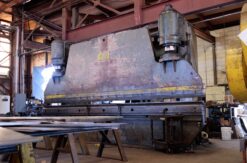
- Fabrication Machines — Cutting and forming equipment for sheet and plate fabrication
Ready to get more out of your floor? Contact Southwest Machine Technologies to talk through the right machine and process for your Texas shop.
Frequently Asked Questions
How do I choose the right carbide insert grade?
Start with the workpiece material, not the price. Match the substrate and coating to what you are cutting—steel, stainless, cast iron, aluminum, or a high-temperature alloy each favor different grades. Then refine geometry (nose radius, rake, chipbreaker) for the operation. An insert chosen for material and operation will almost always out-earn one chosen for lowest unit cost.
Why does cutting faster wear tools out so quickly?
Because tool life and cutting speed are inversely related through Taylor’s tool life equation, and the curve is steep. A modest speed increase can cut tool life sharply, since higher speed means more heat at the cutting edge. The fastest settings are rarely the most profitable once tooling cost and tool-change time are included.
Is premium tooling worth the higher price?
Often, yes—when measured per finished part rather than per insert. A premium edge that lasts longer and holds size reduces both tooling spend and the spindle time lost to tool changes, and it scraps fewer out-of-tolerance parts. Track parts-per-edge and change-over time to see the real cost; the cheaper insert frequently loses.
Does tooling affect part accuracy, not just cost?
Yes. A sharp, correctly matched tool generates lower cutting forces, which reduces workpiece deflection and chatter and improves surface finish and dimensional consistency. Worn or mismatched tools push harder, vibrate more, and drift out of tolerance faster, so tooling is part of the accuracy conversation, not separate from it.
Works Cited
Wojciechowski, Stanisław, et al. “Tribological Aspects of Cutting Tool Wear during the Turning of Stainless Steels.” Materials, vol. 13, no. 1, 2020, pmc.ncbi.nlm.nih.gov/articles/PMC6981806/. Accessed 14 June 2026.
Zhang, Xi, et al. “A Tool Life Prediction Model Based on Taylor’s Equation for High-Speed Ultrasonic Vibration Cutting Ti and Ni Alloys.” Coatings, vol. 12, no. 10, 2022, www.mdpi.com/2079-6412/12/10/1553. Accessed 14 June 2026.