Southwest Machine Technologies | Houston, TX
For most of the past decade, a Texas fabrication shop that needed precision-cut structural tube or pipe had two realistic options: plasma cut it and grind the edge, or send the work out. Neither was satisfying. Plasma cutting delivers speed but not the edge quality that downstream welding and assembly operations increasingly require. Outsourcing introduces lead time, freight cost, and a dependency on external suppliers that has become progressively harder to justify as reshoring drives domestic production volume higher and customers shorten their delivery expectations.
Tube laser cutting has resolved that tradeoff — and the market data confirms that the resolution is arriving at scale. North American tube laser cutting equipment purchases have increased 12 percent year-over-year as fabricators invest in domestic capacity for HVAC components, agricultural machinery, and structural steel production. Architectural steel tube cutting volumes are growing at 7.5 percent annually. And the broader heavy-duty laser tube cutting machine market is expanding at 8.8 percent CAGR, driven by exactly the application categories that define Texas’s fabrication base: energy infrastructure, industrial equipment, structural construction, and agricultural manufacturing.
The Industries Driving Tube Laser Demand in Texas
Texas is one of the most concentrated markets in the country for industries that consume tube and pipe in large volumes. The oil and gas sector requires precise structural members, support frames, and process piping components. Agricultural equipment manufacturers across the Panhandle, Central Texas, and the I-35 corridor produce row crop equipment, trailers, and implements built on square and rectangular tube. The construction industry — particularly the commercial and industrial building sector that has accelerated across Dallas-Fort Worth, Houston, Austin, and San Antonio — depends on precision-cut structural steel sections for frames, connections, and architectural elements. Power infrastructure and data center construction, two of the fastest-growing segments in 2026, consume large quantities of fabricated steel tube in their support structures and enclosures.
What all of these industries share is a quality expectation that has risen steadily as downstream processes have become more automated and less forgiving. A construction welding robot designed to work from a template expects a consistently prepared joint face. An agricultural equipment assembly line calibrated for a specific wall thickness and end-face perpendicularity does not accommodate variations that a plasma-cut or saw-cut tube introduces. When the production standard demands repeatability, tube laser is not a luxury — it is the specification the application requires.
The energy infrastructure sector adds another dimension specific to Texas. The Gulf Coast’s petrochemical and refining complex, along with the state’s expanding power generation and transmission buildout, generates consistent demand for precisely cut pipe and tube sections that meet dimensional tolerances and surface finish requirements incompatible with thermal cutting processes that leave rough edges and heat-affected zones requiring secondary work.
As the broader investment wave in Texas manufacturing continues — a trend covered in detail in CNC Fiber Laser Cutting Machines Are Reshaping Texas Fabrication in 2026 — tube laser capability is becoming the differentiating factor that separates fabricators who can handle the full scope of a structural job from those who can only process the flat sheet portion.
What Tube Laser Technology Actually Does Differently
The difference between a tube laser and a conventional saw or plasma cutter is not simply precision, though precision is significant. The more important difference is capability. A tube laser with CNC control and FSCut software can process round, square, rectangular, and a wide range of specialty profiles — including I-beam, C-channel, and custom extrusions — with cope cuts, saddle cuts, slot cuts, and end miters executed in a single programming pass. What would require a saw for the primary cut, a drill or plasma for secondary features, and a grinder for edge preparation becomes a single-machine operation with a single setup.
That workflow compression has direct consequences for throughput and labor. A fabricator processing fifty structural members per shift on a combination of saw, drill press, and manual finishing might require three or four operators and multiple material handling moves between stations. The same work volume on a tube laser with auto loading and unloading runs with one operator monitoring the system — and the finished parts leave the machine ready for fit-up and welding without secondary prep.
The economics of that compression are compelling at Texas wages and labor availability conditions. Skilled welding and fitting labor is in short supply across the state, and every hour those workers spend on pre-weld grinding and edge preparation is an hour they are not welding. Tube laser systems that eliminate that preparatory work effectively extend the productive capacity of the welding crew without adding headcount. In a market where finding and retaining skilled fabricators is consistently cited as a top operational constraint, that multiplier effect carries real business value.
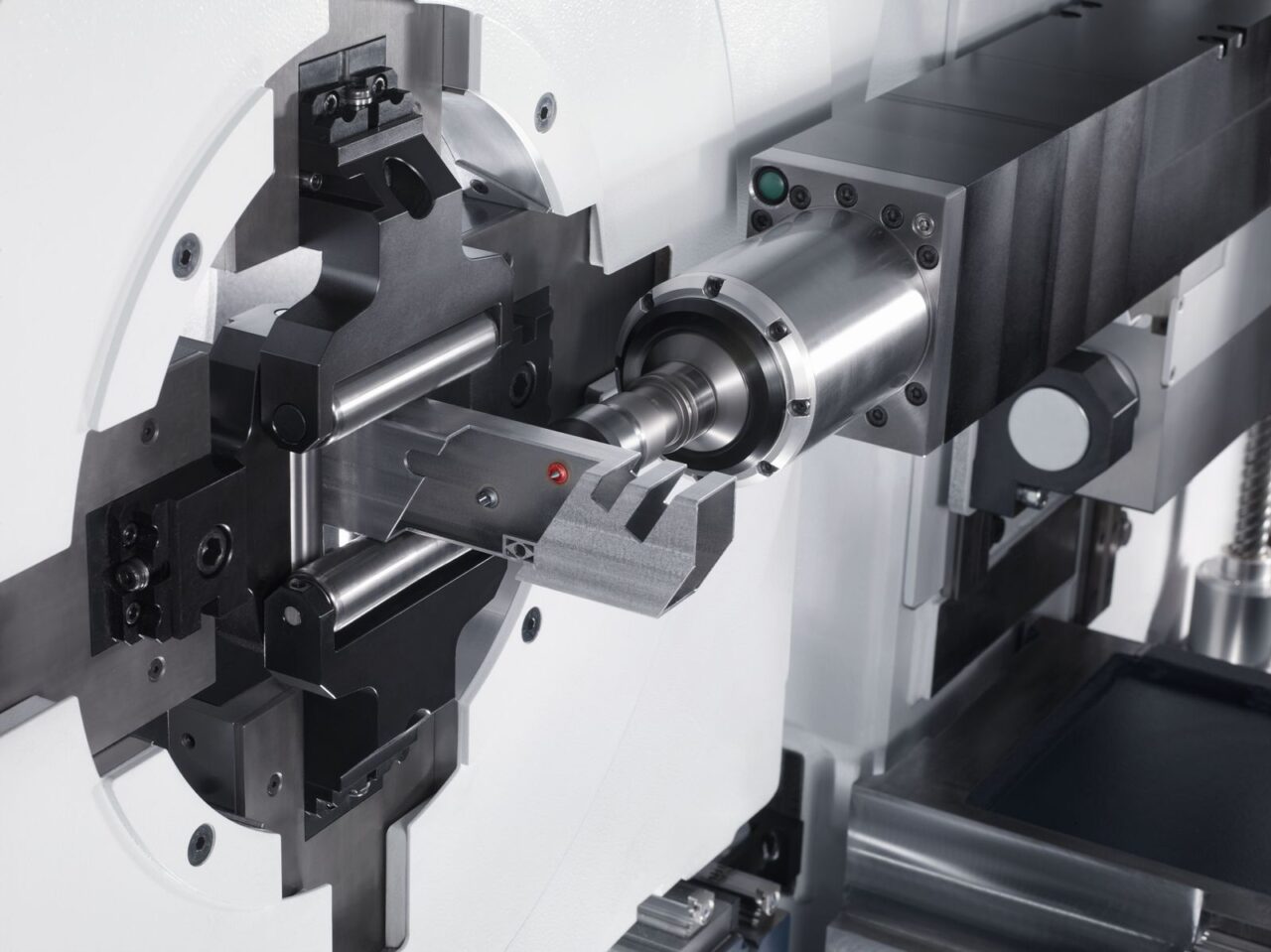
Processing lengths of 20 feet to 40 feet cover the full range of structural tube applications from light architectural work to heavy structural members. Two-chuck and three-chuck clamping systems accommodate wall thickness variation and provide the support required to maintain dimensional accuracy across the full length of a heavy section. Auto loading and unloading systems integrated with the laser cell enable lights-out operation for high-volume runs on consistent profiles — a production capability that changes the cost-per-part calculus on contracts that would be marginal on a manually loaded system.
The Case for Adding Tube Laser Alongside Sheet Capability
Many Texas fabricators who already run flat sheet laser cutting are now evaluating tube laser as a second-stage investment — and the business case for combining both capabilities is stronger than for either system in isolation. The same customer base that requires precision-cut sheet metal components also requires precision-cut structural tube: the shop that can quote both as a single-source supplier eliminates a coordination step that customers value and competitors without combined capability cannot match.
Combining sheet and tube laser capability also changes how a shop approaches quoting. Jobs that previously required subcontracting the tube component — and building subcontractor lead time and margin into the quote — can now be handled entirely in-house. That changes both the economics of the quote and the delivery commitment the shop can make, which are exactly the two variables that determine whether a fabricator wins or loses competitive bids on complex assemblies.
The practical questions around adding tube laser capability — system selection, specification matching to your specific profile inventory, and the service support structure you need to protect uptime — are examined directly in How Texas Fabrication Shops Should Evaluate a Fiber Laser Purchase in 2026.
Southwest Machine Technologies
Southwest Machine Technologies serves fabrication shops throughout all 254 counties of Texas with high-performance CNC fiber laser cutting machines backed by dependable U.S. service and support.
Our Fiber Laser Offerings Include:
- Dener USA Sheet Fiber Lasers — 5’x10′, 6’x12′, and 8’x20′ tables, 3kW–20kW resonators, auto shuttle table, auto-focusing head, FSCut control
- Dener USA Tube Lasers — 20’–40′ tube processing lengths, 3kW–12kW, 2- and 3-chuck systems, auto loading/unloading, FSCut control
Ready to See What Fiber Laser Can Do for Your Shop? Contact SWMT to request a quote or discuss which system fits your material mix, volume, and budget.
Works Cited
“Tube Laser Cutting Machine Market Outlook 2025–2032.” Intel Market Research, www.intelmarketresearch.com/machines/8221/tube-laser-cutting-machine-market. Accessed 26 Mar. 2026.
“Why Metal Fabrication Remains a Dynamic Business in 2026.” The Fabricator, Fabricators & Manufacturers Association, Feb. 2026, www.thefabricator.com/thefabricator/blog/shopmanagement/why-metal-fabrication-remains-a-dynamic-business-in-2026. Accessed 26 Mar. 2026.
Related Articles
- CNC Fiber Laser Cutting Machines Are Reshaping Texas Fabrication in 2026
- How Texas Fabrication Shops Should Evaluate a Fiber Laser Purchase in 2026