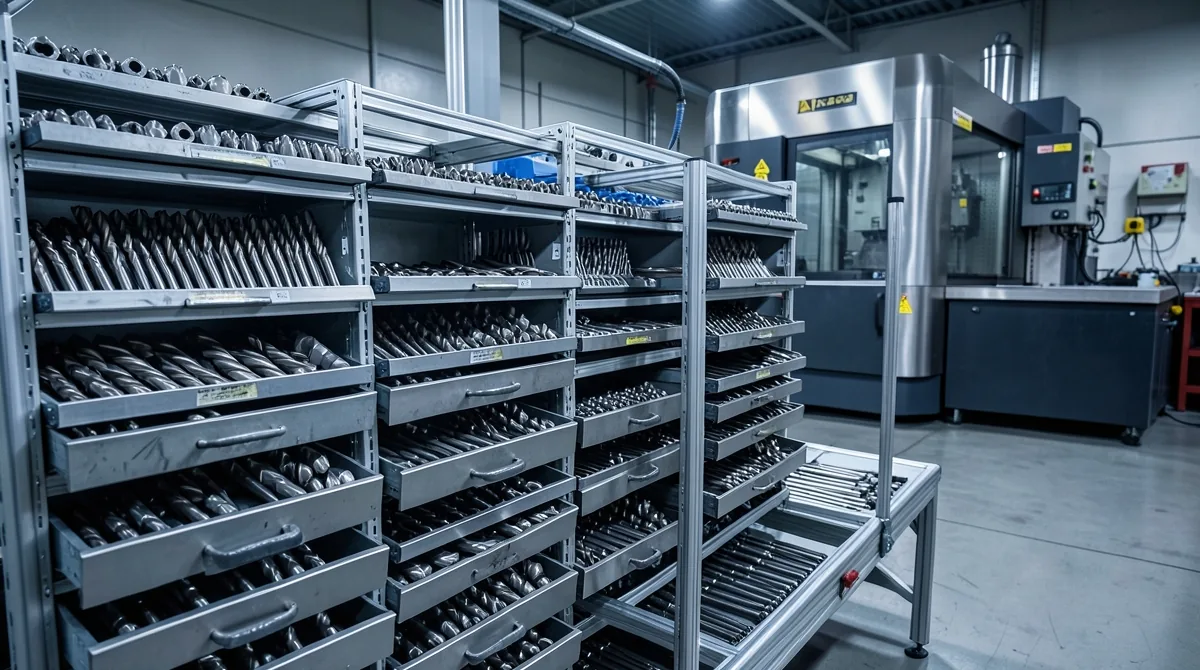
Cutting tool prices have moved and most shops have not repriced around them. The BLS producer price index for cutting tools and accessories reached 267.978 in August 2026. In October 2025 it sat at 248.446, so the category is up about 8 percent in ten months.
Selling prices have not kept pace. The Dallas Fed’s August 2026 Texas Manufacturing Outlook Survey put the raw materials prices index at 44.1. Finished goods prices came in at 22.7 over the same month. Texas manufacturers are paying more and charging comparatively less.
That gap comes out of the margin on every part.
Well-run shops already track this
Walk into a shop with tight cost control and you find the same habits. Tool life is logged by operation, not guessed. Insert grades are matched to the material rather than to whatever the crib has. Workholding sits on the capital schedule rather than the consumables line. Someone owns the coolant concentration.
Those shops can tell you tooling cost per part within a few cents. The rest of the market treats tooling as overhead and finds out at year end.
Cost per edge, not cost per insert
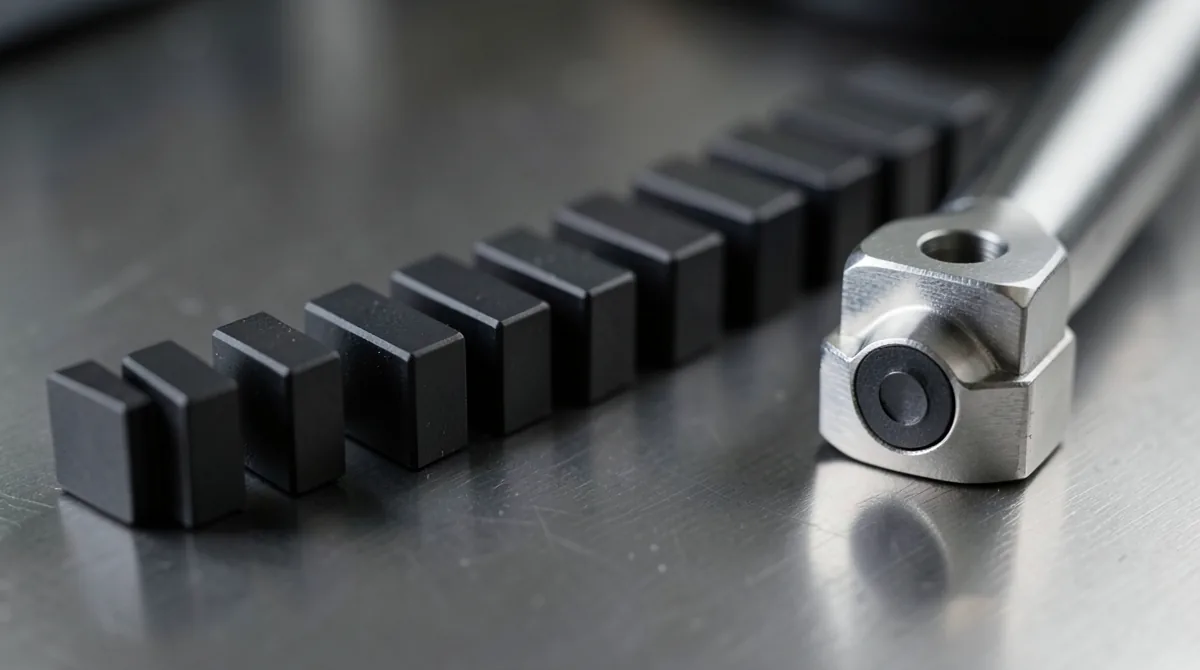
Start with the arithmetic that changes buying behavior. An insert with four usable edges at $12 costs $3 per edge. A $16 insert with the same four edges costs $4 per edge, which looks worse until you count parts.
Run 40 parts per edge on the cheaper insert and 60 on the dearer one. Cost per part lands at 7.5 cents against 6.7 cents. The more expensive insert is cheaper, and the crib sheet that tracks unit price alone shows the opposite.
Two things make that arithmetic real rather than theoretical. Somebody has to count parts per edge on the actual job, then record it where the next person can find it. Neither task is hard, and both get skipped.
The lines that do not show up on the tooling budget
Tooling cost is bigger than the tooling invoice. Four other lines belong in the calculation.
Setup labor. Workholding that takes 90 minutes to change over on a weekly job is a payroll line, not a fixture line. Quick-change tool posts and collet systems buy back hours that appear nowhere in the tooling spend.
Scrap and rework. A worn edge that runs 20 parts past its limit produces a finish problem discovered at inspection. Those parts carry full material and machine time.
Spindle time. Feeds and speeds that protect tool life at the cost of cycle time are a trade. It is worth knowing which side of it you are on, because a tool costing 30 percent more that runs 20 percent faster changes the machine rate math.
Measurement. Parts checked with the wrong instrument, or checked too late, generate scrap. That scrap gets booked against material rather than against the gaging decision behind it. We worked through the question in where measurement belongs on a modern job.
Coolant is a tooling cost
Most shops book metalworking fluid as a supply. It behaves like a tooling variable.
Concentration outside the recommended band shortens tool life, degrades finish, and raises the odds of bacterial problems in the sump. A refractometer costs very little against the tool life it protects. Checking it weekly takes minutes. The full picture, including the air-quality requirements that come with it, sits in metalworking fluid management for a Texas shop.
Consolidation is a real lever
Tooling spend is fragmented in most shops. Cutting tools from one source, workholding from another, measuring equipment from a third, coolant from a fourth, each with its own terms, its own freight, and its own contact who knows part of the picture.
Southwest Machine Technologies represents cutting tools, taps and end mills, drills, toolholding and workholding, power chucks and rotary tables, barfeeders, probing systems, precision measuring instruments, and metalworking fluids. One purchase order and one conversation can cover the whole tooling picture rather than four.
The practical benefit is not only freight. It is having one supplier who can look at the part, the machine, the workholding, and the fluid together, because those four decisions interact and are usually made separately.
Where to start this week
Pick one job you run repeatedly. Count parts per edge for a week and write it down. Time the setup. Note the scrap.
Then price the same job with the tooling decision changed, whether that means a different grade, different workholding, or a corrected coolant concentration. The comparison takes an afternoon and usually pays for itself on the first repeat order.
Do it on your highest-volume job rather than your hardest one. The hardest job is where the money feels like it goes. Repeat work is where it actually goes.
Tooling is a system, not a purchase
Cutting tool prices are up roughly 8 percent since last autumn and selling prices have not followed. Shops absorbing that quietly are the ones without a number for tooling cost per part.
The shops that have the number make different decisions. They buy the more expensive insert when it runs longer, they capitalize workholding that removes setup hours, and they treat coolant as a variable that affects tool life. None of that requires new machines. It requires measuring what the current ones consume.
Frequently Asked Questions About Tooling Cost Per Part
01How do I calculate tooling cost per part?
Divide the cost of a cutting edge by the number of parts that edge produces, then add workholding amortization, setup labor, and scrap attributable to tooling. Counting parts per edge on one repeat job for a week gives you the base number most shops are missing.
02Why have cutting tool prices increased in 2026?
The BLS producer price index for cutting tools and accessories reached 267.978 in August 2026, up from 248.446 in October 2025, an increase of roughly 8 percent. Tariff activity on imported metal articles and broader input cost pressure both contribute to the movement.
03Can a more expensive insert actually be cheaper per part?
Yes, whenever the longer-running edge produces enough additional parts to offset its price. A $16 insert running 60 parts per edge beats a $12 insert running 40, at 6.7 cents against 7.5 cents per part. Unit price alone hides this reversal.
04Should workholding be treated as a capital purchase or a consumable?
Workholding belongs on the capital schedule when it removes recurring setup hours. A quick-change system that saves an hour on a weekly job returns roughly 50 hours of labor annually, which is a capital return rather than a supply expense.
05How much does coolant concentration affect tool life?
Concentration below the supplier’s recommended band reduces lubricity, which shortens edge life and degrades surface finish. Because worn edges look like a tooling problem, shops frequently book the cost against tooling rather than fluid. A weekly refractometer check takes about two minutes.
Southwest Machine Technologies: Tooling and Machine Tools for Texas Shops
Southwest Machine Technologies is the exclusive Texas dealer for Smart Machine Tools and HNK, working with machine and fabrication shops from Houston to El Paso. Our sales team worked on shop floors, and our service technicians are trained on FANUC controls for install, training, and maintenance.
Our Tooling and Equipment Includes:
- Tooling and Accessories — cutting tools, workholding, toolholding, probing, measuring instruments, and metalworking fluids
- Turning Machines — 2-axis, 3-axis, and multi-axis turning centers for Texas shops
Working out a cost-per-part number?
Talk to us about your part and tell us the material, the operation, and the volume.
Works Cited
- Federal Reserve Bank of Dallas. “Texas Manufacturing Outlook Survey.” Federal Reserve Bank of Dallas, 31 Aug. 2026, www.dallasfed.org/research/surveys/tmos/2026/2608.
- United States, Department of Labor, Bureau of Labor Statistics. “Producer Price Index by Commodity: Machinery and Equipment: Cutting Tools and Accessories [WPU1135].” Retrieved from FRED, Federal Reserve Bank of St. Louis, 10 Sept. 2026, fred.stlouisfed.org/series/WPU1135.