
Unlocking Success: Materials for 3-Axis Milling in Houston
Choosing the right materials for 3-axis CNC milling is one of the most critical decisions in any machining project. 3-Axis Milling, often referred to as CNC milling, is a versatile machining process used across industries in Houston and around the world. As a Machine Tool specialist serving Texas manufacturers, we understand that this technology has revolutionized manufacturing and become an integral part of the production process for businesses from aerospace to medical device fabrication. While 3-axis milling machines can work with a wide range of materials, choosing the right material for your specific project directly determines your tolerances, cycle times, tooling costs, and finished part quality. In this guide, we cover the most suitable materials for 3-axis milling in Houston, Texas — including what to expect from each one and where they’re used in real applications.
Metals
Metals are some of the most commonly milled materials in Houston due to their wide range of applications and durability. Various types of metals can be effectively machined using 3 Axis Milling machines, including:
- Aluminum:
Aluminum is a lightweight, highly machinable metal frequently used in the aerospace and automotive industries. Its low density makes it ideal for weight-sensitive applications, and it carries one of the highest machinability ratings of any structural metal — making it fast and cost-effective to machine. Alloys like 6061-T6 and 7075-T651 are the most common choices on Houston shop floors, covering everything from structural brackets to aerospace components.
- Steel:
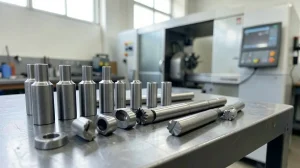
Steel — including carbon steel and stainless steel grades — is a versatile material with high strength and durability used for structural parts and industrial machinery. Carbon steel grades like 1018 and 1045 machine easily; stainless grades like 303, 304, and 316 require more attention to feeds and speeds to avoid work-hardening. In Houston’s oil and gas sector, 316 stainless is a standard choice for components exposed to corrosive environments.
- Brass and Copper:
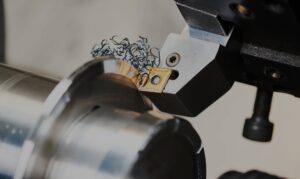
Brass and copper are known for excellent electrical conductivity and machine cleanly at high speeds. They are widely used in electrical components, plumbing fixtures, fittings, and decorative applications. Free-machining brass (C360) in particular produces short, well-broken chips and requires minimal coolant — one of the easiest materials to run on a 3-axis mill.
- Titanium:
Titanium is prized for its high strength-to-weight ratio and corrosion resistance, making it common in aerospace and medical applications. Grade 5 (Ti-6Al-4V) is the standard aerospace alloy. Titanium requires aggressive, consistent feed rates to prevent work-hardening at the cutting edge, along with high-pressure flood coolant to manage heat buildup. 3-axis CNC mills can shape titanium into precise parts when the machine is rigid and the tooling strategy is correct.
- Bronze:
Bronze is a corrosion-resistant alloy commonly used for bearings, bushings, wear plates, and sculptures. Its machinability makes it well-suited for intricate designs and tight-tolerance functional components, particularly in industrial equipment and marine applications common across the Houston region.
Plastics
Plastic materials are prevalent in Houston’s manufacturing landscape due to their versatility, chemical resistance, low cost, and ease of machining. Engineering plastics cover a wide range of performance requirements across medical, semiconductor, food processing, and consumer product industries.
- Acrylic:
Acrylic is used for transparent parts, signage, light guides, and display cases. 3-axis CNC milling creates precise cuts and polished edges on acrylic, though it requires sharp tooling and consistent feeds dull tooling chips rather than cuts. For optical clarity after machining, edges must be polished as a secondary step.
- Nylon:
Nylon is a strong, lightweight plastic used for gears, bushings, rollers, and consumer products. It machines to tight tolerances with CNC milling. One important note: nylon absorbs moisture and can shift dimensionally after machining, so for tight-tolerance parts, stabilize stock in a low-humidity environment before cutting.
- Polyethylene and Polypropylene:
These thermoplastics are valued for their chemical resistance and are used in containers, pipes, food processing components, and automotive parts. 3-axis milling produces accurate dimensions and smooth finishes on both materials. UHMWPE (ultra-high molecular weight polyethylene) is a particularly useful variant for conveyor wear parts and marine applications.
- Delrin (Polyoxymethylene):
Delrin is the most machinable engineering plastic excellent dimensional stability, low friction, and clean chip generation. It’s the first choice for gears, mechanical components, and fluid handling parts where consistent tolerances and low maintenance are required. No coolant is typically needed for most Delrin operations.
- PTFE (Polytetrafluoroethylene): PTFE, commonly known as Teflon, is an ideal material for applications that require low friction, such as bearings and seals. It machines well with 3 Axis Milling.

Composites
Composite materials are created by combining different substances to produce a material with improved properties. They are commonly used in high-performance applications and are suitable for 3 Axis Milling in Houston. Common composite materials include:
- Carbon Fiber Reinforced Composites:
Carbon fiber reinforced polymer (CFRP) is lightweight and exceptionally strong, used in aerospace structures, UAV frames, and high-performance industrial components. It requires diamond-coated or PCD tooling for production runs standard carbide dulls rapidly against the abrasive carbon fiber reinforcement. Proper dust extraction and operator PPE are required, as CFRP machining generates fine abrasive dust.
- Fiberglass:
Fiberglass composites are widely used in boat manufacturing, automotive components, electrical insulation panels, and construction. CNC milling allows precise shaping of fiberglass parts. Like CFRP, fiberglass is abrasive to tooling diamond tooling extends tool life significantly. Delamination at cut edges is managed through climb milling strategies and proper work holding.
Wood
Wood is suitable for 3-axis milling in Houston for furniture manufacturing, cabinetry, tooling patterns, and woodworking. Hardwoods oak, maple, walnut, cherry and softwoods like pine can all be milled with CNC equipment to create intricate designs and precise cuts. Standard carbide tooling works well for wood; the main considerations are chip evacuation at speed and workholding on irregular blanks. For shops where wood routing is the primary work, a dedicated CNC router is typically a more cost-effective platform than an industrial machining center.
Considerations for Material Selection
When choosing a material for 3 Axis Milling, it’s important to consider several factors:
- Material Properties: Understand the material’s properties, such as strength, weight, and thermal conductivity, to ensure it suits your project requirements.
- Budget: Consider the cost of the material, as some materials may be more budget-friendly than others.
- Machinability: Different materials require different tooling and machining parameters. Ensure your chosen material is compatible with the milling process.
- End Use: Think about the application of the milled part. For example, aerospace components may require lightweight, high-strength materials, while decorative items may prioritize aesthetics.
- Environmental Factors: Some materials may be more resistant to environmental factors, such as moisture, chemicals, or UV exposure, which could affect the choice of material.

SWMT’s Diverse Offerings for 3-Axis Milling in Houston, Texas
Southwest Machine Technologies, a trusted name in the world of machine tools, fabrication equipment, and application/machine maintenance in Texas, is your one-stop solution for all things related to 3 Axis Milling. Our brand offers a wide range of CNC milling and turning machines, including Smart Machine Tools, HNK, and Fuji Machine America, ensuring that you have the perfect machinery for your specific project. We cater to various industries in Houston, delivering the highest quality services and equipment. Our service technicians are not only trained to install and instruct but also provide maintenance for all FANUC-controlled machines, guaranteeing uninterrupted operations. Whether it’s CNC Milling, CNC Turning, CNC machine sales Texas, or fabrication services, SWMT is your go-to partner for precision and performance in the world of 3-Axis Milling. Choose SWMT for excellence in machining technology and unmatched customer satisfaction.
Whether you need guidance on CNC milling machine selection, want to understand what materials your current equipment can handle, or are ready to upgrade your machining capacity, contact SWMT to speak directly with our machine tool specialists.
Frequently Asked Questions: 3-Axis CNC Milling Materials
Q: What materials can be machined on a 3-axis CNC mill?
A 3-axis CNC mill can process metals (aluminum alloys, carbon steel, stainless steel, titanium, brass, copper, bronze), engineering plastics (Delrin, Nylon, PEEK, Acrylic, UHMWPE, PTFE), composites (carbon fiber, fiberglass/G10), and wood. The constraint is not material type but geometry — 3-axis machines access flat surfaces, pockets, and simple contours. Features on multiple faces or compound angles require 4-axis or 5-axis setups.
Q: What is the most machinable metal for CNC milling?
Aluminum 6061 is the most commonly used and most machinable engineering metal for CNC milling. It carries a machinability rating of approximately 100% on the industry-standard scale, meaning it cuts efficiently at high speeds with standard carbide tooling and low cutting forces. Brass (C360 free-machining) is comparable in machinability but less common for structural parts.
Q: What aluminum alloy is best for 3-axis CNC milling?
For general-purpose work, 6061-T6 is the correct choice — good strength, excellent machinability, anodizes cleanly, and is widely available. For high-strength aerospace applications, 7075-T651 is the standard. For large flat fixtures and tooling plates where dimensional stability matters, MIC-6 cast aluminum plate is preferred because it stays flat after machining.
Q: Is titanium difficult to machine on a 3-axis mill?
Yes — titanium (particularly Grade 5, Ti-6Al-4V) is demanding to machine. Its machinability rating is approximately 20–30% of aluminum. The core challenge is heat: titanium has very low thermal conductivity, so heat concentrates at the cutting edge rather than flowing into the chip. This requires aggressive feed rates to generate proper chip evacuation, high-pressure flood coolant, and sharp tooling. Dwell cuts on titanium — stopping feed while the spindle runs — immediately work-hardens the surface.
Q: What plastic materials are best for 3-axis CNC milling?
Delrin (Acetal/POM) is the best all-around engineering plastic for 3-axis milling — it cuts cleanly, holds tolerances, and doesn’t require coolant. For high-temperature or chemically demanding applications, PEEK is the choice. For optical parts, Acrylic. For food processing and conveyor components, UHMWPE. For seals and chemical-resistant parts, PTFE — but note that PTFE creeps under load, so hold tolerances generously.
Q: Can a 3-axis CNC mill cut carbon fiber?
Yes, but it requires diamond-coated or PCD (polycrystalline diamond) tooling for any production volume. Standard carbide tooling dulls within minutes on carbon fiber reinforced polymer (CFRP) due to the abrasive nature of the carbon fiber reinforcement. CFRP machining also generates fine abrasive dust — proper dust extraction and PPE are required.
Q: What is the difference between machining aluminum and stainless steel on a 3-axis mill?
The difference is significant. Aluminum cuts at 3–5x the spindle speed of stainless steel, generates lower cutting forces, and doesn’t work-harden. Stainless steel — particularly 304 and 316 — work-hardens when the tool dwells, requiring consistent, aggressive feed rates to stay ahead of the hardened layer. Stainless also generates more heat at the cutting zone, demanding better coolant delivery. Tool life on stainless is a fraction of tool life on aluminum for the same toolpath.
Q: What materials require 5-axis instead of 3-axis milling?
The machine configuration is driven by part geometry, not material. If a part has features on three or more faces, compound angles that cannot be fixtured on a 3-axis machine, or freeform surfaces, 5-axis is required regardless of material. The materials themselves — titanium, Inconel, stainless — can physically be cut on a 3-axis machine. It’s the geometry that pushes the work to 5-axis. For a full breakdown, see the guide on 5-axis CNC machining.
Q: What CNC milling materials does the Houston oil and gas sector use most?
316 stainless steel for subsea and chemical-exposure components, 4140 alloy steel for downhole tool bodies, titanium Grade 5 for corrosion-critical offshore parts, and Inconel 625 or 718 for high-temperature wellhead components. All require specific tooling strategies and material traceability documentation that Houston’s energy corridor job shops are set up to handle.
Q: How hard can a material be for CNC milling on a 3-axis machine?
Standard 3-axis milling is practical up to approximately 48–50 HRC (Rockwell hardness C scale) with solid carbide tooling and conservative parameters. Above that, conventional milling becomes inefficient — tool life collapses and material removal rates drop to the point where grinding or EDM is a better process choice. Pre-hardened 4140 (28–32 HRC) machines acceptably. D2 tool steel in hardened condition (60–62 HRC) does not.