
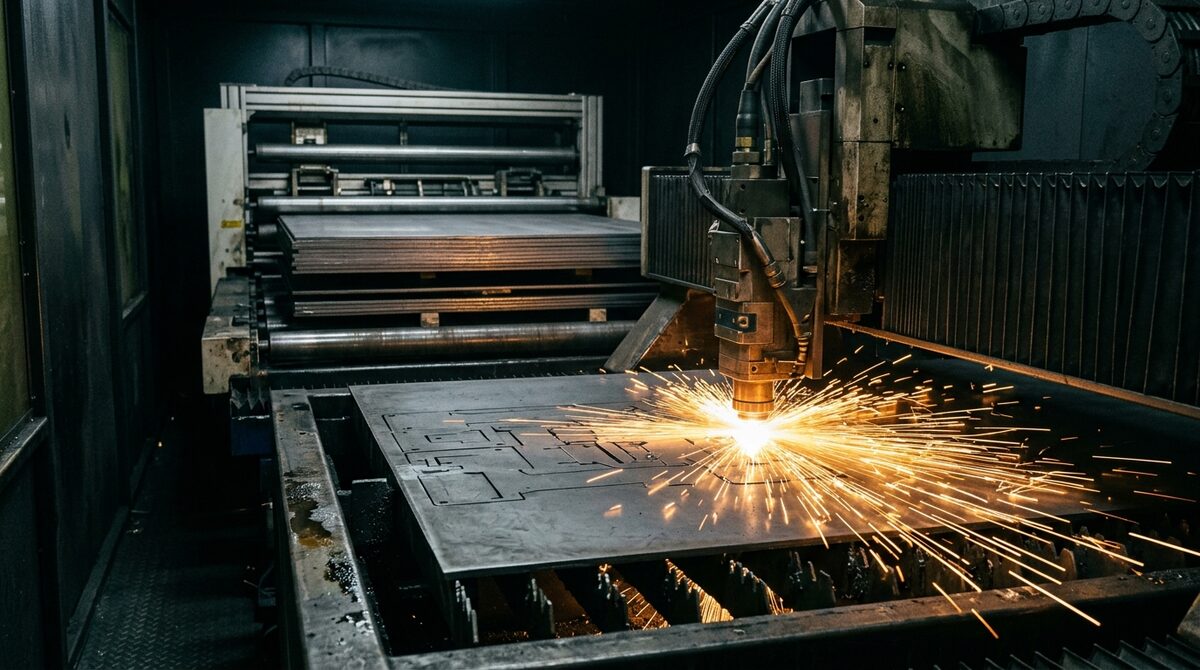
Open post Fiber laser cutting head tracking through sheet steel, brilliant cut point and a fan of sparks, automated sheet loader...

Higher Power, Fewer Hands: How the 2026 Fiber Laser Is Answering Texas’s Labor Gap

Southwest Machine Technologies — Providing high quality products at unmatched value with unrivaled support.

The fiber laser a Texas fabrication shop bought five years ago and the one it can buy today are barely the same machine. Resonator power has climbed, automation that used to be exotic is now standard, and control software has gotten smart enough to run a cutting cell with one set of hands instead of three. That shift matters more than ever in 2026, because the constraint squeezing most shops isn’t demand for cut parts — it’s finding the skilled people to make them. The modern fiber laser has quietly become a labor strategy.

The Power Curve Keeps Climbing

Not long ago, a 3- to 4-kilowatt fiber laser was a serious machine. Today, resonators reaching 12, 15, and 20 kilowatts and beyond are moving into everyday shops, and the jump changes the economics of the work. Higher power cuts thick plate that used to be plasma or saw work, pushes feed rates dramatically faster on thin material, and — with the right assist-gas strategy — lets fabricators cut more parts per hour while trimming consumable costs. It also widens the range of jobs a single machine can take on, from delicate stainless sheet to heavy structural steel. For shops quoting a broad mix of work, that flexibility can be the difference between winning a contract and passing on it. Power alone doesn’t guarantee profit, but DENER fiber laser cutting machines raise the ceiling on what a shop can profitably cut.

Automation Is the Real Story
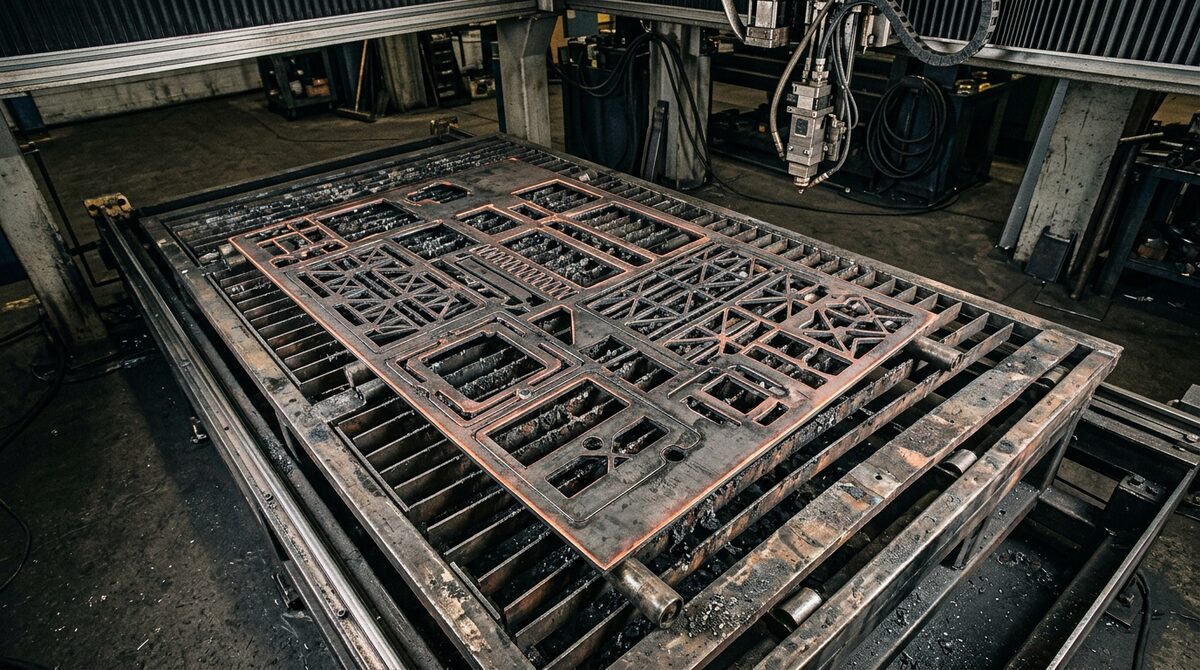
Finished laser-cut steel sheet lifted clear on the shuttle table, intricate cut-outs and the skeleton remaining, cut...

Raw speed means little if parts pile up waiting for an operator. That’s why the biggest change in 2026 fiber laser cutting isn’t the beam — it’s what surrounds it. Automatic shuttle tables swap material in seconds, auto-loading and unloading systems feed sheet and clear finished parts without a forklift, and tube-handling systems index stock through the cutting zone untouched. Together, they let one worker supervise a cell that once needed a full crew, and in many shops the laser now runs unattended into a second or third shift. That capability lands squarely on the industry’s hardest problem. The Manufacturing Institute projects U.S. manufacturers could need as many as 3.8 million workers by 2033, with roughly 1.9 million jobs at risk of going unfilled if the talent gap isn’t closed. Automation doesn’t replace skilled people — it multiplies the ones a shop already has.

Smarter Controls Lower the Skill Barrier

Just as important as power and automation is the intelligence now built into the machine. Auto-focusing heads set themselves for each material and thickness, real-time monitoring watches the cut and catches problems before they scrap a sheet, and modern nesting software lays out parts to squeeze the most from every piece of stock. The practical effect is that a newer operator can produce cuts that once demanded years of hands-on experience. In a market where seasoned laser techs are scarce and expensive, that lowered skill barrier is its own kind of automation — it shortens training time, reduces costly mistakes, and lets a shop put a productive machine in the hands of the people it can actually hire. For many fabricators, that’s the feature that turns a capital purchase into a genuine hedge against the labor market.

Why the Timing Favors Investment

The macro backdrop still rewards adding capacity. U.S. spending on manufacturing construction was running near a $186 billion annual pace in early 2026 — down from its 2024 peak but still roughly double what it was before the reshoring wave began, according to U.S. Census Bureau data. Those factories need fabricated metal: brackets, frames, enclosures, structural tube, and thousands of cut-to-print parts. For Texas shops serving energy, aerospace, agriculture, and construction customers, order books have stayed full even as the labor pool has thinned. That combination — steady demand, scarce labor — is exactly the environment where an automated, high-power fiber laser pays for itself fastest.

Tube Lasers Open New Revenue

The sheet laser gets the attention, but tube and profile cutting is where many shops are finding fresh margin. A dedicated tube laser processes round, square, and rectangular structural sections with cut-to-length precision, weld prep, and hole features in one operation — work that used to mean sawing, drilling, and hand layout across several stations. Bringing that in-house captures revenue shops previously subcontracted or turned away, and it pairs naturally with the rest of a modern sheet metal fabrication line.

What Texas Shops Should Weigh

The right machine depends on the work. Shops running mostly thin gauge may prioritize speed and automation over maximum wattage; those cutting heavy plate or structural steel benefit from higher power. Just as important is service: a fiber laser earns money only when it’s running, so U.S.-based support, parts availability, and operator training should weigh as heavily as spec-sheet numbers. The goal isn’t the flashiest machine — it’s the one that keeps cutting profitably shift after shift.

That’s where Southwest Machine Technologies comes in. SWMT supplies Dener USA sheet and tube lasers — with resonators from 3kW to 20kW, auto shuttle tables, and automatic load/unload systems — backed by U.S.-based service across all 254 Texas counties. It’s high-power, automation-ready cutting built to help shops do more with the crews they already have.

SWMT: Fabrication Cutting Solutions for Texas

Southwest Machine Technologies equips machine and fabrication shops across all 254 Texas counties with high-performance cutting and forming machinery, plus the parts, accessories, and maintenance support to keep it running.

Our Services Include:

Facing a labor crunch? Contact SWMT to spec a fiber laser cell that fits your part mix and your crew.

Works Cited

  1. “Manufacturers Need as Many as 3.8 Million New Employees by 2033.” The Manufacturing Institute, 3 Apr. 2024, themanufacturinginstitute.org/manufacturers-need-as-many-as-3-8-million-new-employees-by-2033/. Accessed 22 July 2026.
  2. “Total Construction Spending: Manufacturing in the United States (TLMFGCONS).” FRED, Federal Reserve Bank of St. Louis, U.S. Census Bureau, 1 June 2026, fred.stlouisfed.org/series/TLMFGCONS. Accessed 22 July 2026.
Open post

Texas Manufacturing Rebounds in 2026: Why Fiber Laser Technology Is Leading the Recovery

Southwest Machine Technologies: Precision Equipment for Texas Fabrication

Texas factory activity posted its strongest expansion signal in months during January 2026, marking a dramatic reversal from December’s contraction. The Federal Reserve Bank of Dallas reported the production index surged to 11.2 from negative 3.0—a swing of more than 14 points that signals renewed momentum across the state’s industrial base. For fabrication shops navigating this rebound, fiber laser technology cutting systems have emerged as the technology enabling manufacturers to capitalize on returning demand without the workforce expansion that remains stubbornly difficult.

The Dallas Fed’s Texas Manufacturing Outlook Survey captured this sentiment directly from business executives. New orders jumped 18 points to 11.8, while capacity utilization climbed 12 points to 7.1. One machinery manufacturer responding to the survey described conditions bluntly: “Business is booming. We are buying new equipment to increase production, since we are falling behind on our inventory requirements.”

This equipment investment surge reflects a broader transformation in how Texas manufacturers approach production capacity. Rather than competing for scarce skilled workers in a market where 79 percent of manufacturing executives cite labor shortages as their greatest challenge, shops are investing in automation technologies that multiply the output of existing teams. DENER fiber laser cutting machines for Texas sit at the center of this strategy.

The Technology Advantage Driving Investment

Fiber laser cutting machines deliver performance characteristics that make them particularly valuable during a manufacturing recovery. Unlike traditional CO2 laser systems, fiber technology converts electrical power to cutting energy at efficiencies between 20 and 30 percent—roughly three to four times better than CO2 alternatives. This efficiency translates directly to lower operating costs at precisely the moment when inflation and rising energy prices pressure margins.

The productivity gains extend beyond energy savings. Modern fiber laser systems routinely cut sheet metal three to five times faster than CO2 lasers, depending on material type and thickness. For a fabrication shop responding to the order surge the Dallas Fed documented, this speed advantage means the difference between capturing new business and turning away profitable work.

Processing capability further distinguishes fiber technology in the current market. Fabrication shops serving Texas industries from oil and gas to construction frequently work with reflective metals including aluminum, brass, and copper. Fiber lasers handle these materials that historically challenged CO2 systems, expanding the range of work shops can accept without specialized equipment changes. The U.S. Bureau of Labor Statistics manufacturing sector data shows fabricated metal product manufacturing remains among the largest manufacturing subsectors, with establishments increasingly requiring versatile cutting capability to serve diverse customer requirements.

Regional Dynamics Favoring Texas Fabricators

Texas manufacturers operate from an advantageous position as the national manufacturing landscape shifts. The state has claimed the Governor’s Cup award for job-creating relocation and expansion projects for thirteen consecutive years. The Texas Economic Development Corporation notes the state’s GDP now exceeds 2.6 trillion dollars—making it the eighth-largest economy globally if ranked as an independent nation.

This economic scale creates sustained demand for fabricated components across sectors from energy infrastructure to commercial construction. The Dallas Fed survey captured specific market opportunities: health care facility construction and data center projects are offsetting slowdowns in commercial office work, while new home construction projections point toward increased demand in the second half of 2026.

For fabrication shops positioned with modern fiber laser capability, understanding how to address the labor constraints that accompany growth becomes essential. Exploring How Texas Fabrication Shops Are Solving the Skilled Worker Shortage with Automation provides critical context for manufacturers balancing capacity expansion against workforce realities.

The investment patterns visible across Texas mirror broader industry trends. The global fiber laser market reached nearly 6.9 billion dollars in 2024 and projects growth at 11.1 percent annually through 2033. Manufacturing equipment suppliers report that automated laser cutting lines improve production throughput by 45 percent while reducing material waste by 18 percent through AI-powered nesting software.

What the Data Signals for Fabricators

The January manufacturing survey results require careful interpretation. While headline numbers signal expansion, business executives also expressed substantial uncertainty about conditions six months forward. Tariff policies, international trade dynamics, and the uneven recovery across manufacturing subsectors create planning challenges that sophisticated equipment investments can help address.

Fabricators who invested in fiber laser technology during previous cycles report advantages that compound during uncertain periods. The flexibility to process diverse materials means shops can pivot toward growing market segments—whether data center components, renewable energy infrastructure, or precision parts for the aerospace supply chain expanding across Texas.

Production economics favor modern fiber systems regardless of which specific sectors drive demand. Energy consumption that runs 30 to 40 percent below CO2 alternatives protects margins as utility costs fluctuate. Minimal maintenance requirements compared to gas-based laser systems reduce both direct costs and production interruptions that complicate delivery commitments.

Manufacturers evaluating fiber laser technology should understand the specific performance characteristics that differentiate available systems. Reading Fiber Laser vs. CO2: Which Cutting Technology Fits Your Texas Shop? provides technical comparison data essential for informed equipment decisions.

SWMT: Your Texas Partner for Fabrication Equipment

Southwest Machine Technologies provides fiber laser cutting systems from Dener USA engineered specifically for the demands Texas fabricators face. From sheet laser systems processing materials up to 20kW capacity to tube laser machines handling profiles up to 40 feet, SWMT delivers equipment matched to your production requirements.

Our Services Include:

  • Fiber Laser Systems – Sheet and tube laser cutting machines with power options from 3kW to 20kW
  • CNC Machine Tools – Complete milling and turning solutions for Texas manufacturing

Ready to Capitalize on the Texas Manufacturing Rebound? Contact SWMT to discuss how fiber laser technology can position your shop for growth.

Works Cited

“Growth Resumes in Texas Manufacturing.” Texas Manufacturing Outlook Survey, Federal Reserve Bank of Dallas, 26 Jan. 2026, www.dallasfed.org/research/surveys/tmos/2026/2601. Accessed 30 Jan. 2026.

“Manufacturing: NAICS 31-33.” Industries at a Glance, U.S. Bureau of Labor Statistics, www.bls.gov/iag/tgs/iag31-33.htm. Accessed 30 Jan. 2026.

Related Articles


Scroll to top