Southwest Machine Technologies: Precision Machining Solutions for Texas
Texas factory floors are humming again. After a turbulent close to 2025 marked by soft orders and tariff uncertainty, the state’s manufacturing sector has snapped back with force in early 2026, posting above-average production expansion and the strongest capacity utilization numbers in months. For machine shops and contract manufacturers across the Lone Star State, this rebound is translating directly into new equipment decisions—and CNC turning centers sit at the center of that investment wave.
The Federal Reserve Bank of Dallas reported in its February 2026 Texas Manufacturing Outlook Survey that the production index held at 12.5, well above the long-run series average, while capacity utilization climbed to 11.8 and new orders remained firmly positive at 11.1. Perhaps most telling, the future production index surged to 34.3, signaling that Texas manufacturers expect a significant ramp-up in output by late summer. Wages and benefits pressures jumped to 31.9, nearly double January’s reading, confirming that the battle for skilled labor is intensifying even as production accelerates.
These numbers matter for anyone running a machine shop in Houston, Dallas-Fort Worth, San Antonio, or the Gulf Coast corridor. When orders rise and labor stays tight, shops must extract maximum productivity from every spindle hour available. That equation increasingly favors modern 2-axis CNC turning centers equipped with rigid box way construction, intuitive FANUC controls, and the torque to handle aggressive material removal rates across the steel, aluminum, and exotic alloys Texas manufacturers encounter daily.
A State Built for Manufacturing Momentum
Texas did not arrive at this moment by accident. The state’s manufacturing advantages are structural: no corporate income tax, the nation’s largest roadway and freight network, thirty-five foreign trade zones, and a workforce exceeding 15.5 million people—the youngest and fastest-growing labor pool in the country. Governor Abbott has repeatedly characterized “Made in Texas” as a global brand, and the data supports the claim. Texas has held the title of top exporting state for twenty-three consecutive years, and construction spending on manufacturing facilities has nearly tripled since 2020.
The current rebound is amplified by reshoring momentum. Over three trillion dollars in reshoring-related manufacturing investments have been announced across the United States since early 2025, driven by tariff pressures and federal incentives like permanent 100-percent bonus depreciation for new machinery. Texas, with its deep-water ports and energy infrastructure, is capturing a disproportionate share of that capital. Machine shops positioned to take on the resulting work—precision-turned components for energy, aerospace, defense, and automotive sectors—need equipment that can deliver tight tolerances, shift after shift, without the luxury of a fully staffed second crew.
The machinist shortage compounds the urgency. Understanding The Machinist Shortage Is Reshaping Texas Machine Shops—Here’s How Shops Are Fighting Back provides essential context for why equipment decisions matter more than ever. When experienced operators retire faster than new ones enter the trade, the machines themselves must compensate with ease of programming, rigidity under heavy cuts, and reliability that minimizes unplanned downtime.
Why Turning Centers Are Seeing Renewed Demand
Turning operations are foundational to virtually every manufacturing sector thriving in Texas right now. Oil and gas components, valve bodies, hydraulic fittings, aerospace bushings, automotive shafts, and medical device housings all begin on a lathe. The diversity of Texas industry—from Permian Basin energy equipment to Houston-area petrochemical hardware to defense subcontracting around Fort Worth—means shops need turning platforms versatile enough to handle short runs of complex alloys on Monday and long production runs of carbon steel on Thursday.
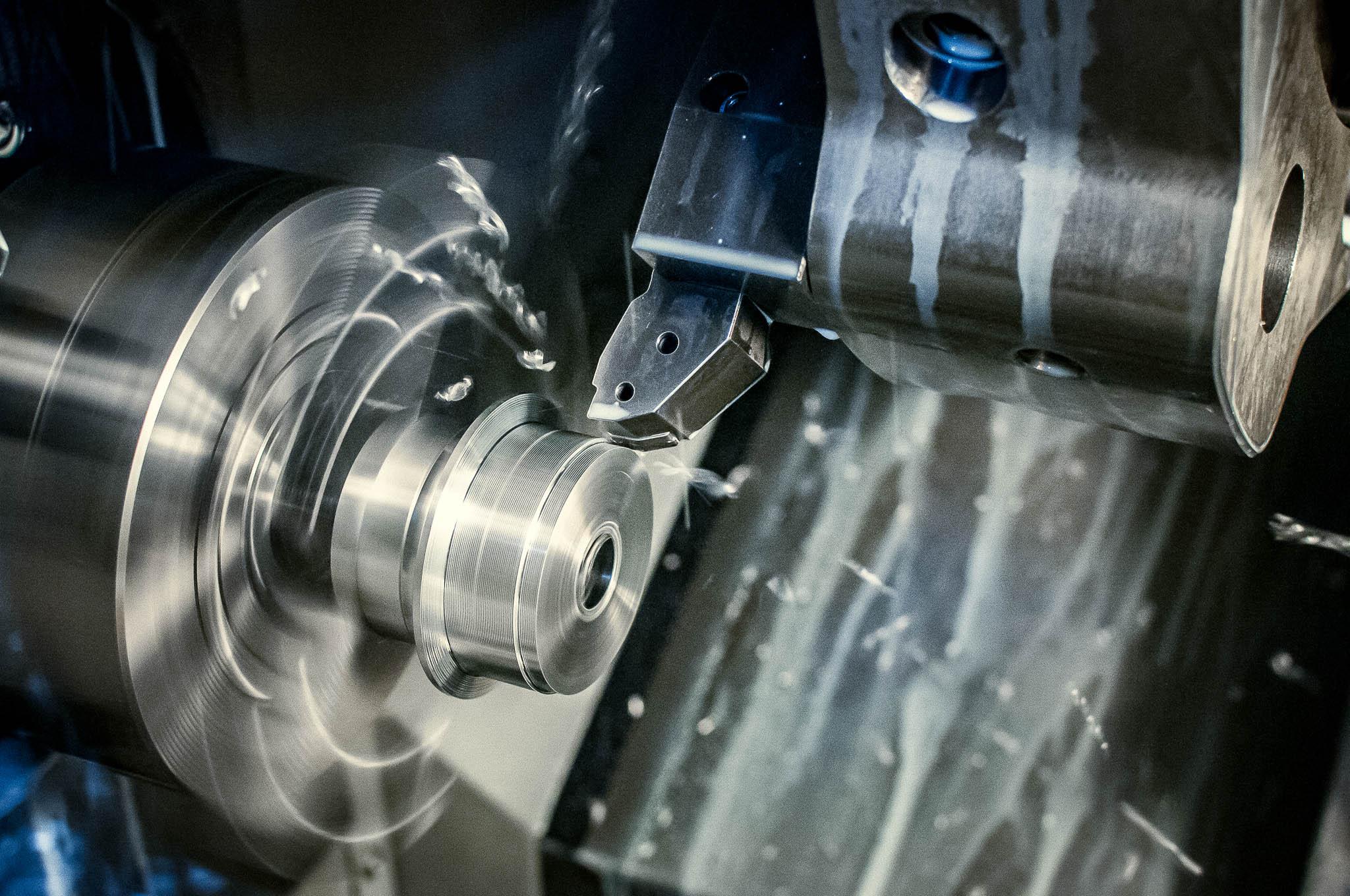
Modern 2-axis CNC lathes with box way construction meet this demand with a combination of vibration damping, thermal stability, and raw cutting force that slant-bed designs cannot always replicate in heavy-duty applications. Box ways excel in interrupted cuts and large-diameter work where rigidity determines both surface finish quality and tool life. For Texas shops machining tough materials like Inconel for downstream energy clients or 4140 steel for oilfield tools, that rigidity directly affects profitability.
FANUC 0i-TF Plus controls have become a common thread across many of these machines, and for good reason. The fifteen-inch touchscreen interface and Manual Guide i conversational programming lower the barrier for less experienced operators to become productive quickly—an increasingly critical factor when shops cannot find veteran machinists willing to work second shift. Conversational programming allows operators to create simple programs at the control without needing full G-code fluency, effectively expanding the pool of workers who can run the machine productively.
The U.S. Bureau of Labor Statistics projects roughly 34,200 annual openings for machinists over the coming decade, nearly all resulting from retirements and transfers rather than job growth. That replacement math means every Texas shop owner should be thinking about how their equipment choices either ease or worsen the hiring problem. Machines that are difficult to program, unreliable to maintain, or limited in capability shrink an already thin applicant pool.
The Equipment Investment Calculus in 2026
Several converging forces make 2026 a pivotal year for CNC turning center acquisitions across Texas. First, the One Big Beautiful Bill Act’s permanent bonus depreciation provision allows manufacturers to deduct the full cost of new machinery in the year of purchase through 2030. That tax treatment dramatically compresses payback periods and makes capital equipment purchases more attractive relative to leasing or continuing to run aging machines.
Second, reshoring is creating new work that did not exist in Texas shops twelve months ago. Components previously sourced from China, Mexico, or Southeast Asia are being pulled back into domestic supply chains, and turning work represents a significant share of that volume. Shops that invested in capacity before the wave hits will capture contracts that competitors with maxed-out spindle hours cannot.
The broader story of How Reshoring and Tariff Policy Are Driving CNC Equipment Investment Across Texas reveals the scale of this opportunity. From Section 301 duties on Chinese imports to the new Section 122 global surcharge proposals, trade policy is structurally favoring domestic production in ways that may persist for years regardless of which party controls Washington.
Third, the Texas Workforce Commission’s Skills Development Fund and similar state programs provide grants to help employers train workers on new equipment, offsetting some of the ramp-up costs associated with bringing a new turning center online. For shops investing in machines with user-friendly controls and conversational programming, these training dollars stretch further because operators reach competency faster.
The ripple effects extend to maintenance and uptime. Modern turning centers with proven servo systems, hardened and ground box ways, and robust spindle assemblies reduce the unplanned downtime that devastates production schedules when shops are already running thin on labor. When a machine goes down in a fully staffed shop, the operator moves to another station. When a machine goes down in a short-staffed shop, that capacity simply vanishes until the repair is complete. Reliability is not just a maintenance metric—it is a workforce multiplier.
The manufacturers who thrive through the rest of this decade will be those who treat equipment strategy as inseparable from workforce strategy. A capable, reliable, and easy-to-operate turning center does not simply make parts—it makes hiring easier, training faster, and margins wider in an environment where all three matter more than they have in a generation.
Southwest Machine Technologies: Your Texas CNC Equipment Partner
Southwest Machine Technologies (SWMT) provides the highest quality machine tools, service, and support to manufacturers across all 254 Texas counties. With over 125 years of combined team experience and a Houston-area facility, SWMT delivers installation, operator training, and machine maintenance on every product sold.
Our Services Include:
- SMART NL Series 2-Axis Turning Centers – Box way CNC lathes with 6″ to 24″ chuck sizes, FANUC 0i-TF Plus controls, and the torque to handle your toughest turning applications
- Turning Machines for Texas Manufacturers – Full lineup of 2-axis, 3-axis, multi-axis, and vertical turning centers from Smart Machine Tools, HNK, and Fuji Machine America
Ready to Upgrade Your Shop? Contact SWMT to discuss which turning center fits your production requirements and how our technicians can get you cutting chips fast.
Works Cited
“Texas Manufacturing Outlook Survey: February 2026.” Federal Reserve Bank of Dallas, 23 Feb. 2026, www.dallasfed.org/research/surveys/tmos/2026/2602. Accessed 24 Feb. 2026.
“Machinists and Tool and Die Makers: Occupational Outlook Handbook.” U.S. Bureau of Labor Statistics, U.S. Department of Labor, www.bls.gov/ooh/production/machinists-and-tool-and-die-makers.htm. Accessed 24 Feb. 2026.
Related Articles
- The Machinist Shortage Is Reshaping Texas Machine Shops—Here’s How Shops Are Fighting Back
- How Reshoring and Tariff Policy Are Driving CNC Equipment Investment Across Texas