
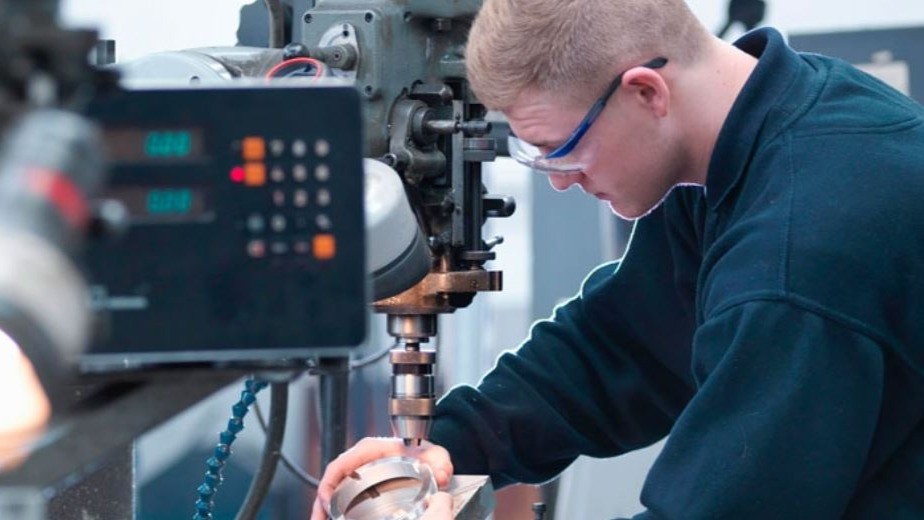
Texas manufacturers are caught in an unprecedented paradox. The state added more than 40,200 manufacturing jobs in 2025 through reshoring initiatives—nearly 23 percent of all positions created nationwide—yet precision machining shops can’t find enough skilled workers to fill critical cnc machinist roles. This collision between surging demand and severe labor shortages threatens to undermine Texas’s emergence as America’s reshoring capital just as the opportunity reaches historic proportions.
The numbers tell a story of both triumph and crisis. Since 2010, reshoring and foreign direct investment have announced over two million manufacturing jobs returning to American soil, with Texas capturing the largest share of this industrial renaissance. Major investments include Samsung’s 65 billion dollar semiconductor facility, Tesla’s 5.5 billion dollar expansion, and 4.9 billion in public infrastructure projects specifically designed to support advanced manufacturing. Yet approximately 54 percent of precision machining companies now report skilled labor shortages affecting operational output and timely project delivery, creating a bottleneck that prevents manufacturers from capitalizing on unprecedented demand.
The reshoring wave sweeping across Texas represents more than simple job creation. Computer and electronics manufacturing leads with roughly 68,700 new positions nationally, transportation follows with 52,500 jobs, and electrical equipment adds 34,800 positions. These sectors depend heavily on precision CNC machining capabilities—the exact skills Texas shops struggle to staff. As companies like Apple announce 20,000 new jobs and major corporations commit to expanding domestic production, the gap between available work and available workers widens dangerously.
The Scale of Texas’s Manufacturing Transformation
Understanding the magnitude of Texas’s manufacturing expansion requires examining both the immediate numbers and longer-term projections. The Federal Reserve Bank of Dallas reported factory activity at some of its strongest levels in more than three years during mid-2025, with the future production index rising to 30.3 and the future general business activity index climbing to 19.0. This momentum reflects competitive advantages that extend beyond cheap land and favorable taxes—Texas offers access to ports and logistics networks, proximity to Mexican manufacturing hubs through nearshoring arrangements, and a regulatory environment that accelerates project approvals.
The precision machining market itself demonstrates explosive growth trajectories. The global precision machining market reached 115.41 billion dollars in 2025 and projects to hit 244.59 billion by 2035, registering compound annual growth of 7.8 percent throughout the forecast period. Aerospace demand drives 61 percent of market expansion, automotive applications influence 55 percent, and medical device utilization contributes 48 percent of growth. Each of these sectors maintains significant operations in Texas, concentrating demand for precision turning, milling, and electrical discharge machining capabilities.
Houston exemplifies this transformation most dramatically. The city historically identified with energy and petrochemicals now attracts technology giants reshaping its industrial identity. Foxconn invested 450 million dollars to expand AI server production, creating 600 new jobs with an estimated 920 million dollar economic impact. Nvidia announced new AI supercomputer facilities in both Houston and Dallas areas. These high-tech manufacturers require precision components machined to tolerances measured in microns—work that demands skilled CNC operators Texas shops increasingly cannot provide.
Infrastructure projects specifically targeting manufacturing expansion compound workforce pressures. A 50-square-mile former Alcoa site outside Rockdale transforms into Sandow Lakes Advanced Manufacturing Logistix Campus, positioned as the only megasite in Texas with abundant electrical power, water, rail, natural gas, and interstate access. The development plans up to 35 million square feet of industrial capacity strategically located within the Texas Triangle—20 minutes from Samsung’s advanced chip fabrication facility and 45 minutes from Tesla’s Giga Texas campus. This concentration of advanced manufacturing creates unprecedented demand for precision machining support services that existing workforce capacity cannot meet.
Why CNC Machinist Shortages Threaten Everything
The skilled labor crisis affects precision machining more acutely than many manufacturing sectors because CNC operation demands specialized technical knowledge that cannot be acquired quickly. Machinists must understand G-code programming, interpret complex engineering drawings, select appropriate cutting tools and parameters, monitor multiple machines simultaneously, and troubleshoot problems requiring both mechanical and programming expertise. CNC machine training competent CNC machinists typically requires two to four years through formal apprenticeships or technical programs, creating a pipeline problem that cannot be solved with short-term hiring pushes.
Demographic trends compound the challenge. Approximately one quarter of the current manufacturing workforce exceeds 55 years old, with retirement waves accelerating throughout the decade ahead. Experienced machinists retiring take with them decades of accumulated knowledge about material properties, tooling strategies, and problem-solving approaches that newer workers must learn through years of hands-on experience. This generational transition occurs precisely as reshoring initiatives create maximum demand for precision machining capabilities, creating what industry analysts describe as a perfect storm of labor scarcity.
The manufacturing sector must fill 1.5 million openings by 2035 according to workforce projections, with CNC machinists, general machinists, and CNC programmers ranking among the most in-demand skilled production positions. Competition for available talent intensifies as multiple industries pursue the same limited candidate pool. Aerospace contractors, automotive suppliers, medical device manufacturers, and oil and gas equipment producers all require precision machining capabilities, bidding against each other for workers who can command premium wages due to scarcity.
Texas shops face particular challenges competing for talent against technology giants offering substantially higher compensation packages. When Apple, Nvidia, and Samsung establish major facilities paying technology-sector wages, traditional machine shops struggle to match compensation levels even as they require equivalent technical sophistication from employees. The perception problem persists despite reality—many younger workers view manufacturing as dirty, low-tech, and lacking advancement opportunities even as modern CNC shops operate climate-controlled facilities filled with sophisticated equipment requiring advanced technical skills.
How Automation Technology Fits the Solution
Smart manufacturers recognize that solving workforce shortages requires strategic combinations of technology adoption, training investments, and operational restructuring rather than simply pursuing scarce labor more aggressively. Understanding How Automation Technology Solves the CNC Machinist Shortage Without Replacing Workers becomes essential for shops seeking sustainable competitive advantages. Advanced CNC turning machines with automation capabilities enable smaller crews to maintain higher production volumes by handling material loading, unloading, and basic quality verification without constant operator supervision.
Five-axis turning centers exemplify how sophisticated equipment changes workforce equations. These machines complete complex parts in single setups that previously required multiple operations across several machines, reducing both floor space requirements and the number of operators needed per part produced. The upfront capital investment proves substantial—approximately 30 percent higher than conventional equipment—but manufacturers report that automation-enhanced machines increase operational efficiency by 50 percent through improved production speed, maximized precision, and reduced waste.
The conversation around automation often triggers fears about job displacement, but the manufacturing reality proves more nuanced. The industry needs to fill millions of positions even as automation expands, suggesting technology supplements rather than replaces human workers. Automation handles repetitive tasks and material movement while freeing skilled machinists to focus on setup, troubleshooting, programming, and quality assurance—work requiring judgment and expertise that machines cannot replicate.
Texas manufacturers investing in advanced turning technology position themselves to compete effectively for reshored work while managing workforce constraints. Examining Why Texas Manufacturers Are Winning the Reshoring Wave: Infrastructure, Incentives, and Precision Machining reveals how strategic positioning within the Texas Triangle manufacturing corridor provides competitive advantages that extend beyond labor availability to encompass logistics efficiency, customer proximity, and supply chain integration.
SW Machine & Technology: Your Partner in Precision Manufacturing
At SW Machine & Technology, we understand the challenges Texas manufacturers face in this rapidly evolving landscape. Our precision CNC turning machines deliver the accuracy, reliability, and efficiency that modern manufacturing demands, helping shops maximize productivity from available workforce resources.
Our Services Include:
- CNC Turning Machines – Advanced turning solutions engineered for Texas precision manufacturing requirements
- Technical Support & Training – Comprehensive assistance helping your team maximize equipment performance
Ready to Address Your Workforce Challenges? Contact SW Machine & Technology to discuss how our turning machine solutions can help your operation meet growing demand even in tight labor markets.
Works Cited
“Map Shows States Gaining Most Jobs Due to Reshoring Efforts.” Newsweek, 29 July 2025, www.newsweek.com/map-shows-states-gaining-most-jobs-due-reshoring-efforts-2105963. Accessed 18 Nov. 2025.
“Global Precision Machining Market 2025–2035: Strategic Insights.” Business Research Insights, www.businessresearchinsights.com/market-reports/precision-machining-market-118285. Accessed 18 Nov. 2025.
Related Articles
- How Automation Technology Solves the CNC Machinist Shortage Without Replacing Workers
- Why Texas Manufacturers Are Winning the Reshoring Wave: Infrastructure, Incentives, and Precision Machining
