Blog

Open post

How Reshoring and Tariff Policy Are Driving CNC Equipment Investment Across Texas

Southwest Machine Technologies: Precision Machining Solutions for Texas

American manufacturing is undergoing its most dramatic structural shift in decades, and Texas machine shops stand directly in the path of opportunity. Over three trillion dollars in reshoring-related investment commitments have been announced across the United States since early 2025, driven by a combination of aggressive tariff policy, federal tax incentives, and a bipartisan recognition that critical supply chains must move closer to home. For CNC equipment investment shops in Houston, San Antonio, Dallas-Fort Worth, and across the state, this wave is not abstract economic theory—it is showing up as purchase orders, quote requests, and the urgent need for additional spindle capacity.

The policy architecture fueling this moment is unprecedented in modern American manufacturing. The tariffs enacted in April 2025 established baseline duties of ten to fifteen percent on most imports and a punitive 125 percent rate on Chinese goods. Simultaneously, the One Big Beautiful Bill Act signed in July 2025 provided permanent 100-percent bonus depreciation for new machinery and full deductions for domestic manufacturing facility construction through 2030. The combination of sticks and carrots has created a clear economic incentive for companies to manufacture domestically rather than import, and machine shops are the primary beneficiaries of that calculus.

Texas is uniquely positioned to capture this reshoring volume. The National Institute of Standards and Technology’s Manufacturing Extension Partnership has documented how small and mid-size manufacturers—exactly the profile of most Texas machine shops—serve as the backbone of domestic supply chains. The MEP National Network has worked with tens of thousands of manufacturers across the country, supporting job creation and generating billions in cost savings through operational improvements. As reshoring accelerates, these shops are the ones tooling up to produce the precision-turned and milled components that previously arrived on container ships from Shenzhen or Guadalajara.

What Reshoring Actually Looks Like on a Shop Floor

The reshoring narrative often focuses on billion-dollar semiconductor fabs and electric vehicle gigafactories. Those investments matter, but the real volume impact for Texas machine shops comes from the thousands of smaller sourcing decisions happening across industrial supply chains every month. An oilfield equipment manufacturer in Houston who previously sourced valve bodies from a Chinese foundry is now quoting Texas machine shops. A defense contractor in Fort Worth pulling circuit board housings back from a Taiwanese supplier needs domestic CNC turning capacity. A medical device company shifting production from Juárez needs precision-machined components from a shop that can hold five-tenths on a three-inch bore.

These individual contracts are modest compared to factory announcements that make headlines, but they are the lifeblood of job shops and contract manufacturers. And they are accumulating. The February 2026 Dallas Fed Manufacturing Survey showed new orders holding firmly positive for the second consecutive month, with the future production index at 34.3—one of the strongest forward-looking readings in recent memory. Texas machinery manufacturers reported in the survey that “the floodgates have opened” and that they expect to be “firing on all cylinders” through 2026.

The challenge is that reshoring demand is arriving while the workforce is shrinking. The dynamic creates a powerful incentive to invest in CNC equipment that maximizes output per operator. Turning centers with rigid box way construction, automated features, and intuitive controls allow shops to accept reshored work without proportionally increasing headcount—a critical consideration when experienced machinists are in desperately short supply, as explored in detail in The Machinist Shortage Is Reshaping Texas Machine Shops—Here’s How Shops Are Fighting Back.

The Tariff Landscape and Its Equipment Implications

Tariff policy in 2026 remains volatile but directionally clear: imported manufactured goods face rising costs that favor domestic production. The Supreme Court’s February 2026 ruling striking down certain broad-based tariffs enacted under the International Emergency Economic Powers Act briefly created uncertainty, but the administration quickly pivoted to invoking Section 122 authority to impose a ten-percent global surcharge pending congressional approval. Regardless of the specific legal mechanism, the political consensus around trade protection appears durable.

For Texas machine shops, the implications are twofold. First, the work is coming. Components subject to tariffs become economically viable to produce domestically even at higher American labor rates, and shops with available capacity will capture that work. Second, raw material costs are rising. Steel, aluminum, and specialty alloys used in CNC turning and milling operations face their own tariff pressures, with some manufacturers reporting unpredictable input cost swings. Dallas Fed survey respondents noted that the raw materials price index remains well above its historical average, and one fabricated metal manufacturer reported closing a family business active since 1958 because customers either stopped buying or stopped paying on time.

This environment rewards shops that invest strategically in equipment capable of minimizing material waste, maximizing tool life, and maintaining tight tolerances that reduce scrap. Every rejected part in a high-material-cost environment hits harder than it did two years ago. Rigid, precise turning centers that deliver consistent first-pass quality are not luxuries—they are margin protection.

Texas Infrastructure Advantages Amplify the Opportunity

The Lone Star State’s structural advantages make it a natural magnet for reshoring-driven manufacturing investment. Texas maintains the nation’s largest roadway and freight network, thirty-five foreign trade zones, and over 240 million dollars in port investments. The state’s GDP exceeds 2.6 trillion dollars, which would rank eighth globally if Texas were a sovereign nation. No corporate income tax, predictable regulatory environment, and a workforce exceeding 15.5 million people round out an equation that consistently attracts manufacturing capital.

According to the National Association of Manufacturers, the manufacturing skills gap could leave 2.1 million jobs unfilled nationally by 2030, potentially costing the economy one trillion dollars annually. Texas is not immune to this challenge, but its younger-than-average workforce, extensive community college system, and state-funded training programs like the Skills Development Fund give it a relative advantage over states with older and less mobile labor pools.

The state’s energy sector provides an additional tailwind. Oil and gas operations require enormous quantities of precision-turned components—from downhole tools and completion equipment to surface valves and pump housings. When crude prices support drilling activity, machine shops across the Gulf Coast and Permian Basin see direct demand increases that compound the reshoring effect. Texas shops serving energy clients while simultaneously picking up reshored industrial work face a capacity squeeze that only new equipment can relieve.

The Investment Window Is Open

The convergence of reshoring demand, favorable tax treatment, and rising material costs creates a strategic window for Texas machine shops to invest in CNC turning and milling equipment. Permanent bonus depreciation means the full cost of a new turning center can be written off in the year of purchase, collapsing what would normally be a multi-year payback calculation into a single tax cycle. For profitable shops, this provision makes equipment acquisition more attractive than it has been in years.

The broader context of Texas manufacturing’s 2026 trajectory—above-average production expansion, strong new orders, and surging future expectations—is analyzed thoroughly in Texas Manufacturing Rebounds: Why CNC Turning Centers Are Central to the Lone Star State’s 2026 Growth Strategy. That momentum is not speculative; it is captured in survey data from eighty Texas manufacturing executives collected just weeks ago.

Shops that delay equipment investment risk missing the reshoring wave entirely. Lead times for new CNC machines, installation, and operator training mean that a decision made today translates to productive capacity three to six months from now. In a market where contracts are being awarded to shops that can demonstrate available capacity and reasonable lead times, waiting carries a real cost measured in lost revenue and lost customer relationships.

The manufacturers best positioned for what comes next are those pairing equipment investment with workforce strategy—acquiring machines that are reliable enough to run extended hours, intuitive enough for newer operators to learn quickly, and rigid enough to handle the heavy cutting that Texas manufacturing demands.

Southwest Machine Technologies: Your Texas CNC Equipment Partner

Southwest Machine Technologies (SWMT) provides the highest quality machine tools, service, and support to manufacturers across all 254 Texas counties. Based in the Houston metropolitan area, SWMT delivers installation, comprehensive operator training, and machine maintenance backed by over 125 years of combined team experience.

Our Services Include:

  • SMART NL Series 2-Axis Turning Centers – Box way CNC lathes with 6″ to 24″ chuck sizes, FANUC 0i-TF Plus controls, and the rigidity to handle aggressive cuts in tough Texas materials
  • Full Turning Machine Lineup – 2-axis, 3-axis, multi-axis, and vertical turning centers from Smart Machine Tools, HNK, and Fuji Machine America

Ready to Add Capacity? Contact SWMT to discuss which turning center matches your production needs and how our technicians can have you running parts quickly.

Works Cited

“Manufacturing Extension Partnership (MEP).” National Institute of Standards and Technology, U.S. Department of Commerce, www.nist.gov/mep. Accessed 24 Feb. 2026.

“2.1 Million Manufacturing Jobs Could Go Unfilled by 2030.” National Association of Manufacturers, 4 May 2021, nam.org/2-1-million-manufacturing-jobs-could-go-unfilled-by-2030-13743/. Accessed 24 Feb. 2026.

Related Articles


Open post

Texas Manufacturing Rebounds in 2026: Why Fiber Laser Technology Is Leading the Recovery

Southwest Machine Technologies: Precision Equipment for Texas Fabrication

Texas factory activity posted its strongest expansion signal in months during January 2026, marking a dramatic reversal from December’s contraction. The Federal Reserve Bank of Dallas reported the production index surged to 11.2 from negative 3.0—a swing of more than 14 points that signals renewed momentum across the state’s industrial base. For fabrication shops navigating this rebound, fiber laser technology cutting systems have emerged as the technology enabling manufacturers to capitalize on returning demand without the workforce expansion that remains stubbornly difficult.

The Dallas Fed’s Texas Manufacturing Outlook Survey captured this sentiment directly from business executives. New orders jumped 18 points to 11.8, while capacity utilization climbed 12 points to 7.1. One machinery manufacturer responding to the survey described conditions bluntly: “Business is booming. We are buying new equipment to increase production, since we are falling behind on our inventory requirements.”

This equipment investment surge reflects a broader transformation in how Texas manufacturers approach production capacity. Rather than competing for scarce skilled workers in a market where 79 percent of manufacturing executives cite labor shortages as their greatest challenge, shops are investing in automation technologies that multiply the output of existing teams. DENER fiber laser cutting machines for Texas sit at the center of this strategy.

The Technology Advantage Driving Investment

Fiber laser cutting machines deliver performance characteristics that make them particularly valuable during a manufacturing recovery. Unlike traditional CO2 laser systems, fiber technology converts electrical power to cutting energy at efficiencies between 20 and 30 percent—roughly three to four times better than CO2 alternatives. This efficiency translates directly to lower operating costs at precisely the moment when inflation and rising energy prices pressure margins.

The productivity gains extend beyond energy savings. Modern fiber laser systems routinely cut sheet metal three to five times faster than CO2 lasers, depending on material type and thickness. For a fabrication shop responding to the order surge the Dallas Fed documented, this speed advantage means the difference between capturing new business and turning away profitable work.

Processing capability further distinguishes fiber technology in the current market. Fabrication shops serving Texas industries from oil and gas to construction frequently work with reflective metals including aluminum, brass, and copper. Fiber lasers handle these materials that historically challenged CO2 systems, expanding the range of work shops can accept without specialized equipment changes. The U.S. Bureau of Labor Statistics manufacturing sector data shows fabricated metal product manufacturing remains among the largest manufacturing subsectors, with establishments increasingly requiring versatile cutting capability to serve diverse customer requirements.

Regional Dynamics Favoring Texas Fabricators

Texas manufacturers operate from an advantageous position as the national manufacturing landscape shifts. The state has claimed the Governor’s Cup award for job-creating relocation and expansion projects for thirteen consecutive years. The Texas Economic Development Corporation notes the state’s GDP now exceeds 2.6 trillion dollars—making it the eighth-largest economy globally if ranked as an independent nation.

This economic scale creates sustained demand for fabricated components across sectors from energy infrastructure to commercial construction. The Dallas Fed survey captured specific market opportunities: health care facility construction and data center projects are offsetting slowdowns in commercial office work, while new home construction projections point toward increased demand in the second half of 2026.

For fabrication shops positioned with modern fiber laser capability, understanding how to address the labor constraints that accompany growth becomes essential. Exploring How Texas Fabrication Shops Are Solving the Skilled Worker Shortage with Automation provides critical context for manufacturers balancing capacity expansion against workforce realities.

The investment patterns visible across Texas mirror broader industry trends. The global fiber laser market reached nearly 6.9 billion dollars in 2024 and projects growth at 11.1 percent annually through 2033. Manufacturing equipment suppliers report that automated laser cutting lines improve production throughput by 45 percent while reducing material waste by 18 percent through AI-powered nesting software.

What the Data Signals for Fabricators

The January manufacturing survey results require careful interpretation. While headline numbers signal expansion, business executives also expressed substantial uncertainty about conditions six months forward. Tariff policies, international trade dynamics, and the uneven recovery across manufacturing subsectors create planning challenges that sophisticated equipment investments can help address.

Fabricators who invested in fiber laser technology during previous cycles report advantages that compound during uncertain periods. The flexibility to process diverse materials means shops can pivot toward growing market segments—whether data center components, renewable energy infrastructure, or precision parts for the aerospace supply chain expanding across Texas.

Production economics favor modern fiber systems regardless of which specific sectors drive demand. Energy consumption that runs 30 to 40 percent below CO2 alternatives protects margins as utility costs fluctuate. Minimal maintenance requirements compared to gas-based laser systems reduce both direct costs and production interruptions that complicate delivery commitments.

Manufacturers evaluating fiber laser technology should understand the specific performance characteristics that differentiate available systems. Reading Fiber Laser vs. CO2: Which Cutting Technology Fits Your Texas Shop? provides technical comparison data essential for informed equipment decisions.

SWMT: Your Texas Partner for Fabrication Equipment

Southwest Machine Technologies provides fiber laser cutting systems from Dener USA engineered specifically for the demands Texas fabricators face. From sheet laser systems processing materials up to 20kW capacity to tube laser machines handling profiles up to 40 feet, SWMT delivers equipment matched to your production requirements.

Our Services Include:

  • Fiber Laser Systems – Sheet and tube laser cutting machines with power options from 3kW to 20kW
  • CNC Machine Tools – Complete milling and turning solutions for Texas manufacturing

Ready to Capitalize on the Texas Manufacturing Rebound? Contact SWMT to discuss how fiber laser technology can position your shop for growth.

Works Cited

“Growth Resumes in Texas Manufacturing.” Texas Manufacturing Outlook Survey, Federal Reserve Bank of Dallas, 26 Jan. 2026, www.dallasfed.org/research/surveys/tmos/2026/2601. Accessed 30 Jan. 2026.

“Manufacturing: NAICS 31-33.” Industries at a Glance, U.S. Bureau of Labor Statistics, www.bls.gov/iag/tgs/iag31-33.htm. Accessed 30 Jan. 2026.

Related Articles


Open post

How Texas Fabrication Shops Are Solving the Skilled Worker Shortage with Automation

Southwest Machine Technologies: Precision Equipment for Texas Fabrication

Texas fabrication shops face a workforce crisis that threatens their ability to capture growing demand. New research from CADDi’s 2026 Manufacturing Outlook Study reveals that 79 percent of manufacturing executives identify the skilled labor shortage as their greatest operational challenge—a figure that has persisted despite years of recruitment efforts, wage increases, and training programs. The manufacturing departments directly responsible for production are hit hardest, with 90 percent of companies reporting these areas experience the most severe staffing gaps.

The mathematics of this shortage are stark. Projections indicate 2.1 million manufacturing positions could remain unfilled by 2030, creating a constraint that no amount of job posting or salary adjustment can resolve. The talent pipeline simply cannot produce enough skilled workers to meet demand. For Texas fabricators watching new orders climb—the Dallas Fed’s January survey showed an 18-point surge in the new orders index—the question becomes how to capture this business without the workers traditionally needed to execute it.

The answer increasingly involves automation technologies that multiply the output of existing teams. Sixty-nine percent of manufacturers plan to invest in robots, equipment, and other physical assets in 2026—a nine percent increase from the previous year. This shift represents recognition that technology investment provides a more reliable path to capacity expansion than competing for workers who may not exist in sufficient numbers.

The Productivity Multiplier Effect

Fiber laser cutting systems exemplify how automation transforms fabrication shop economics. A single skilled operator overseeing modern fiber laser equipment produces output that previously required multiple workers on conventional machinery. The speed differential is dramatic: fiber lasers cut sheet metal three to five times faster than CO2 alternatives and orders of magnitude faster than mechanical cutting processes.

This speed translates to capacity without proportional headcount expansion. A fabrication shop adding a fiber laser system with automatic sheet loading can process significantly more material per shift with the same labor allocation. The technology handles material positioning, executes programmed cutting paths with micron-level precision, and presents completed parts for downstream operations—all with minimal operator intervention once jobs are programmed.

Understanding the broader context of Texas manufacturing’s current momentum helps fabricators evaluate technology investments strategically. Texas Manufacturing Rebounds in 2026: Why Fiber Laser Technology Is Leading the Recovery examines how state-level economic dynamics create opportunities for shops positioned with modern equipment capability.

Quality consistency compounds the productivity advantage. Human operators, regardless of skill level, experience fatigue and attention variation across shifts and weeks. Automated fiber laser systems maintain identical cutting parameters from the first part to the thousandth, eliminating the quality variation that generates scrap, rework, and customer complaints. For fabricators serving demanding industries from aerospace to energy infrastructure, this consistency often determines supplier qualification.

A Structural Shift in Workforce Strategy

Texas fabricators are responding to workforce constraints with focused capital deployment. The Manufacturing Institute reports that 77 percent of manufacturers anticipate ongoing difficulties attracting and retaining workers indefinitely—not as a temporary condition but as a permanent operating reality requiring structural response.

This structural shift favors equipment that reduces labor dependency while maintaining or improving output quality. Fiber laser technology aligns particularly well with these requirements. The systems process diverse materials including reflective metals that challenge other cutting methods, expanding the range of work shops can accept without specialized labor for each material type.

The automation investment surge extends beyond cutting operations. Manufacturers report increasing focus on integrated production systems where fiber lasers connect with automated material handling, inventory management, and quality verification. These integrated cells require fewer workers per unit of output while generating comprehensive production data that supports continuous improvement.

Operational Realities Driving Decisions

Fabrication shop owners making equipment decisions weigh multiple factors beyond labor scarcity. Energy costs represent an increasingly significant operating expense, and fiber laser technology delivers 30 to 40 percent energy savings compared to CO2 alternatives. This efficiency advantage compounds across production volume, generating savings that accumulate throughout equipment life.

Maintenance requirements further differentiate fiber systems in the current labor environment. Traditional CO2 lasers require regular mirror alignment, gas mixture management, and component servicing that demands specialized technical knowledge. Fiber lasers eliminate these maintenance categories entirely, reducing both direct service costs and the skilled technician time such maintenance consumes.

The CADDi research revealed that investment in operational systems like ERP and MES software fell sharply in 2026—dropping from 60 percent to 33 percent of companies prioritizing such spending. Manufacturers are redirecting capital toward technologies that deliver measurable output gains on the shop floor rather than administrative systems. Fiber laser equipment represents exactly the kind of productive asset that generates immediate, quantifiable return.

For shops evaluating specific equipment options, understanding the technical differences between cutting technologies provides essential decision support. Fiber Laser vs. CO2: Which Cutting Technology Fits Your Texas Shop? offers detailed comparison of performance characteristics, operating costs, and application suitability.

SWMT: Your Texas Partner for Fabrication Equipment

Southwest Machine Technologies delivers fiber laser systems engineered to maximize productivity while minimizing labor requirements. Dener USA’s sheet and tube laser platforms incorporate automatic shuttle tables, auto-focusing heads, and intuitive controls that enable rapid operator training and consistent production.

Our Services Include:

  • Fiber Laser Systems – Sheet processing from 5×10 to 8×20 tables with power options up to 20kW
  • Tube Laser Systems – Processing lengths up to 40 feet with automatic loading and unloading

Ready to Multiply Your Workforce Productivity? Contact SWMT to evaluate how fiber laser automation can address your capacity challenges.

Works Cited

“79% of Manufacturing Executives Say Skilled Labor Shortage is Greatest Challenge According to New CADDi Research.” Yahoo Finance, 20 Jan. 2026, finance.yahoo.com/news/79-manufacturing-executives-skilled-labor-150000740.html. Accessed 30 Jan. 2026.

“2.1 Million Manufacturing Jobs Could Go Unfilled by 2030.” The Manufacturing Institute, themanufacturinginstitute.org/2-1-million-manufacturing-jobs-could-go-unfilled-by-2030-11330/. Accessed 30 Jan. 2026.

Related Articles


Open post

Fiber Laser vs. CO2: Which Cutting Technology Fits Your Texas Shop?

Southwest Machine Technologies: Precision Equipment for Texas Fabrication

Texas fabrication shops evaluating laser cutting technology face a fundamental choice that shapes operating economics for years forward. Fiber laser and CO2 laser systems represent distinct approaches to metal cutting, each with performance characteristics that determine suitability for specific applications. Understanding these differences enables fabricators to match technology selection to their production requirements, material mix, and competitive positioning.

The global shift toward fiber technology reflects compelling performance advantages that have reshaped equipment markets. Industry analysis from Grand View Research shows fiber laser systems now account for 59 percent of new laser cutting installations, displacing CO2 technology that dominated the sector for decades. The global fiber laser market reached 6.87 billion dollars in 2024 and projects growth at 11.1 percent annually through 2033. This transition stems not from marketing but from measurable productivity and cost advantages that compound across production volume.

For Texas fabricators specifically, material processing requirements often favor fiber capability. Energy sector work frequently involves reflective metals including aluminum and copper that historically challenged CO2 systems. Construction and infrastructure projects demand throughput speeds that fiber technology delivers. For Texas fabricators ready to evaluate the switch, SWMT’s full line of DENER fiber laser cutting machines flat sheet and tube, 3kW to 20kW — is a useful starting point before working through the comparison below.

The Efficiency Differential

Energy consumption represents the most quantifiable difference between fiber and CO2 laser technology. According to technical documentation on laser cutting processes, fiber lasers convert electrical power to cutting energy at efficiencies between 20 and 30 percent. CO2 systems achieve only 5 to 10 percent efficiency, meaning they consume two to three times more electricity to perform equivalent cutting work.

This efficiency gap compounds across production hours. A fabrication shop running laser cutting equipment through extended shifts accumulates energy costs continuously. At Texas industrial electricity rates, the operating cost differential between fiber and CO2 systems can reach thousands of dollars monthly depending on utilization. Over typical equipment lifespans measured in years, these savings substantially offset initial investment premiums.

The efficiency advantage extends beyond direct utility costs. Higher electrical efficiency means less waste heat generation, reducing cooling system loads and facility HVAC requirements. Fiber laser resonators produce less heat than CO2 gas excitation systems, enabling more compact equipment footprints that maximize productive floor space utilization.

Speed and Throughput Capabilities

Cutting speed differentials between fiber and CO2 systems vary with material type and thickness but consistently favor fiber technology for typical fabrication materials. On thin to medium gauge steel, stainless steel, and aluminum—the materials constituting most fabrication work—fiber lasers cut three to five times faster than comparable CO2 systems.

This speed advantage translates directly to throughput capacity. A fabrication shop processing sheet metal with fiber laser equipment completes jobs in a fraction of the time CO2 systems require. For operations constrained by delivery commitments or backlog accumulation, speed determines competitiveness as directly as pricing.

The productivity implications extend beyond cutting cycles. Faster cutting means more parts per shift, spreading fixed overhead across larger production volume. Labor costs per part decrease because operator time distributes across more output. Texas Manufacturing Rebounds in 2026: Why Fiber Laser Technology Is Leading the Recovery details how these economics are driving equipment investment across the state’s expanding fabrication sector.

Material Processing Capabilities

Fiber laser technology excels at processing reflective metals that historically posed challenges for CO2 systems. Aluminum, brass, copper, and galvanized steel reflect CO2 laser wavelengths efficiently, reducing cutting effectiveness and potentially damaging beam delivery optics. Fiber laser wavelengths interact more favorably with these materials, enabling reliable processing without specialized precautions or reduced power settings.

For Texas fabricators serving diverse industries, this material flexibility expands addressable markets. Energy sector work includes copper busbars for electrical systems and aluminum components for various applications. HVAC and architectural fabrication involves galvanized steel and aluminum extensively. The ability to process these materials efficiently means capturing work that less capable equipment cannot handle reliably.

Thickness capabilities favor CO2 technology only at the extreme end of the range. For cutting very thick plate steel exceeding one inch, high-power CO2 systems maintain advantages in cut quality and edge characteristics. However, most fabrication work involves materials where fiber technology performs excellently, making CO2 advantages in thick material processing relevant only for specialized heavy plate applications.

Maintenance and Operating Considerations

Fiber laser systems require fundamentally less maintenance than CO2 alternatives, reducing both direct service costs and production interruptions. CO2 lasers depend on carefully aligned mirror systems, gas mixture management, and regular resonator servicing. These maintenance requirements demand skilled technicians and create scheduling constraints around service intervals.

Fiber lasers eliminate mirror alignment entirely—the laser beam travels through fiber optic cables rather than bouncing between mirrors. No cutting gas consumption occurs during the lasing process itself, removing gas supply logistics and cost. Resonator maintenance intervals extend substantially beyond CO2 equivalents, with many operations reporting years between major service requirements.

This reduced maintenance burden proves especially valuable given current workforce constraints. How Texas Fabrication Shops Are Solving the Skilled Worker Shortage with Automation explores how equipment choices that minimize specialized labor requirements help fabricators navigate the persistent talent shortage affecting the industry.

Consumable costs further differentiate the technologies. CO2 laser systems consume specialty gas mixtures continuously during operation, creating ongoing supply expenses and delivery logistics. Fiber systems require only assist gases for the cutting process itself—nitrogen, oxygen, or compressed air depending on material and quality requirements. These assist gases cost less and supply more readily than laser gas mixtures.

SWMT: Your Texas Partner for Fabrication Equipment

Southwest Machine Technologies supplies Dener USA fiber laser systems engineered for the performance demands Texas fabricators face. From compact 3kW systems for lighter duty work to 20kW configurations processing thick materials at production speeds, SWMT matches equipment capability to your operational requirements.

Our Services Include:

  • Fiber Laser Systems – Complete range of sheet and tube processing equipment with Texas-based support
  • Equipment Consultation – Technical guidance on system selection, facility requirements, and capability matching

Ready to Evaluate Fiber Laser Technology for Your Operation? Contact SWMT to discuss equipment options suited to your production requirements.

Works Cited

“Fiber Laser Market Size and Share.” Grand View Research, www.grandviewresearch.com/industry-analysis/fiber-laser-market-report. Accessed 30 Jan. 2026.

“Laser Cutting.” Wikipedia, Wikimedia Foundation, en.wikipedia.org/wiki/Laser_cutting. Accessed 30 Jan. 2026.

Related Articles


Open post A high-pressure waterjet cutting technology, cutting a complex titanium aerospace component in a Texas.

Waterjet Cutting Technology Gains Ground in Texas Metal Fabrication Operations

Southwest Machine Technologies: Providing High Quality Products at Unmatched Value with Unrivaled Support

The global waterjet cutting machine market reached $1.41 billion in 2025 and is projected to expand to $2.20 billion by 2032, growing at 6.6 percent annually according to recent industry analysis. North America commands over 40 percent of worldwide market share, with the United States waterjet equipment sector specifically projected to grow from $305 million in 2024 to nearly $400 million by 2033. Texas ranks among the leading industrial states driving this expansion, with the state’s diversified manufacturing base in oil and gas equipment, metal fabrication, aerospace, and construction creating sustained demand for precision cutting technology that preserves material integrity.

Waterjet cutting technology has emerged as a critical capability for manufacturers requiring precision processing across diverse materials without the thermal distortion associated with plasma, laser, or flame cutting methods. The technology accelerates water to supersonic speeds—often mixed with abrasive garnet particles—to cut through metals, composites, stone, glass, and virtually any material with tolerances measured in thousandths of an inch. For Texas fabricators serving aerospace contractors, energy equipment manufacturers, and precision component customers, waterjet systems deliver cutting versatility that single-technology shops cannot match.

The technology adoption aligns with broader equipment modernization trends reshaping Texas manufacturing. As detailed in Texas Manufacturers Face Equipment Modernization Pressure as Production Activity Accelerates, production output surged while employment remained flat—evidence that capacity expansion increasingly depends on equipment capability rather than workforce growth. Waterjet systems contribute to this productivity equation by enabling shops to process work previously requiring outsourcing or multiple cutting technologies, consolidating capabilities that improve throughput and reduce lead times.

Cold Cutting Advantages Drive Adoption

The fundamental distinction separating waterjet cutting from thermal processes lies in heat-affected zones—or rather, their absence. Plasma, laser, and flame cutting generate temperatures exceeding several thousand degrees, creating metallurgical changes in material adjacent to cut edges. These heat-affected zones can alter hardness, introduce brittleness, cause warping, and compromise material properties that engineers specified for performance reasons. Aerospace components, medical devices, and precision mechanisms cannot tolerate these thermal effects without risking performance degradation or premature failure.

Waterjet cutting eliminates thermal distortion entirely because the process generates no significant heat at the cutting interface. The Fortune Business Insights waterjet market analysis identifies cold cutting capability as a primary driver of technology adoption, noting that manufacturers increasingly demand precision processes preserving material integrity without thermal effects. This characteristic makes waterjet essential for cutting heat-sensitive materials including titanium alloys, tool steels, and advanced composites where post-cutting heat treatment or stress relief would otherwise be required.

Material versatility extends waterjet applications beyond traditional metal fabrication into diverse industrial sectors. A single waterjet system can cut aluminum for aerospace applications, stainless steel for food processing equipment, glass for architectural installations, and rubber for gasket production—all without tool changes or equipment reconfiguration. This flexibility proves particularly valuable for job shops and contract manufacturers serving varied customer requirements, enabling them to accept work across multiple industries rather than specializing narrowly in materials compatible with single cutting technologies.

Edge quality from waterjet cutting frequently eliminates secondary finishing operations required after thermal processes. Cut edges emerge smooth and burr-free, often ready for welding, assembly, or final use without grinding, deburring, or machining. This process efficiency reduces total manufacturing time and cost while improving consistency across production quantities. For Texas manufacturers competing on delivery speed and price, the elimination of secondary operations translates directly into competitive advantage.

Texas Industrial Base Drives Regional Demand

Texas manufacturing diversity creates waterjet demand across multiple industrial sectors simultaneously. The state’s energy industry requires precision-cut components for drilling equipment, pipeline fittings, valve bodies, and processing machinery. Aerospace contractors throughout the Dallas-Fort Worth and Houston regions need complex titanium and aluminum parts for aircraft structures and engines. Construction equipment manufacturers demand heavy steel fabrication with the precision that waterjet technology delivers for critical load-bearing components.

The Coherent Market Insights waterjet analysis documents that automotive applications dominate overall waterjet equipment demand in 2025, with aerospace, metal fabrication, and construction representing additional major market segments. Texas manufacturers serve all these sectors, creating concentrated regional demand for waterjet capabilities that support production across diverse customer requirements. Shops investing in waterjet technology position themselves to pursue opportunities across multiple industries rather than depending on single-sector demand cycles.

The 3D waterjet cutting segment commands 42 percent of market share, reflecting growing demand for complex geometry processing that two-dimensional cutting cannot address. Five-axis waterjet systems manipulate cutting heads through multiple angles simultaneously, producing beveled edges, compound cuts, and three-dimensional shapes from flat stock. Texas manufacturers serving aerospace and energy customers increasingly require these capabilities for components with complex geometries that would otherwise demand expensive five-axis machining operations.

Texas’s pro-business environment and infrastructure advantages amplify equipment investment returns. Manufacturers benefit from lower operating costs, favorable tax treatment, and logistics connectivity that enhance competitiveness against rivals in higher-cost regions. Equipment investments that improve capability and efficiency compound these structural advantages, enabling Texas shops to win work from customers throughout North America who might otherwise source locally or offshore.

Technology Integration and Automation Trends

Modern waterjet systems integrate extensively with CNC controls, CAD/CAM software, and production management systems that optimize cutting efficiency while reducing operator intensity. Nesting software automatically arranges parts on material sheets to minimize waste, often achieving material utilization exceeding 90 percent on complex part mixes. Cutting path optimization reduces head travel time between cuts while managing pierce sequencing to prevent part movement during processing. These software capabilities transform waterjet from a standalone cutting tool into an integrated manufacturing system generating data for production planning and quality documentation.

Hardware innovations continue expanding waterjet capabilities and economics. Ultra-high-pressure pumps exceeding 90,000 PSI enable faster cutting speeds and improved edge quality compared to earlier generation equipment operating at lower pressures. Abrasive delivery systems precisely meter garnet consumption, reducing operating costs while maintaining cut quality. Automatic head height sensing compensates for material variations, maintaining optimal standoff distance without operator intervention. Each advancement improves the cost-per-part economics that determine waterjet competitiveness against alternative cutting technologies.

The relationship between waterjet and CNC machining technologies deserves attention from manufacturers evaluating equipment investments. As examined in CNC Machine Market Surges Past $100 Billion as Texas Shops Invest in Precision Equipment, precision machining demand continues accelerating across Texas manufacturing. Waterjet cutting frequently serves as an upstream process producing near-net-shape blanks that CNC machines finish to final specifications. Shops operating both technologies capture more value from customer work while controlling quality throughout the manufacturing sequence.

Maintenance and consumable economics factor significantly into waterjet ownership calculations. Cutting heads, orifices, mixing tubes, and high-pressure seals require periodic replacement based on operating hours and cutting conditions. Abrasive garnet represents the largest ongoing consumable expense, with consumption rates varying based on material thickness, cutting speed, and quality requirements. Manufacturers evaluating waterjet investments should model total operating costs including consumables, maintenance, and utilities alongside capital equipment expenses to understand true cost-per-part economics.

Application Diversity Across Texas Industries

Aerospace manufacturing represents a particularly strong waterjet application in Texas given the state’s concentration of aircraft production, maintenance, repair, and overhaul facilities. Titanium, Inconel, and aluminum alloys used extensively in aerospace applications cut cleanly with waterjet while resisting efficient processing through many alternative methods. The absence of heat-affected zones satisfies aerospace quality requirements that often prohibit thermal cutting methods for flight-critical components. Aerospace contractors increasingly specify waterjet cutting in manufacturing planning, creating demand that equipped shops can capture while competitors lacking capability cannot pursue.

Energy sector applications span equipment manufacturing, maintenance, and field fabrication throughout Texas oil and gas operations. Valve bodies, flange blanks, and pressure vessel components require precision cutting from materials including carbon steel, stainless steel, and specialty alloys. Waterjet capability enables shops to process these diverse materials without maintaining multiple cutting technologies, simplifying operations while expanding addressable markets. Field service applications benefit from portable waterjet systems capable of on-site cutting for maintenance and repair work where shop fabrication proves impractical.

Architectural and artistic applications represent growing waterjet markets as designers specify intricate patterns in stone, metal, and glass that only waterjet can economically produce. Texas construction growth generates demand for custom architectural elements including lobby features, facade panels, and decorative metalwork. Shops positioned to serve architectural markets diversify revenue beyond industrial manufacturing while commanding premium pricing for design-intensive work requiring programming expertise alongside cutting capability.

Food processing equipment manufacturing benefits from waterjet’s ability to cut stainless steel cleanly without contamination concerns associated with some cutting processes. Texas food processing operations require equipment fabrication meeting sanitary standards that waterjet cutting supports through clean edges and absence of thermal effects that might compromise corrosion resistance. This application illustrates how waterjet capabilities open market opportunities that shops limited to thermal cutting methods cannot address.

Investment Considerations for Texas Fabricators

Equipment selection involves tradeoffs between capability, cost, and operational requirements that each manufacturer must evaluate based on their specific circumstances. Entry-level waterjet systems provide basic cutting capability at lower capital costs but may limit cutting speed, material thickness capacity, or precision compared to higher-specification equipment. Production-focused systems designed for industrial throughput command premium prices but deliver economics that justify investment for shops with sufficient volume to utilize capacity.

Table size determines maximum part dimensions and influences material handling efficiency for production operations. Larger tables accommodate bigger workpieces while enabling efficient nesting of multiple smaller parts that maximize material utilization. However, larger tables require more floor space, higher pump capacity, and greater capital investment. Manufacturers should evaluate typical part sizes and production volumes when specifying table dimensions rather than defaulting to maximum available sizes.

Pump pressure and horsepower directly affect cutting speed and edge quality, with higher specifications enabling faster processing of thick materials while potentially improving surface finish. Ultra-high-pressure systems cutting at 90,000 PSI or above achieve speeds approximately 50 percent faster than standard 60,000 PSI equipment on equivalent materials, improving throughput economics for production applications. The pressure decision involves balancing capital cost premiums against operating efficiency gains based on anticipated production requirements.

Southwest Machine Technologies: Your Texas Waterjet Equipment Partner

Southwest Machine Technologies serves manufacturers across all 254 Texas counties with industry-leading fabrication equipment and comprehensive service support. Our CMS waterjet systems—including the Tecnocut Smartline, Proline, and Aquatec platforms—deliver precision cutting capabilities engineered for demanding production environments.

Our Fabrication Equipment Solutions Include:

  • Fabrication Machines – CMS waterjet cutting systems and Cosen saws providing versatile material processing for Texas manufacturers
  • Complete Equipment Integration – Waterjet systems complementing milling, turning, and sawing equipment for comprehensive fabrication capabilities

Ready to Expand Your Cutting Capabilities? Contact Southwest Machine Technologies to discuss how waterjet technology can diversify your fabrication capabilities and position your operation for growth across Texas manufacturing’s expanding markets.

Works Cited

“Waterjet Cutting Machine Market Analysis & Forecast: 2025-2032.” Coherent Market Insights, 29 Jul. 2025, www.coherentmarketinsights.com/market-insight/waterjet-cutting-machine-market-3290. Accessed 9 Dec. 2025.

“Waterjet Cutting Machines Market Size, Share & Industry Analysis.” Fortune Business Insights, 24 Nov. 2025, www.fortunebusinessinsights.com/waterjet-cutting-machines-market-102026. Accessed 9 Dec. 2025.

Related Articles


Open post

Texas Manufacturers Face Equipment Modernization Pressure as Production Activity Accelerates

Southwest Machine Technologies: Providing High Quality Products at Unmatched Value with Unrivaled Support

Texas factory activity expanded at a markedly faster pace in November 2025, with the production index jumping 15 points to 20.5 according to the Federal Reserve Bank of Dallas—a reading indicating the strongest output growth the state has seen in months. Capacity utilization surged 21 points to 19.4, and shipments climbed nine points to 15.1, signaling that manufacturers across the Lone Star State are running harder than they have all year. Yet this acceleration arrives alongside persistent challenges that threaten to constrain growth: workforce shortages exceeding 60,000 positions in manufacturing alone, rising raw material costs, and equipment modernization demands that many shops struggle to meet.

The pressure on Texas manufacturers reflects a broader reality reshaping American industrial production. Companies that invested in modern fabrication equipment before the current expansion find themselves positioned to capture demand. Those still running aging machinery face capacity constraints precisely when orders are flowing. The Dallas Fed Texas Manufacturing Outlook Survey documented this tension directly, with raw materials prices jumping to 35.3 on their index—the highest sustained pricing pressure in over two years—while finished goods prices rose to 10.8 as manufacturers passed costs downstream.

The equipment decisions Texas manufacturers make today will determine their competitive position for the next decade. Waterjet cutting systems, CNC machining centers, and precision fabrication equipment represent capital investments that enable shops to accept work they would otherwise decline. For metal fabricators serving aerospace, automotive, energy, and construction sectors across Houston, Dallas, San Antonio, and Austin, equipment modernization has shifted from optional upgrade to operational necessity.

Production Growth Meets Capacity Constraints

The November production surge caught many Texas manufacturers operating near their limits. Seventeen percent of firms reported net hiring while sixteen percent reported layoffs—essentially flat employment despite accelerating output. This paradox reveals the real constraint facing the sector: not demand, but capacity and capability to fulfill it. Manufacturers are pushing existing equipment and existing teams harder rather than expanding, a strategy that generates short-term results but creates long-term vulnerabilities in quality, maintenance, and employee retention.

Hours worked increased 15 points to 9.9, confirming that Texas manufacturers achieved their output gains through overtime rather than workforce expansion. The approach makes economic sense when orders are uncertain, but November’s data suggested anything but uncertainty in demand. New orders climbed to 4.8 from negative territory, and future production expectations jumped to 33.7—the strongest forward-looking indicator in months. Manufacturers expect activity to remain elevated, creating pressure to translate temporary capacity stretches into permanent capability expansions.

The equipment intensity of modern manufacturing means capital investment often delivers greater returns than headcount expansion. A single waterjet cutting system or multi-axis machining center can accomplish work that previously required multiple operators on conventional equipment. Automation doesn’t eliminate jobs so much as redefine them, transforming machine operators into equipment technicians capable of programming, maintaining, and optimizing sophisticated production systems. This evolution explains why manufacturers facing worker shortages increasingly turn to equipment modernization as their primary growth strategy.

Understanding how precision equipment investments are reshaping fabrication capabilities across the state, as explored in CNC Machine Market Surges Past $100 Billion as Texas Shops Invest in Precision Equipment, provides context for the capital decisions manufacturers face. The choice between incremental upgrades and transformational equipment investments often determines whether shops capture growth or lose ground to better-equipped competitors.

Workforce Challenges Amplify Equipment Imperatives

Texas manufacturing confronts a workforce gap that traditional hiring alone cannot close. The National Association of Manufacturers reports the sector faces a consistent shortage exceeding 60,000 workers statewide, with positions in technical roles like machinists, welders, and equipment technicians proving especially difficult to fill. The Texas Workforce Commission notes that only 32 percent of Texas workers currently possess qualifications matching available jobs, while 47 percent of positions require postsecondary skills training that the educational pipeline delivers too slowly.

The workforce mathematics force manufacturers toward equipment solutions. When skilled operators prove scarce, equipment that reduces operator intensity per part produced becomes strategically valuable. Modern fabrication machines incorporate features specifically designed to address skill shortages: conversational programming interfaces that reduce training time, automated tool changers that minimize setup complexity, and real-time monitoring systems that catch errors before they generate scrap. Equipment investments become workforce investments when they enable existing employees to accomplish more.

The Fortune Business Insights CNC machine market analysis projects the global market growing from $101.22 billion in 2025 to $195.59 billion by 2032, driven substantially by manufacturers seeking automation solutions for labor constraints. The U.S. market specifically is expected to reach $15.03 billion by 2032, with aerospace, automotive, and precision engineering sectors leading adoption. Texas manufacturers participate in this global equipment trend while facing regional competitive dynamics that make modernization particularly urgent.

The equipment-workforce relationship extends beyond productivity metrics to encompass talent attraction. Manufacturers operating modern equipment find recruiting easier than those running decades-old machinery. Technical workers with CNC programming skills and automation experience gravitate toward shops where their capabilities translate into interesting work rather than frustrated workarounds for obsolete systems. Equipment modernization thus compounds its benefits—enabling higher productivity while simultaneously improving the talent pool available to achieve it.

Regional Manufacturing Strength Creates Opportunity

Governor Abbott’s proclamation of Manufacturing Week 2025 highlighted Texas as the manufacturing capital of the nation, home to a sector driving the state’s $2.7 trillion economy—the eighth largest in the world. The recognition reflects reality: Texas manufacturers benefit from geographic advantages, energy access, regulatory environment, and market proximity that competitors in other states cannot replicate. These structural advantages translate into growth opportunities for manufacturers positioned to capture them.

The Dallas-Fort Worth area requires an estimated 130,000 additional skilled workers over the next decade to maintain current growth trajectories, according to Federal Reserve Bank of Dallas research. Houston’s manufacturing base continues expanding around energy, aerospace, and industrial equipment sectors. San Antonio and Austin add manufacturing employment as technology companies localize production. Each metropolitan area’s growth creates demand for fabrication services that equipped manufacturers can fulfill—and that under-equipped operations must decline.

State workforce development initiatives recognize the equipment dimension of manufacturing competitiveness. Programs like Texas A&M Engineering Extension Service’s advanced manufacturing training facilities in Brownsville and the Coastal Bend prepare workers for careers operating sophisticated production equipment. The state’s emphasis on Industry 4.0 readiness acknowledges that modern manufacturing increasingly depends on digital integration, automation, and precision capabilities that only advanced equipment provides.

The regional dynamics of waterjet cutting technology, examined in Waterjet Cutting Technology Gains Ground in Texas Metal Fabrication Operations, illustrate how specific equipment categories are reshaping competitive landscapes across Texas manufacturing sectors. Fabricators adding waterjet capabilities access work streams previously unavailable, from aerospace composites to architectural metals to precision industrial components.

Price Pressures and Investment Decisions

Raw material costs represented the most significant pressure point in November’s manufacturing survey, with the index reaching 35.3—well above historical averages and indicating sustained input price increases. Manufacturers reported finished goods price increases reaching 10.8, but the gap between input and output pricing suggests margin compression that many operations cannot sustain indefinitely. Equipment that reduces material waste, improves first-pass yields, and accelerates production cycles directly addresses this margin pressure.

The investment calculus for fabrication equipment increasingly incorporates not just production speed but material efficiency. Waterjet cutting systems generate minimal kerf waste compared to traditional cutting methods. Multi-axis machining centers produce complex parts in single setups that would otherwise require multiple operations with handling damage risks. Precision capabilities reduce the scrap rates that consume both material and labor costs. When raw material prices remain elevated, these efficiency gains compound into significant competitive advantages.

Survey respondents across Texas manufacturing sectors expressed consistent themes: uncertainty about tariff impacts, pressure from pricing environments, and determination to invest through challenges rather than retreat. One machinery manufacturer reported November as their most profitable month of the year despite broader concerns, attributing success to increased business activity and new projects. Another noted that even modest interest rate decreases had provided confidence for expansion planning. The manufacturers achieving success share equipment capabilities enabling them to capture opportunity while competitors struggle with capacity constraints.

Capital expenditure intentions rose to 9.8 in November, with future investment expectations reaching 12.9—both readings indicating manufacturers plan equipment investments despite economic uncertainties. The forward-looking data suggests Texas manufacturers understand that competitive position depends on capability, not just cost management. Equipment investments made during periods of strong demand position shops to serve customers when conditions moderate, building relationships and reputation that persist through economic cycles.

Southwest Machine Technologies: Your Texas Fabrication Equipment Partner

Southwest Machine Technologies serves manufacturers across all 254 Texas counties with industry-leading machine tools, fabrication equipment, parts and accessories, and application support. Founded in 2022 and headquartered in Houston, our team brings over 125 years of combined experience to every customer relationship, with sales professionals who understand shop floor realities from direct experience.

Our Equipment Solutions Include:

  • Fabrication Machines – CMS waterjet cutting systems, Cosen saws, and precision fabrication equipment engineered for Texas manufacturing demands
  • Milling and Turning Centers – Smart Machine Tools, HNK, and Fuji Machine America machinery with FANUC controls and comprehensive service support

Ready to Expand Your Capabilities? Contact Southwest Machine Technologies to discuss how modern fabrication equipment can position your operation for Texas manufacturing’s continued growth.

Works Cited

“Texas Manufacturing Activity Accelerates, Though Employment Remains Flat.” Federal Reserve Bank of Dallas, Texas Manufacturing Outlook Survey, 24 Nov. 2025, www.dallasfed.org/research/surveys/tmos/2025/2511. Accessed 9 Dec. 2025.

“CNC (Computer Numerical Control) Machine Market Size, Share & Industry Analysis.” Fortune Business Insights, Nov. 2025, www.fortunebusinessinsights.com/industry-reports/computer-numerical-controls-cnc-machine-tools-market-101707. Accessed 9 Dec. 2025.

Related Articles


Open post Modern CNC machine tools operating in a Texas manufacturing facility, reflecting the precision and technology driving the $100B+ market.

CNC Machine Market Surges Past $100 Billion as Texas Shops Invest in Precision Equipment

Southwest Machine Technologies: Providing High Quality Products at Unmatched Value with Unrivaled Support

The global CNC machine tools market reached $25.53 billion in 2024 and is projected to expand to $44.64 billion by 2033, growing at a compound annual rate of 6.4 percent according to recent industry analysis. The United States commands approximately 32 percent of global market share, with over 38,000 CNC machines installed across industries and more than 2,100 manufacturers and suppliers supporting domestic production capabilities. For Texas fabrication shops competing in aerospace, automotive, energy, and precision manufacturing, this equipment investment surge represents both opportunity and competitive imperative.

The acceleration in CNC adoption reflects fundamental shifts in how manufacturers approach production challenges. Labor constraints affecting 60 percent of machine tool companies globally are pushing shops toward automation solutions that reduce operator intensity while maintaining output quality. Demand for 5-axis CNC machines—equipment capable of producing complex geometries in single setups—rose 24 percent year-over-year as manufacturers recognize that capability investments deliver returns traditional hiring strategies cannot match. The technology transition transforms shop floor economics by enabling smaller teams to accomplish work that previously required larger crews operating conventional equipment.

Texas manufacturers operate within this global equipment evolution while facing regional dynamics that amplify investment urgency. As detailed in Texas Manufacturers Face Equipment Modernization Pressure as Production Activity Accelerates, the state’s production index jumped 15 points in November 2025 while employment remained essentially flat—evidence that output gains increasingly depend on equipment capability rather than headcount expansion. Shops positioned with modern CNC systems capture the demand surge while competitors constrained by aging machinery watch opportunities pass to better-equipped rivals.

Precision Requirements Drive Technology Adoption

The automotive and aerospace sectors account for 58 percent of all CNC machine deployments in the United States, reflecting the precision requirements that define modern manufacturing. Engine components, transmission parts, turbine blades, and airframe structures demand tolerances measured in thousandths of an inch—specifications that only computer-controlled equipment can achieve consistently across production volumes. Texas manufacturers serving these sectors compete against suppliers worldwide, making equipment capability a threshold requirement rather than a competitive differentiator.

The Global Growth Insights CNC market analysis documents that 72 percent of CNC installations now integrate with IoT systems, enabling real-time monitoring, predictive maintenance, and data-driven process optimization. This connectivity transforms machine tools from standalone production assets into networked manufacturing systems generating continuous performance insights. Shops leveraging these capabilities identify inefficiencies, prevent downtime, and optimize throughput in ways that disconnected equipment cannot support.

The precision engineering segment is growing fastest within the CNC market, driven by medical device manufacturing, electronics production, and specialty component fabrication. These applications require micrometer-level accuracy that only advanced machine tools deliver. Texas manufacturers expanding into higher-value market segments find that equipment capability determines which contracts they can pursue. A shop limited to conventional machining cannot bid on work requiring five-axis positioning or sub-thousandth tolerances—the equipment gap becomes a revenue ceiling.

Multi-axis machining centers exemplify the capability evolution reshaping competitive dynamics. Traditional three-axis machines require multiple setups to produce complex parts, with each repositioning introducing potential for alignment errors and dimensional variation. Five-axis systems complete the same work in single setups, improving accuracy while dramatically reducing cycle times. The productivity differential compounds across production volumes, giving equipped shops substantial cost advantages on complex part families.

Workforce Dynamics Accelerate Equipment Investment

The U.S. Chamber of Commerce reports that Texas has 116 available workers for every 100 open jobs—a ratio indicating relative labor availability compared to states facing acute shortages. However, this aggregate figure masks severe constraints in skilled manufacturing trades. Texas currently has 554,000 open positions against 643,799 unemployed workers, but the mismatch between available skills and employer requirements leaves manufacturing positions chronically difficult to fill. CNC programming, machine operation, and equipment maintenance demand technical expertise that general labor availability statistics do not capture.

The skills gap drives equipment investment strategies that reduce dependence on hard-to-find expertise. Modern CNC systems incorporate conversational programming interfaces that simplify operation compared to traditional G-code entry. Automated tool changers eliminate manual setup complexity. Integrated quality monitoring catches errors before they generate scrap. Each feature reduces the skill threshold for productive equipment operation, enabling manufacturers to accomplish sophisticated work with the workforce actually available rather than the ideal workforce they cannot recruit.

Training economics further favor equipment investment over hiring expansion. Developing CNC programming proficiency through traditional pathways requires years of education and experience. Equipment with intuitive interfaces and built-in guidance accelerates this timeline, enabling manufacturers to develop internal talent faster than external recruitment allows. The equipment becomes a training platform that compounds its value by building workforce capabilities alongside production output.

Manufacturers adopting automation report that technology investments improve recruitment outcomes. Technical workers with CNC skills prefer employers operating current-generation equipment where their capabilities translate into interesting work and career development. Shops running decades-old machinery struggle to attract candidates who recognize that obsolete equipment limits their professional growth. Equipment modernization thus addresses both immediate productivity needs and longer-term talent pipeline requirements.

Texas Market Position and Competitive Dynamics

Texas manufacturing benefits from structural advantages that equipment investments amplify. Energy access, transportation infrastructure, regulatory environment, and market proximity create favorable operating conditions that attract manufacturing investment. The state’s labor force participation rate of 64.7 percent—above national average—indicates a working population actively engaged in employment. These fundamentals support manufacturing growth, but capturing opportunity requires production capabilities matching customer requirements.

The state’s diverse industrial base creates equipment demand across multiple categories. Waterjet cutting systems serve metal fabricators, aerospace suppliers, and architectural manufacturers requiring versatile material processing. Vertical and horizontal machining centers address automotive, energy, and general industrial applications. Turning centers support precision component production for oil and gas, medical device, and electronics customers. The regional diversity of applications that waterjet technology specifically addresses, examined in Waterjet Cutting Technology Gains Ground in Texas Metal Fabrication Operations, illustrates how equipment specialization enables manufacturers to pursue focused market segments.

Competition for Texas manufacturing work intensifies as reshoring initiatives bring production back from overseas and nearshoring trends relocate supply chains closer to end markets. Manufacturers winning this relocated work demonstrate capabilities—quality certifications, precision tolerances, delivery reliability—that equipment directly enables. A shop quoting reshored aerospace components must prove capability to produce parts meeting specifications that overseas suppliers struggled to achieve. Modern CNC equipment provides both the production capability and the process documentation supporting these capability claims.

The federal government’s emphasis on domestic manufacturing through infrastructure investments, defense spending, and industrial policy creates demand that equipped manufacturers can capture. Programs supporting semiconductor production, clean energy manufacturing, and defense supply chain resilience generate contracts flowing to manufacturers demonstrating appropriate capabilities. Equipment investments position shops to pursue these opportunities as they emerge rather than scrambling to build capability after contracts are awarded to better-prepared competitors.

Investment Decisions and Strategic Positioning

Equipment investment decisions involve tradeoffs between capability expansion and capital preservation that each manufacturer must navigate based on their specific circumstances. The shops achieving strongest returns typically identify specific capability gaps limiting their competitiveness, invest in equipment addressing those gaps, and leverage new capabilities to pursue work previously beyond their reach. This targeted approach delivers measurable returns rather than acquiring equipment hoping opportunity will follow.

The integration between equipment categories matters as much as individual machine capabilities. CNC machining centers, waterjet cutting systems, and fabrication equipment work together in production workflows where bottlenecks in any stage constrain overall throughput. Manufacturers optimizing their equipment mix achieve balanced capacity that maximizes utilization across all assets rather than leaving expensive machines idle while other processes catch up.

Service and support infrastructure influences equipment value beyond initial specifications. Machines require maintenance, repair, and application support throughout their operational lives. Manufacturers partnering with suppliers offering responsive service, parts availability, and technical expertise protect their equipment investments against downtime that erodes productivity gains. The equipment purchase decision extends beyond the machine itself to encompass the relationship supporting ongoing operations.

Southwest Machine Technologies: Your Texas CNC Equipment Partner

Southwest Machine Technologies serves manufacturers across all 254 Texas counties with industry-leading machine tools, fabrication equipment, and comprehensive service support. Our team’s 125+ years of combined experience includes extensive shop floor background—we understand manufacturing challenges from direct experience, not just sales presentations.

Our Equipment Solutions Include:

  • Fabrication Machines – CMS waterjet cutting systems and Cosen saws delivering precision fabrication capabilities for Texas manufacturers
  • Milling and Turning Centers – Smart Machine Tools, HNK, and Fuji Machine America equipment with FANUC controls and full service support

Ready to Expand Your Precision Capabilities? Contact Southwest Machine Technologies to discuss how CNC equipment investments can position your operation for growth in Texas manufacturing’s expanding market.

Works Cited

“CNC Machine Tools Market Size, Share, Growth, and Industry Analysis.” Global Growth Insights, Nov. 2025, www.globalgrowthinsights.com/market-reports/cnc-machine-tools-market-114969. Accessed 9 Dec. 2025.

Ferguson Melhorn, Stephanie, and Lindsay Burton. “Understanding America’s Labor Shortage: The Most Impacted States.” U.S. Chamber of Commerce, 16 Oct. 2025, www.uschamber.com/workforce/the-states-suffering-most-from-the-labor-shortage. Accessed 9 Dec. 2025.

Related Articles


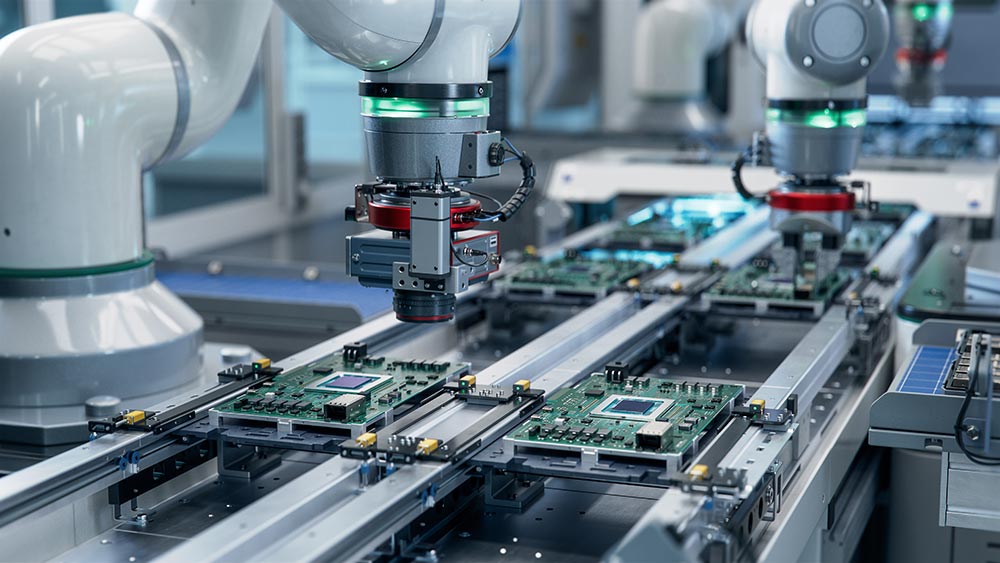
Open post Automated machinery operating in a clean, representing the technological edge of manufacturing reshoring.

Why Texas Manufacturers Are Winning the Reshoring Wave: Infrastructure, Incentives, and Precision Machining

Texas captured more than 40,200 manufacturing jobs through reshoring initiatives in 2025—nearly one quarter of all positions created nationwide—but this dominance didn’t occur accidentally. The state assembled a unique combination of infrastructure investments, geographic advantages, and manufacturing capabilities that position Texas manufacturers to win work returning from overseas production. Understanding these competitive factors helps precision machining operations evaluate their strategic positioning within America’s manufacturing renaissance and identify opportunities to capture reshored business.

The reshoring definition manufacturing phenomenon itself represents one of the most significant industrial shifts in recent decades. Since 2010, companies announced over two million manufacturing jobs returning to American soil through reshoring and foreign direct investment, with momentum accelerating rather than plateauing. Projections suggest as many as 2.3 million jobs could return to the U.S. economy by the close of 2025, driven by geopolitical risk considerations, supply chain vulnerability concerns, rising offshore production costs, and tariff policies encouraging domestic manufacturing.

Texas doesn’t merely participate in this manufacturing reshoring wave—it leads decisively. South Carolina ranks second nationally with 24,800 reshore manufacturing jobs, Mississippi captures 12,100 positions, and New Mexico adds 9,800 jobs, but no state approaches Texas’s concentration of returning manufacturing capacity. This leadership position stems from strategic investments made years before reshoring accelerated, creating infrastructure and capabilities that companies prioritized when evaluating domestic production locations.

Infrastructure Advantages That Matter

Manufacturing site selection depends critically on infrastructure availability including reliable electrical power, adequate water supplies, transportation networks connecting to suppliers and customers, and telecommunications supporting modern production technologies. Texas offers all these elements at scales few states can match, with continuing investments expanding capacity ahead of projected industrial demand.

The Sandow Lakes Advanced Manufacturing Logistix Campus exemplifies Texas’s infrastructure approach. This 50-square-mile development transforms a former Alcoa industrial site into what developers describe as Texas’s only true megasite—an industrial park equipped with abundant electrical power, water, rail, natural gas, and interstate access capable of supporting massive manufacturing operations. The site offers up to 35 million square feet of best-in-class industrial capacity with full build-to-suit opportunities and minimal design constraints, accommodating operations ranging from distribution to advanced manufacturing including cold storage and light industrial applications.

According to the Federal Reserve Bank of Dallas, there have been nearly one trillion dollars in private investment projects announced nationally since the pandemic, with 165 billion dollars (or 16 percent) designated for projects in Texas in addition to nearly 44 billion in federal government aid for clean energy, infrastructure and manufacturing. The megasite sits 20 minutes from Samsung’s advanced semiconductor fabrication facility in Taylor and 45 minutes from Tesla’s Giga Texas campus, positioning manufacturers to integrate into supply chains supporting these anchor tenants.

Electrical power availability represents perhaps Texas’s single greatest infrastructure advantage for advanced manufacturing. The state’s independent electrical grid managed by ERCOT provides competitive rates and sufficient capacity to support energy-intensive operations that consume megawatts of power around the clock. Natural gas availability from Texas production fields ensures industrial users can access affordable energy for process heating and power generation, reducing operational costs compared to states dependent on pipeline imports or liquefied natural gas terminals.

Transportation infrastructure facilitates both inbound material flows and outbound product distribution. Texas maintains more miles of public roads and freight rail than any other state, at 313,220 miles and 10,539 miles respectively, along with 19 seaports including 11 deep water ports. This multimodal transportation capacity enables manufacturers to optimize logistics costs while maintaining supply chain flexibility that reduces vulnerability to disruptions affecting single transportation modes.

Government Policies and Investment Incentives

State and local governments throughout Texas actively compete for manufacturing investments through tax abatements, infrastructure improvements, workforce training support, and expedited permitting processes that reduce project development timelines. These incentive packages, combined with Texas’s absence of corporate income tax and relatively light regulatory environment, create favorable economics for manufacturers evaluating domestic production locations.

Major reshoring announcements in Texas typically involve substantial public sector support. Samsung’s 65 billion dollar semiconductor investment received significant state and local incentives recognizing the project’s transformative economic impact. Tesla’s 5.5 billion dollar expansion similarly benefited from governmental support facilitating rapid project approval and infrastructure development. These headline investments create multiplier effects throughout regional manufacturing ecosystems as suppliers establish operations near major customers and service providers expand to support growing industrial activity.

The CHIPS and Science Act, Inflation Reduction Act, and Infrastructure Investment and Jobs Act provide federal funding supporting domestic manufacturing investments particularly in semiconductor production, electric vehicle manufacturing, and clean energy technology. Texas manufacturers and project developers have accessed substantial federal resources through these programs, layering national incentives atop state and local support to create compelling financial packages that influence corporate location decisions.

Workforce development programs represent another critical governmental support mechanism. Texas community colleges and technical schools operate training programs specifically designed for manufacturing careers, often customizing curricula in partnership with major employers to ensure graduates possess skills matching local industry requirements. These public investments in workforce capability reduce training burdens on individual manufacturers while ensuring adequate talent pipelines support industrial expansion.

Precision Machining as Reshoring Enabler

Reshoring success depends on domestic manufacturing capabilities matching or exceeding what offshore production offers. For many products, this means American manufacturers must provide superior quality, faster response times, and greater flexibility compared to low-cost overseas alternatives rather than competing purely on price. Precision machining capabilities prove essential for delivering these value propositions across industries from aerospace to medical devices to energy equipment.

The precision machining market demonstrates explosive growth aligned with reshoring trends. Global market valuations reached 115.41 billion dollars in 2025 and project to hit 244.59 billion by 2035, representing compound annual growth of 7.8 percent throughout the forecast period. Milling represents 45 percent of precision machining applications, turning accounts for 34 percent, and electrical discharge machining contributes 21 percent of market activity. Texas manufacturers with advanced turning capabilities position themselves to capture work in the fastest-growing precision machining segment.

Turning operations prove particularly critical for cylindrical components including shafts, bushings, fasteners, and rotational parts used throughout manufacturing machinery, transportation equipment, and energy systems. The versatility of modern CNC turning centers enables manufacturers to produce parts ranging from simple bushings to complex multi-diameter shafts with tight tolerances and excellent surface finishes. This capability breadth allows Texas machine shops to serve diverse customers across multiple industries rather than depending on single sectors vulnerable to cyclical demand fluctuations.

Quality expectations for reshored manufacturing typically exceed offshore standards because domestic production must justify higher costs through superior performance and reliability. Aerospace applications demand components maintaining structural integrity under extreme temperatures and stresses where failures prove catastrophic. Medical devices require parts meeting FDA regulatory standards with complete traceability and documentation. Energy equipment operates in harsh environments where premature failures create safety hazards and expensive downtime. These demanding applications reward manufacturers investing in precision equipment and quality systems that ensure consistent performance.

Supply Chain Integration and Customer Proximity

Reshoring appeals to manufacturers pursuing supply chain resilience after experiencing disruptions from pandemic lockdowns, port congestion, shipping container shortages, and geopolitical tensions affecting international trade. Domestic production shortens supply chains, reduces lead times, and eliminates many risks associated with offshore sourcing including intellectual property concerns, quality control challenges, and communication difficulties across time zones and language barriers.

Texas’s central U.S. location provides efficient access to customers throughout North America. Manufacturers serving automotive companies can reach assembly plants in Mexico, the American South, and the Midwest within single-day trucking distances. Aerospace suppliers can deliver to Boeing facilities in South Carolina, Lockheed Martin operations in Fort Worth, and numerous defense contractors concentrated in California and the Eastern Seaboard. This geographic positioning reduces transportation costs and delivery times compared to coastal states serving primarily regional markets.

The nearshoring trend—relocating production to Mexico while maintaining proximity to U.S. operations—creates additional opportunities for Texas manufacturers. Companies establishing assembly operations in Mexican border cities often maintain engineering, tooling, and specialized machining capabilities in Texas where technical expertise and infrastructure prove superior. This hybrid approach allows manufacturers to access cost-competitive labor for assembly while retaining sophisticated operations requiring advanced capabilities in Texas facilities.

Computer and electronics manufacturing leads reshoring activity with approximately 68,700 new positions nationally, transportation equipment follows with 52,500 jobs, and electrical equipment adds 34,800 positions. These sectors concentrate in regions with established manufacturing ecosystems including supplier networks, technical workforce, and engineering expertise. Texas’s existing industrial base in energy equipment, aerospace, and electronics provides foundation capabilities that transfer effectively to reshored production across adjacent industries.

How Precision Machine Shops Capture Reshoring Opportunities

Texas machine shops pursuing reshored business should emphasize capabilities that differentiate domestic production from offshore alternatives. Quick turnaround times enable customers to reduce inventory investments and respond faster to changing demand patterns. Engineering support helps customers optimize designs for manufacturability, reducing costs and improving quality compared to offshore suppliers providing pure manufacturing services. Quality documentation satisfies regulatory requirements and provides traceability that many offshore producers cannot match consistently.

Automation investments signal capability and capacity to potential customers evaluating domestic supply sources. Understanding How Automation Technology Solves the CNC Machinist Shortage Without Replacing Workers  reveals how advanced turning centers with robotic loading, integrated quality verification, and lights-out manufacturing capability demonstrate that Texas shops can achieve productivity levels competing with low-labor-cost regions while maintaining superior quality and responsiveness.

Industry certifications including ISO 9001, AS9100 for aerospace, and ISO 13485 for medical devices provide objective evidence of quality system maturity that customers require when qualifying new suppliers. Texas manufacturers pursuing reshored business should prioritize obtaining relevant certifications for target industries, recognizing that certification requirements represent barriers to entry protecting qualified suppliers from unqualified competition.

However, even with excellent infrastructure and capabilities, Texas CNC Shops Face Critical Workforce Crisis as 244,000 Reshoring Jobs Flood Market, creating strategic imperatives for manufacturers to address labor constraints through technology adoption, training investments, and operational innovation. Collaboration with industry associations, economic development organizations, and reshoring advocacy groups helps Texas manufacturers connect with companies actively evaluating domestic sourcing options.

SW Machine & Technology: Your Partner in Precision Manufacturing

At SW Machine & Technology, we help Texas manufacturers capitalize on reshoring opportunities through precision CNC turning solutions that deliver the quality, efficiency, and reliability today’s demanding applications require. Our equipment enables you to compete effectively for reshored work while managing workforce and capacity constraints.

Our Services Include:

  • CNC Turning Machines – Advanced turning solutions engineered for the precision and productivity reshoring demands
  • Technical Support & Training – Comprehensive assistance helping you maximize competitive advantages

Ready to Capture Reshoring Opportunities? Contact SW Machine & Technology to discuss how our turning machine solutions position your operation for success in America’s manufacturing renaissance.

Works Cited

“Industrial Building Boom Is Bigger in Texas, Signaling Growth Wave.” Federal Reserve Bank of Dallas, www.dallasfed.org/research/swe/2025/swe2501. Accessed 18 Nov. 2025.

“Texas Infrastructure.” Texas Economic Development Corporation, 19 Aug. 2025, businessintexas.com/why-texas/infrastructure/. Accessed 18 Nov. 2025.

Related Articles 


Open post Skilled CNC machinist operating modern equipment in Texas.

Texas CNC Shops Face Critical Workforce Crisis as 244,000 Reshoring Jobs Flood Market

Texas manufacturers are caught in an unprecedented paradox. The state added more than 40,200 manufacturing jobs in 2025 through reshoring initiatives—nearly 23 percent of all positions created nationwide—yet precision machining shops can’t find enough skilled workers to fill critical cnc machinist roles. This collision between surging demand and severe labor shortages threatens to undermine Texas’s emergence as America’s reshoring capital just as the opportunity reaches historic proportions.

The numbers tell a story of both triumph and crisis. Since 2010, reshoring and foreign direct investment have announced over two million manufacturing jobs returning to American soil, with Texas capturing the largest share of this industrial renaissance. Major investments include Samsung’s 65 billion dollar semiconductor facility, Tesla’s 5.5 billion dollar expansion, and 4.9 billion in public infrastructure projects specifically designed to support advanced manufacturing. Yet approximately 54 percent of precision machining companies now report skilled labor shortages affecting operational output and timely project delivery, creating a bottleneck that prevents manufacturers from capitalizing on unprecedented demand.

The reshoring wave sweeping across Texas represents more than simple job creation. Computer and electronics manufacturing leads with roughly 68,700 new positions nationally, transportation follows with 52,500 jobs, and electrical equipment adds 34,800 positions. These sectors depend heavily on precision CNC machining capabilities—the exact skills Texas shops struggle to staff. As companies like Apple announce 20,000 new jobs and major corporations commit to expanding domestic production, the gap between available work and available workers widens dangerously.

The Scale of Texas’s Manufacturing Transformation

Understanding the magnitude of Texas’s manufacturing expansion requires examining both the immediate numbers and longer-term projections. The Federal Reserve Bank of Dallas reported factory activity at some of its strongest levels in more than three years during mid-2025, with the future production index rising to 30.3 and the future general business activity index climbing to 19.0. This momentum reflects competitive advantages that extend beyond cheap land and favorable taxes—Texas offers access to ports and logistics networks, proximity to Mexican manufacturing hubs through nearshoring arrangements, and a regulatory environment that accelerates project approvals.

The precision machining market itself demonstrates explosive growth trajectories. The global precision machining market reached 115.41 billion dollars in 2025 and projects to hit 244.59 billion by 2035, registering compound annual growth of 7.8 percent throughout the forecast period. Aerospace demand drives 61 percent of market expansion, automotive applications influence 55 percent, and medical device utilization contributes 48 percent of growth. Each of these sectors maintains significant operations in Texas, concentrating demand for precision turning, milling, and electrical discharge machining capabilities.

Houston exemplifies this transformation most dramatically. The city historically identified with energy and petrochemicals now attracts technology giants reshaping its industrial identity. Foxconn invested 450 million dollars to expand AI server production, creating 600 new jobs with an estimated 920 million dollar economic impact. Nvidia announced new AI supercomputer facilities in both Houston and Dallas areas. These high-tech manufacturers require precision components machined to tolerances measured in microns—work that demands skilled CNC operators Texas shops increasingly cannot provide.

Infrastructure projects specifically targeting manufacturing expansion compound workforce pressures. A 50-square-mile former Alcoa site outside Rockdale transforms into Sandow Lakes Advanced Manufacturing Logistix Campus, positioned as the only megasite in Texas with abundant electrical power, water, rail, natural gas, and interstate access. The development plans up to 35 million square feet of industrial capacity strategically located within the Texas Triangle—20 minutes from Samsung’s advanced chip fabrication facility and 45 minutes from Tesla’s Giga Texas campus. This concentration of advanced manufacturing creates unprecedented demand for precision machining support services that existing workforce capacity cannot meet.

Why CNC Machinist Shortages Threaten Everything

The skilled labor crisis affects precision machining more acutely than many manufacturing sectors because CNC operation demands specialized technical knowledge that cannot be acquired quickly. Machinists must understand G-code programming, interpret complex engineering drawings, select appropriate cutting tools and parameters, monitor multiple machines simultaneously, and troubleshoot problems requiring both mechanical and programming expertise. CNC machine training competent CNC machinists typically requires two to four years through formal apprenticeships or technical programs, creating a pipeline problem that cannot be solved with short-term hiring pushes.

Demographic trends compound the challenge. Approximately one quarter of the current manufacturing workforce exceeds 55 years old, with retirement waves accelerating throughout the decade ahead. Experienced machinists retiring take with them decades of accumulated knowledge about material properties, tooling strategies, and problem-solving approaches that newer workers must learn through years of hands-on experience. This generational transition occurs precisely as reshoring initiatives create maximum demand for precision machining capabilities, creating what industry analysts describe as a perfect storm of labor scarcity.

The manufacturing sector must fill 1.5 million openings by 2035 according to workforce projections, with CNC machinists, general machinists, and CNC programmers ranking among the most in-demand skilled production positions. Competition for available talent intensifies as multiple industries pursue the same limited candidate pool. Aerospace contractors, automotive suppliers, medical device manufacturers, and oil and gas equipment producers all require precision machining capabilities, bidding against each other for workers who can command premium wages due to scarcity.

Texas shops face particular challenges competing for talent against technology giants offering substantially higher compensation packages. When Apple, Nvidia, and Samsung establish major facilities paying technology-sector wages, traditional machine shops struggle to match compensation levels even as they require equivalent technical sophistication from employees. The perception problem persists despite reality—many younger workers view manufacturing as dirty, low-tech, and lacking advancement opportunities even as modern CNC shops operate climate-controlled facilities filled with sophisticated equipment requiring advanced technical skills.

How Automation Technology Fits the Solution

Smart manufacturers recognize that solving workforce shortages requires strategic combinations of technology adoption, training investments, and operational restructuring rather than simply pursuing scarce labor more aggressively. Understanding How Automation Technology Solves the CNC Machinist Shortage Without Replacing Workers  becomes essential for shops seeking sustainable competitive advantages. Advanced CNC turning machines with automation capabilities enable smaller crews to maintain higher production volumes by handling material loading, unloading, and basic quality verification without constant operator supervision.

Five-axis turning centers exemplify how sophisticated equipment changes workforce equations. These machines complete complex parts in single setups that previously required multiple operations across several machines, reducing both floor space requirements and the number of operators needed per part produced. The upfront capital investment proves substantial—approximately 30 percent higher than conventional equipment—but manufacturers report that automation-enhanced machines increase operational efficiency by 50 percent through improved production speed, maximized precision, and reduced waste.

The conversation around automation often triggers fears about job displacement, but the manufacturing reality proves more nuanced. The industry needs to fill millions of positions even as automation expands, suggesting technology supplements rather than replaces human workers. Automation handles repetitive tasks and material movement while freeing skilled machinists to focus on setup, troubleshooting, programming, and quality assurance—work requiring judgment and expertise that machines cannot replicate.

Texas manufacturers investing in advanced turning technology position themselves to compete effectively for reshored work while managing workforce constraints. Examining Why Texas Manufacturers Are Winning the Reshoring Wave: Infrastructure, Incentives, and Precision Machining  reveals how strategic positioning within the Texas Triangle manufacturing corridor provides competitive advantages that extend beyond labor availability to encompass logistics efficiency, customer proximity, and supply chain integration.

SW Machine & Technology: Your Partner in Precision Manufacturing

At SW Machine & Technology, we understand the challenges Texas manufacturers face in this rapidly evolving landscape. Our precision CNC turning machines deliver the accuracy, reliability, and efficiency that modern manufacturing demands, helping shops maximize productivity from available workforce resources.

Our Services Include:

  • CNC Turning Machines – Advanced turning solutions engineered for Texas precision manufacturing requirements
  • Technical Support & Training – Comprehensive assistance helping your team maximize equipment performance

Ready to Address Your Workforce Challenges? Contact SW Machine & Technology to discuss how our turning machine solutions can help your operation meet growing demand even in tight labor markets.

Works Cited

“Map Shows States Gaining Most Jobs Due to Reshoring Efforts.” Newsweek, 29 July 2025, www.newsweek.com/map-shows-states-gaining-most-jobs-due-reshoring-efforts-2105963. Accessed 18 Nov. 2025.

“Global Precision Machining Market 2025–2035: Strategic Insights.” Business Research Insights, www.businessresearchinsights.com/market-reports/precision-machining-market-118285. Accessed 18 Nov. 2025.

Related Articles


Open post how Texas shops use automated CNC machines to multiply capacity and tackle reshoring.

How Automation Technology Solves the CNC Machinist Shortage Without Replacing Workers

The narrative around manufacturing automation typically triggers fears of widespread job elimination, but the actual implementation of advanced automated cnc machines technology tells a fundamentally different story. As Texas CNC Shops Face Critical Workforce Crisis as 244,000 Reshoring Jobs Flood Market , automation emerges not as a workforce replacement strategy but as a force multiplier enabling smaller teams to maintain competitive production capacity. The distinction proves critical for an industry that must fill 1.5 million positions by 2035 even as cutting-edge equipment transforms traditional machining workflows.

Modern CNC turning centers equipped with robotic loading systems, automated tool changers, and integrated quality verification capabilities allow single operators to supervise multiple machines simultaneously—work that previously required dedicated attention to each machine tool. This operational restructuring doesn’t eliminate machinist positions but rather elevates their roles from machine tending to technical oversight, programming, troubleshooting, and quality assurance. The transformation addresses workforce scarcity by extracting maximum productivity from available talent while simultaneously making positions more intellectually engaging and professionally rewarding for workers seeking meaningful manufacturing careers.

The manufacturing labor market dynamics support this interpretation convincingly. If automation truly replaced workers on a one-to-one basis, the industry wouldn’t face unprecedented hiring challenges. Instead, manufacturers report that approximately 54 percent of companies experience skilled labor shortages affecting operational output and project delivery timelines. These statistics demonstrate that technology adoption and workforce needs advance simultaneously rather than inversely, with sophisticated equipment creating demand for technically proficient operators capable of managing complex automated systems.

The Evolution of CNC Operator Roles

Traditional CNC machining required operators to perform repetitive manual tasks including loading raw material, starting machining cycles, monitoring operations for obvious problems, unloading finished parts, performing basic measurements, and moving work-in-process between machines. This workflow kept machinists physically present at individual machines throughout production runs, limiting how much work any single employee could oversee. The job demanded attention to detail and mechanical aptitude but offered limited intellectual challenge once operators mastered basic procedures.

Advanced turning centers with automation capabilities fundamentally restructure these responsibilities. Robotic arms handle material loading and unloading, automated tool changers swap cutting tools based on programmed sequences, integrated probing systems verify critical dimensions without operator intervention, and sophisticated control systems alert operators only when intervention becomes necessary. This technological infrastructure frees machinists to focus on higher-value activities including programming new parts, optimizing cutting parameters for efficiency and quality, troubleshooting complex problems requiring judgment and experience, and mentoring less experienced team members.

Research from Deloitte’s 2025 Smart Manufacturing Survey shows that 46 percent of manufacturers rank process automation as their top investment priority, with 37 percent prioritizing physical automation and 41 percent focusing on factory automation hardware within the next 24 months. These technologies don’t simplify machining to eliminate skill requirements—they shift demanded competencies toward programming, data analysis, and systems thinking while reducing the physical labor components that historically characterized machining work.

The economic mathematics underlying automation investment proves compelling for manufacturers managing tight labor markets. Equipment costs approximately 30 percent more than conventional machines due to advanced sensors, automation systems, and control technologies, but operational efficiency improves by roughly 50 percent through increased production speed, enhanced precision, reduced material waste, and lower energy consumption per part produced. When skilled machinists command premium wages due to scarcity and overtime costs escalate during peak demand periods, automation payback timelines compress significantly compared to historical calculations based solely on labor displacement.

Real-World Implementation Strategies

Successful automation implementation requires careful planning that considers both technical capabilities and workforce implications. Manufacturers pursuing automation strategies should begin with comprehensive workflow analysis identifying bottlenecks, repetitive tasks, and quality challenges that technology might address more effectively than manual methods. This diagnostic approach prevents the common mistake of automating existing inefficient processes rather than redesigning workflows to maximize technological advantages.

Gradual implementation proves more successful than attempting complete facility transformation simultaneously. Starting with pilot programs on single machines or specific product families allows manufacturers to develop expertise, refine procedures, and demonstrate value before committing substantial capital across entire operations. This phased approach also helps existing employees adapt to new technologies incrementally rather than confronting overwhelming simultaneous changes that trigger resistance and anxiety about job security.

Employee involvement throughout automation planning and implementation proves essential for maximizing technology adoption success. Experienced machinists possess intimate knowledge of production realities, material behaviors, and problem-solving approaches that engineering teams may overlook when designing automated workflows. Including operators in technology evaluation, programming development, and troubleshooting processes leverages this expertise while building worker buy-in and reducing fears that automation targets their jobs specifically.

Training investments must accompany equipment purchases to ensure workforce capabilities match technological sophistication. According to industrial automation market research, collaborative robots now make up 11.6 percent of all industrial robots ordered in North America, with these user-friendly systems requiring less extensive programming knowledge than previous generations. However, operators still need training in automation management, data interpretation, and advanced troubleshooting techniques. Manufacturers partnering with equipment suppliers, technical colleges, and industry associations can access training resources that accelerate workforce skill development while reducing internal burden on senior machinists already stretched thin by production demands.

Addressing Common Automation Misconceptions

The persistent belief that automation eliminates manufacturing jobs stems from conflating different types of technological change. Simple mechanization replacing human physical labor with machines performing identical tasks differently than automation enhancing human capabilities through intelligent systems that handle routine work while escalating complex decisions to skilled workers. The distinction matters enormously when evaluating workforce implications of modern manufacturing technology.

Bureau of Labor Statistics projections forecast 7 percent growth for machinist positions through 2030 despite—or perhaps because of—accelerating automation adoption throughout the industry. This growth occurs because manufacturing output expands faster than productivity gains from automation, requiring additional workers even as technology improves individual productivity. The sector confronts capacity constraints from labor scarcity more than from insufficient technological capability, making workforce multiplication through automation an economic necessity rather than merely an efficiency opportunity.

Concerns about automation concentrating skills among smaller elite workforces while eliminating opportunities for less technically sophisticated workers deserve consideration but oversimplify actual workforce evolution. While advanced CNC programming requires mathematical aptitude and technical training, modern manufacturing encompasses diverse roles including machine operation requiring careful attention to detail, quality inspection demanding excellent visual acuity and measurement skills, material handling needing organizational capability and physical capability, and maintenance work requiring mechanical aptitude and troubleshooting persistence.

The semiconductor industry’s experience in Texas illustrates how advanced manufacturing creates unexpected workforce opportunities. Samsung’s chip fabrication facility represents perhaps the most automated manufacturing environment imaginable, yet the company hired thousands of workers for roles ranging from equipment technicians to process engineers to logistics coordinators. The facility’s workforce composition differs dramatically from traditional factories, with higher concentrations of technical specialists and engineers, but employment density per square foot of production space remains substantial because sophisticated equipment requires sophisticated human support.

The Texas Advantage in Manufacturing Automation

Texas manufacturers pursuing automation strategies benefit from state-specific advantages including proximity to equipment suppliers and service networks concentrated in major metropolitan areas, access to technical colleges and workforce training programs specifically targeting manufacturing skills, and connections to research institutions developing next-generation manufacturing technologies. These resources reduce implementation risks and accelerate capability development compared to manufacturers operating in regions with less robust industrial ecosystems.

The concentration of advanced manufacturing within the Texas Triangle creates knowledge-sharing opportunities through industry associations, peer networks, and collaborative relationships. Manufacturers implementing automation technologies can learn from peers’ experiences, avoid common pitfalls, and identify best practices that accelerate adoption curves. This regional learning effect proves particularly valuable for small and medium enterprises lacking internal expertise in advanced manufacturing technologies but able to leverage collective wisdom from neighboring operations facing similar challenges.

Understanding Why Texas Manufacturers Are Winning the Reshoring Wave: Infrastructure, Incentives, and Precision Machining reveals how government incentive programs occasionally provide financial support for technology adoption and workforce training, reducing capital requirements for automation investments. While not consistently available, these programs recognize that manufacturing competitiveness depends increasingly on technological sophistication and workforce capabilities rather than labor cost advantages alone.

SW Machine & Technology: Your Partner in Precision Manufacturing

At SW Machine & Technology, we specialize in CNC turning solutions that help Texas manufacturers maximize workforce productivity through advanced automation capabilities. Our equipment enables skilled machinists to oversee multiple operations simultaneously, multiplying output without proportional workforce expansion.

Our Services Include:

  • CNC Turning Machines – State-of-the-art turning centers designed for automation integration and workforce multiplication
  • Technical Support & Training – Comprehensive assistance ensuring your team maximizes equipment capabilities

Ready to Enhance Your Manufacturing Capacity? Contact SW Machine & Technology to explore how our turning machine solutions can help you address workforce challenges while meeting growing production demands.

Works Cited

“2025 Smart Manufacturing and Operations Survey: Navigating Challenges to Implementation.” Deloitte Insights, 17 Sept. 2025, www.deloitte.com/us/en/insights/industry/manufacturing/2025-smart-manufacturing-survey.html. Accessed 18 Nov. 2025.

“Automation Statistics 2025: Comprehensive Industry Data and Market Insights.” Thunderbit, 27 May 2025, thunderbit.com/blog/automation-statistics-industry-data-insights. Accessed 18 Nov. 2025.

Related Articles


Scroll to top