Blog

Open post

CNC Workholding and Fixturing: How the Setup, Not the Spindle, Decides Your Tolerances

Southwest Machine Technologies | Houston, TX

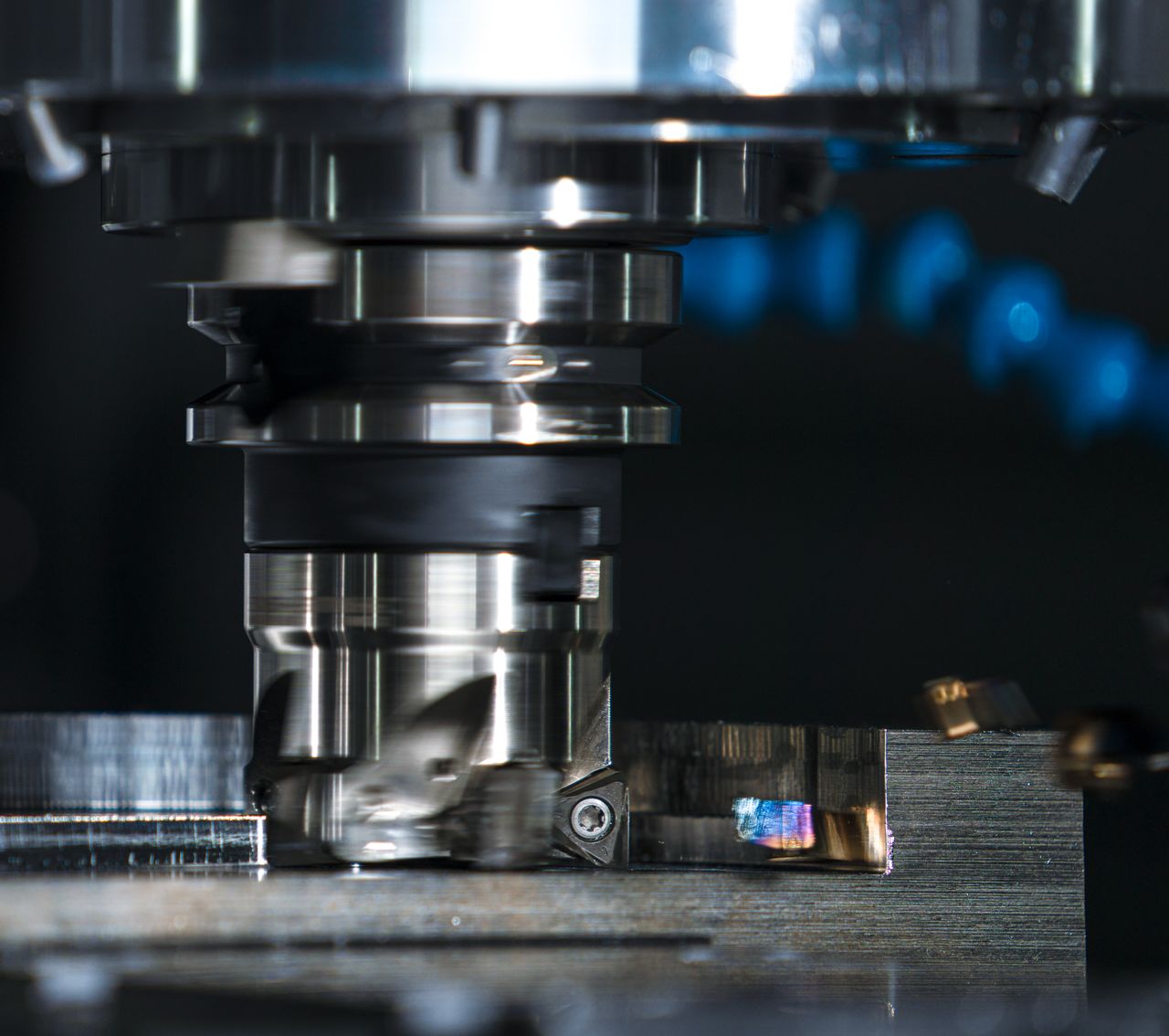
Shops shopping for accuracy tend to look at the spindle, the way axis resolution, and the control. But a large share of dimensional errors never originate in the machine at all—they originate in how the part was held. Workholding is the quiet variable that decides whether an accurate machine produces accurate parts, and it is the one most often left to whatever vise or fixture happened to be on the shelf. The spindle gets the credit and the blame; the fixture usually deserves both.

The physics is unforgiving. A workpiece has six degrees of freedom, and workholding has to control all of them without crushing the part. Clamp too little and cutting forces push the part, causing chatter and mislocation; clamp too hard and the part deforms under the clamp, then springs back out of tolerance after it is released. Research on fixturing is explicit that localized elastic deformation at the workpiece-fixture contacts significantly affects part accuracy. The clamp that feels reassuringly tight to an operator is often the reason a thin-walled part measures fine in the fixture and wrong on the bench.

The 3-2-1 Principle and Why Over-Constraint Hurts

The foundation of good workholding is the 3-2-1 locating principle: three points establish the primary datum plane, two define a secondary plane, and one locates the last axis, fully constraining the part with the minimum necessary contact. The discipline is in the word minimum. Over-constraining a workpiece—adding redundant locators or clamps in a well-meant attempt to make it more rigid—introduces internal stress and distortion that machine away invisibly, then reappear as a warped part when the clamps come off.

Locating off the right datums matters as much as the number of points. If the fixture references different surfaces than the print dimensions are called from, every measurement inherits an error before the spindle even turns. Good fixturing makes the part’s datums and the fixture’s reference surfaces the same, so the machine is cutting from the same zero the inspector measures from. When that alignment is missing, parts can be machined perfectly to the wrong reference and fail inspection for reasons no spindle upgrade will fix.

Clamping Force Is a Calculation, Especially for Thin Walls

The hardest workholding problems are thin-walled and flexible parts—common in energy, aerospace, and precision work across Texas. Here clamping force has to be high enough to resist cutting loads but low enough to avoid deforming the part, a balance that research treats as a formal optimization problem. A study of fixture optimization in turning thin-wall components showed that analyzing clamping configurations against predicted deflection and chatter is what makes it possible to hold tolerance and keep the cut stable. For these parts, “clamp it tight and hope” is not a strategy; it is a scrap generator.

Workholding also governs how cutting forces flow into the part, which ties it directly to tooling. A sharp, correctly matched tool lowers the force the fixture has to resist, so workholding and [PLACEHOLDER: Cutting Tool and Insert Selection — The Tooling Decisions That Decide Your Cost Per Part] are coupled problems—improving one eases the other. The same logic that makes bending a math problem makes workholding one, a theme shared with [PLACEHOLDER: Press Brake Tonnage and Springback — Why Bending Math Makes or Breaks a Fab Shop].

Workholding Is What Makes Automation Pay

There is a productivity dimension too. Repeatable, quick-change workholding is what lets a shop load the next part in seconds instead of re-indicating for minutes, and it is the foundation of any unattended or lights-out strategy. A machine cannot run reliably overnight if every part has to be dialed in by hand; the fixture has to deliver the same zero, part after part, without an operator. In that sense workholding is not just an accuracy tool but a capacity tool—the difference between a machine that runs while the lights are off and one that sits idle waiting for a setup.

For Texas shops, the lesson is to give workholding the same scrutiny as the machine itself. Locate off the right datums, constrain with the 3-2-1 discipline, calculate clamping force instead of cranking it, and invest in repeatable fixturing for the parts that run often. The payoff is accuracy that holds, cycles that shorten, and machines that can finally run the way their spec sheets promised.

Choosing the Right Workholding for the Job

Workholding is not one decision but a spectrum, and matching the method to the job is where shops gain or lose efficiency. A simple vise is fast and flexible for prismatic parts and short runs; dedicated fixtures pay for themselves on parts that run often by cutting setup to seconds; vacuum and magnetic systems hold flat or thin parts without the point loads that deform them; and soft jaws machined to the part profile spread clamping force and locate repeatably. Reaching for the same vise on every job is convenient, but it leaves accuracy and cycle time on the table for the parts that deserve a purpose-built solution.

Volume and tolerance together should drive the choice. A one-off bracket does not justify a custom fixture, but a part that runs weekly in quantity absolutely does, because the fixture’s cost is amortized across every repeat while its repeatability protects every shipment. Tight-tolerance and thin-walled parts move the calculus further toward engineered workholding, since the cost of scrap and rework on those parts dwarfs the cost of holding them correctly. The question is never just “will this hold the part” but “what does the right hold save across the life of this job.”

Modular and quick-change systems bridge the gap for shops with high part variety. Standardized bases, pallets, and locating systems let a shop build repeatable setups without a dedicated fixture for every part, swapping components in minutes instead of re-indicating by hand. For a Texas job shop juggling energy, aerospace, and precision work across short runs, that flexibility is often the difference between a machine that changes over quickly and one that loses its mornings to setup. Workholding strategy, in other words, is capacity strategy.

Southwest Machine Technologies: Precision Machining Solutions for Texas

Southwest Machine Technologies helps Texas shops pair the right milling and turning machines with workholding strategies that actually hold tolerance—so the accuracy you bought shows up in the parts, not just the brochure.

Our Machine Tool Solutions Include:

  • Milling Machines — Vertical and horizontal machining centers for Texas precision and production work
  • Turning Machines — CNC lathes and turning centers for cylindrical and multi-axis part production
  • Fabrication Machines — Cutting and forming equipment for sheet and plate fabrication

Ready to get more out of your floor? Contact Southwest Machine Technologies to talk through the right machine and process for your Texas shop.

Frequently Asked Questions

What is the 3-2-1 locating principle?

It is the standard method for fully constraining a part with minimum contact: three points establish the primary datum plane, two points define a secondary plane, and one point locates the final axis. Together they control all six degrees of freedom without over-constraining, which keeps the part stable while avoiding the internal stress that redundant locators introduce.

Can clamping a part too hard cause defects?

Yes. Excessive clamping force deforms the workpiece while it is held; the part is machined in that distorted state and then springs back out of tolerance once the clamps release. This is especially severe on thin-walled and flexible parts, where clamping force has to be calculated to resist cutting loads without deforming the part.

Why do parts measure right in the fixture but wrong off the machine?

Two common causes: the part was clamped hard enough to deform, so it relaxes out of tolerance when released; or the fixture located off different surfaces than the print datums, building in an error before cutting began. Both are workholding problems, not spindle problems, and no machine upgrade corrects them.

How does workholding affect automation and lights-out machining?

Repeatable, quick-change workholding lets a part load to the same zero every time without manual indicating, which is the prerequisite for unattended and lights-out running. Without it, every part needs an operator to dial in, so the machine cannot run reliably overnight regardless of how capable the machine itself is.

Works Cited

Liu, Haibo, et al. “Fixturing Technology and System for Thin-Walled Parts Machining: A Review.” Frontiers of Mechanical Engineering, vol. 17, no. 4, 2022, link.springer.com/content/pdf/10.1007/s11465-022-0711-5.pdf. Accessed 14 June 2026.

Campatelli, Gianni, et al. “Fixture Optimization in Turning Thin-Wall Components.” Machines, vol. 7, no. 4, 2019, www.mdpi.com/2075-1702/7/4/68. Accessed 14 June 2026.
Related Articles

Open post

Press Brake Tonnage and Springback: Why Bending Math Makes or Breaks a Fab Shop

Southwest Machine Technologies | Houston, TX

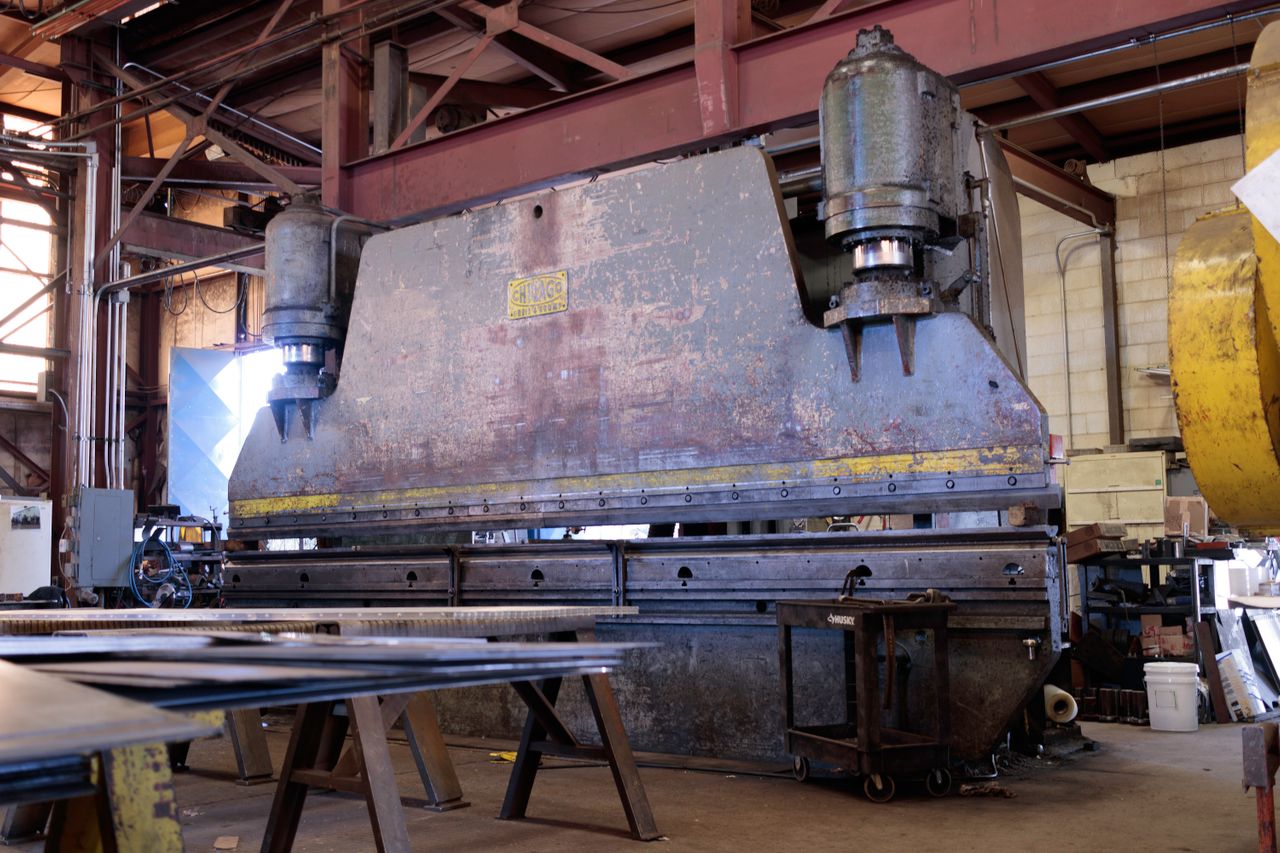
Texas fabrication shops have invested heavily in cutting—fiber laser, tube laser, waterjet—but the part rarely ships flat. Sooner or later it has to be bent, and the press brake is where a clean blank becomes a finished part or an expensive mistake. More than any other operation on the fab floor, bending punishes guesswork. Get the tonnage and springback math wrong and you stall the ram, crack tooling, or ship parts that are a degree or two out and get rejected at assembly.

The first trap is tonnage. The force required to bend a part is not a single number; it scales with material thickness, bend length, the die opening, and the strength of the specific alloy. A standard rule of thumb sizes the V-die opening at roughly six to ten times material thickness, and research on bending processes confirms that die opening, thickness, and bend angle govern the force and punch travel required. Switch from air bending to bottoming or coining and the force multiplies several times over—which is exactly how an operator using an air-bending chart for a coining job stalls a brake that was never overloaded, just mis-calculated.

Springback: The Part Fights Back

The second trap is springback. Sheet metal behaves like a stiff spring: bend it to ninety degrees and the moment the ram lifts, it relaxes open by a degree or more. The amount depends on the material and the geometry, and it is not small. A finite-element study of V-bending in high-strength aluminum found that bend radius was the single most influential factor on springback, followed by material thickness. Harder and higher-strength alloys spring back more, which is why a program that nails mild steel can miss the angle entirely on stainless or aerospace-grade aluminum.

This is the part that surprises shops moving into higher-value work. The same brake, the same tooling, and the same nominal angle produce different finished parts depending on the alloy, because each material has its own elastic recovery. Bottoming and coining reduce springback by forcing the material to conform to the tooling, but they do so at the cost of dramatically higher tonnage and faster tool wear. There is no free angle—only trade-offs that have to be calculated before the ram moves.

Why the Machine and the Math Have to Match

These two traps are why bending capability is a function of the machine and the operator’s math together, not the machine alone. A brake has to have the tonnage for the worst-case job it will see, the control sophistication to compensate for springback through overbend or angle measurement, and tooling matched to the material and radius. The same discipline that governs cutting-tool selection in milling and turning applies here, which is why bending and [PLACEHOLDER: Cutting Tool and Insert Selection — The Tooling Decisions That Decide Your Cost Per Part] are two sides of the same process-control coin—both reward shops that calculate instead of guess.

Modern CNC press brakes close much of the gap by integrating material databases, angle measurement, and springback compensation into the control, letting the machine apply the correct overbend on the first stroke. But the technology assumes the operator understands what it is doing. A shop that treats the brake as a calculator—feeding it correct material data and verifying against tonnage charts—gets repeatable parts. A shop that treats it as a crusher eventually finds the limits of its tooling the hard way.

What This Means for Texas Fabricators

As Texas fab shops chase energy, structural, and precision contracts, forming is increasingly where the margin lives, because anyone can buy a laser but not everyone can bend to tolerance repeatably. The shops that win treat bending as an engineering problem: they size tonnage for the real material, plan for springback by alloy, and choose the forming method—air, bottoming, or coining—deliberately rather than by habit. That discipline turns a press brake from a bottleneck into a competitive advantage.

Tooling, Dies, and the Limits of the Machine

Tonnage and springback are only part of the bending equation; the tooling that delivers the force matters just as much. Punch and die selection—radius, V-opening, and material—determines not only the bend that results but how much of the brake’s rated capacity is actually usable. Pushing a tight radius through a narrow die multiplies the force required and concentrates it on tooling that may not be rated for it, which is how shops crack dies on jobs the machine’s tonnage rating suggested were well within reach. The die opening is a force decision before it is a geometry decision.

Tooling wear quietly changes the math over time. A worn punch radius or a die that has been hammered through thousands of bottoming cycles no longer produces the angle the program expects, and the shop chases the drift with overbend tweaks that mask the real cause. Treating press brake tooling as a maintained asset—inspected, measured, and replaced on a schedule—keeps the bending math predictable. Tooling that is allowed to degrade turns a calculable process back into trial and error, one shim at a time.

Machine capacity has to be matched to the worst-case job, not the average one. A brake sized comfortably for thin mild steel will stall or overload the moment a shop wins a contract for thicker plate or a high-strength alloy, and bottoming or coining those materials can demand several times the air-bending force. Sizing a press brake for the hardest, thickest, shortest-radius work a shop realistically expects to bid—rather than the jobs it runs today—is what prevents a capability gap from becoming a turned-away order or a damaged machine.

Operator skill ties the whole system together. Even a well-sized brake with sharp tooling and a sophisticated control produces bad parts when the person running it does not understand why the numbers matter. The shops that bend reliably invest in training their operators to read tonnage charts, recognize when a job calls for air bending versus bottoming, and anticipate springback by material rather than discovering it after the part is rejected. Technology narrows the margin for error, but it does not remove the need for someone on the floor who understands the forces at work. In bending more than almost any other operation, the difference between a profitable shop and a scrap-prone one is knowledge applied before the ram descends, not adjustments made after it lifts.

Southwest Machine Technologies: Precision Machining Solutions for Texas

Southwest Machine Technologies helps Texas fabricators match press brakes and fabrication equipment to the materials and tolerances they actually run—so tonnage, tooling, and springback control line up with the work instead of fighting it.

Our Machine Tool Solutions Include:

  • Milling Machines — Vertical and horizontal machining centers for Texas precision and production work
  • Turning Machines — CNC lathes and turning centers for cylindrical and multi-axis part production
  • Fabrication Machines — Cutting and forming equipment for sheet and plate fabrication

Ready to get more out of your floor? Contact Southwest Machine Technologies to talk through the right machine and process for your Texas shop.

Frequently Asked Questions

How do I calculate press brake tonnage?

Tonnage scales with material thickness, bend length, the V-die opening, and the strength of the specific alloy—then it is multiplied further if you bottom or coin instead of air bend. Use a tonnage chart or calculator for the real material and method, and never apply air-bending numbers to a bottoming or coining job, which can require several times the force.

What causes springback in bending?

Springback is the elastic recovery of the metal after the ram lifts—the part relaxes slightly open. It is driven mainly by bend radius and material thickness, and higher-strength alloys spring back more. Because it varies by material, the same program and tooling can hit the angle on mild steel and miss it on stainless or high-strength aluminum.

How do shops compensate for springback?

The common approaches are overbending past the target angle so the part relaxes to spec, or switching to bottoming or coining, which force the material to conform to the tooling and reduce recovery—at the cost of much higher tonnage and faster tool wear. Modern CNC brakes integrate material data and angle measurement to apply the right overbend automatically.

Why does my press brake stall on a part it should handle?

Usually because the tonnage was mis-calculated, most often by applying air-bending numbers to a bottoming or coining operation, which can require several times the force. Springback also creates non-linear force spikes near the bottom of the stroke. Verifying the method and the material against a tonnage chart before bending prevents most stalls and tooling damage.

Works Cited

Amaral, Rui L., et al. “Application of Machine Learning to Bending Processes and Material Identification.” Metals, vol. 11, no. 9, 2021, www.mdpi.com/2075-4701/11/9/1418. Accessed 14 June 2026.

“Springback Behavior of AA 7075-T6 Alloy in V-Shaped Bending.” Applied Sciences, vol. 15, no. 10, 2025, www.mdpi.com/2076-3417/15/10/5509. Accessed 14 June 2026.

Related Articles

Open post

How Section 232 Tariffs Are Reshaping Texas Fabrication Shops in 2026

Section 232 tariffs are pushing Southwest Machine Technologies customers to invest in domestic fabrication capacity across the state.

Section 232 tariffs took a major step forward in April 2026. Specifically, the White House restructured how steel, aluminum, and copper tariffs apply to imported finished products. Furthermore, the new framework took effect on April 6, 2026. Therefore, Texas fabrication shops now face a fundamentally changed competitive landscape. Above all, the rules reward domestic fabrication capacity over imported finished goods.

The implications run deep. First, tariffs now apply to the full customs value of imports. Second, they cover derivative products substantially made of these metals. Third, they create real opportunities for U.S. shops capable of taking on reshored work. As a result, Texas fabricators are rethinking equipment investments, staffing strategies, and customer mixes through the rest of 2026 and into 2027.

How Section 232 Tariffs Got Here

The current regime traces back to the first-term tariffs on steel and aluminum imports. Of course, those tariffs originally targeted only the metal portion of imported goods. However, that approach allowed importers to shift costs to non-metal components. As a result, the system effectively undercut domestic producers competing against subsidized foreign metal.

In February 2025, the administration eliminated most country-specific exemptions. Then in June 2025, the steel and aluminum rates jumped to 50 percent. Furthermore, copper joined the list in July 2025 at the same 50 percent rate. By the end of 2025, the United States had become the third-largest steel producer in the world according to the White House fact sheet. Moreover, new steel plants are now under construction in West Virginia, Arkansas, and South Carolina.

For Texas fabricators, this trajectory matters. Specifically, every tariff increase changes the calculation between buying imported fabricated parts and producing them domestically. Therefore, the cumulative effect of Section 232 tariffs over 2024 to 2026 has been profound.

The April 2026 Restructuring Explained

The April 2, 2026 proclamation shifted everything. Specifically, Section 232 tariffs now apply to the full customs value of derivative products, not just the metal content. As a result, importers can no longer reduce duties by emphasizing the non-metal portion of finished goods.

The new rate structure is straightforward. For example, articles made entirely of aluminum, steel, or copper pay a flat 50 percent on full value. Likewise, derivative products substantially made of these metals pay 25 percent. Furthermore, metal-intensive industrial equipment pays 15 percent through December 2027. Additionally, products made abroad with American steel, aluminum, and copper pay a reduced 10 percent rate.

There are some carve-outs. Notably, products with 15 percent or less metal content are no longer subject to Section 232 tariffs. In addition, civil aircraft parts retain exceptions under certain trade agreements. However, the broader scope means many products previously below the tariff threshold now fall within reach. Therefore, the import cost of fabricated parts has climbed sharply across most categories.

How Section 232 Tariffs Are Hitting Texas Fabrication Shops

The broader Texas manufacturing context is covered in Texas Machine Shop Equipment Demand Surges in 2026 as Manufacturing Boom Lands. In short, the state was already seeing massive demand growth. Now, the tariff changes have added pressure on top of that surge.

For Texas fabricators, three effects matter most. First, customers who previously imported fabricated parts are reaching out for domestic alternatives. Second, customers who already buy domestic are placing larger orders to lock in capacity. Third, shops are quoting at higher margins because the alternative is now more expensive.

Of course, this is not pure good news. For instance, shops that import raw steel, aluminum, or copper to fabricate downstream face higher input costs themselves. Furthermore, supply chains for specialty alloys remain fragile. Likewise, lead times on certain steel grades have stretched out as domestic mills run at capacity.

Which Texas Industries Feel the Section 232 Tariffs Most

Oil and gas operations across the Permian Basin face significant exposure. Specifically, valves, fittings, and pressure vessels often involve imported components. As a result, well-pad fabrication work is shifting toward shops with the right equipment for thicker plate and pipe work.

Automotive suppliers in the Dallas-Fort Worth corridor and around Austin are also reshaping their sourcing. For example, Tesla’s Austin operations and the broader EV supply chain require precision fabricated parts in volume. Therefore, suppliers are evaluating whether to expand U.S. fabrication capacity or pay higher import costs.

Aerospace and defense work along the I-35 and I-10 corridors faces a more nuanced picture. In some cases, civil aircraft parts retain exemptions. However, military and dual-use programs see higher costs on imported fabricated assemblies. Meanwhile, semiconductor packaging and equipment work at the Sherman fab and Round Rock facilities depends heavily on precision fabricated enclosures, frames, and tooling. As a result, demand for Texas-based fabrication has expanded across all four major industry clusters.

New Opportunities for Domestic Fabricators

The April 2026 changes create concrete opportunities for Texas fabrication shops. Specifically, customers who were importing finished parts are now seeking domestic suppliers. As a result, quote requests are up across the state. Furthermore, customers are willing to accept slightly longer lead times to lock in domestic supply at predictable cost.

For example, distribution and warehousing customers that buy fabricated racking and material handling equipment are bringing work back to U.S. shops. Likewise, energy infrastructure projects are sourcing more components domestically. In addition, government procurement rules increasingly favor U.S.-fabricated parts. Above all, the trend lines favor shops investing in capacity now.

However, capturing the opportunity requires capability. Specifically, customers will not move work to shops that cannot match imported product quality. Therefore, equipment that produces consistent results at competitive cost is the price of entry.

Equipment Strategy in the Section 232 Tariffs Era

The right equipment mix depends on the work coming in. For instance, oil and gas customers need heavy press brakes, plasma cutting tables capable of thick plate, and welding systems that handle pipe and pressure vessel work. By contrast, semiconductor and electronics customers need precision laser cutting and forming with extremely tight tolerances.

Most Texas fabricators benefit from a balanced approach. Specifically, modern fiber laser cutters provide flexibility across material types and thicknesses. Likewise, programmable press brakes reduce setup time between jobs. Furthermore, automated material handling lets shops run multiple machines with smaller crews. As a result, the same workforce produces substantially more output.

In addition, Section 232 tariffs include the 15 percent reduced rate on metal-intensive industrial equipment through 2027. Notably, this rate helps fabricators acquiring imported production equipment now. Therefore, the window for equipment investment is favorable through the end of next year.

Workforce Pressure Compounds the Equation

The equipment story does not stand alone. In fact, workforce constraints amplify every equipment decision. The full picture appears in The Texas CNC Machinist Shortage Is Reshaping Shop Equipment Decisions in 2026. In short, Texas shops cannot simply hire more machinists to meet demand. Therefore, the equipment that lets a smaller crew produce more becomes the dominant capacity lever.

For Texas fabricators, the tariff-driven demand surge collides directly with this labor reality. As a result, shops that win new work in 2026 are the ones investing in equipment that multiplies what each machinist can do.

Compliance Documentation Matters More Now

The April 2026 proclamation also tightens enforcement. Specifically, U.S. Customs and Border Protection now requires more detailed documentation for derivative product valuations. Furthermore, the Department of Justice is prioritizing False Claims Act enforcement against tariff evasion. As a result, importers face real liability exposure for misclassified entries. According to the International Trade Administration, major U.S. steel producers have applauded the strengthened enforcement framework.

For Texas fabricators, this enforcement environment matters in two ways. First, customers are more cautious about importing fabricated parts that might trigger compliance scrutiny. Second, domestic fabrication eliminates compliance risk entirely. Therefore, the regulatory uncertainty itself drives work toward U.S. shops.

Southwest Machine Technologies: Equipping Texas Fabricators for the Tariff Era

Southwest Machine Technologies supplies fabrication shops across Texas with the equipment needed to compete in the new Section 232 tariffs environment. From basic press brakes to advanced fiber laser systems, we match equipment to the work in front of you. Furthermore, our stock specials provide cost-effective options for shops scaling capacity to capture new domestic demand.

Our Services Include:

Ready to compete in the new tariff era? Contact Southwest Machine Technologies to discuss how the right fabrication equipment can position your shop for the work coming in.

Works Cited

“Fact Sheet: President Donald J. Trump Strengthens Tariffs on Steel, Aluminum, and Copper Imports.” The White House, 2 Apr. 2026, www.whitehouse.gov/fact-sheets/2026/04/fact-sheet-president-donald-j-trump-strengthens-tariffs-on-steel-aluminum-and-copper-imports/. Accessed 18 May 2026.

“What They Are Saying: President Trump Strengthens U.S. Steel, Aluminum, and Copper Industries with Historic Action.” International Trade Administration, U.S. Department of Commerce, www.trade.gov/press-release/what-they-are-saying-president-trump-strengthens-us-steel-aluminum-and-copper. Accessed 18 May 2026.

Related Articles

Open post

The Texas CNC Machinist Shortage Is Reshaping Shop Equipment Decisions in 2026

Texas CNC machinist shortage pressure is pushing Southwest Machine Technologies customers to rethink equipment strategy across every shop floor in the state.

Texas CNC machinist shortage pressure is hitting shop owners harder than at any point in modern memory. The U.S. Bureau of Labor Statistics counts 299,500 machinists in the national workforce as of 2024. Specifically, employment is projected to remain effectively flat through 2034. Meanwhile, Texas reshores tens of thousands of new manufacturing jobs every year. Furthermore, major semiconductor and automotive employers are racing to staff facilities opening in 2026 and 2027.

The math is brutal for Texas shop owners. First, production demand is climbing fast. Second, the median machinist is 46.9 years old. Third, replacement workers are not arriving fast enough. Therefore, equipment strategy is becoming the dominant lever for shops that want to keep up.

The Numbers Behind the Texas CNC Machinist Shortage

According to the BLS Occupational Outlook Handbook, roughly 34,200 openings for machinists and tool and die makers are projected each year through 2034. Notably, virtually all of these openings come from retirements and transfers to other occupations. In other words, very few come from net job growth.

In addition, Deloitte and The Manufacturing Institute project up to 2.1 million unfilled manufacturing roles nationally by 2030. Therefore, the shortage is structural, not cyclical. For example, tool and die maker positions are projected to decline 11 percent over the decade. As a result, pressure on the remaining skilled workforce keeps intensifying.

The wage data tells the same story. Specifically, the median machinist wage was $56,150 in 2024. Top earners cleared $78,000. Likewise, transportation equipment specialists reached $60,000-plus. Once benefits are added, total compensation per machinist approaches $90,000 to $100,000 annually. Therefore, equipment investments that let one machinist run multiple machines pay back faster than ever before.

Furthermore, wage pressure is accelerating. For instance, manufacturing hourly earnings crossed $30 per hour for production workers in early 2026 — the first time on record. As a result, shops competing on wages alone are losing ground every quarter. Above all, the labor cost trend favors capital equipment investment over headcount expansion.

Why the Texas CNC Machinist Shortage Hits Hardest

Texas added more than 40,200 manufacturing jobs through reshoring in 2025. Indeed, that figure leads all states. For example, Foxconn announced a Houston facility. Wistron is building in Dallas. Furthermore, Texas Instruments is hiring across its Sherman fab expansion. In addition, Samsung, Tesla, and a wave of suppliers are pulling from the same regional pool of machinists, CNC programmers, and setup technicians.

The broader context for this demand surge is covered in Texas Machine Shop Equipment Demand Surges in 2026 as Manufacturing Boom Lands. In short, Dallas-Fort Worth has seen demand outstrip supply for controls and automation roles tied to semiconductor packaging and testing. Meanwhile, smaller shops without dedicated training programs or corporate recruitment infrastructure cannot compete against billion-dollar fabs offering signing bonuses.

Reshoring has been particularly intense in Texas. In fact, the state captured nearly 23 percent of all reshored manufacturing positions nationwide in 2025. Of course, every one of those new positions needs to be filled from the same statewide labor market. As a result, mid-size Texas shops are losing skilled workers to larger employers. Meanwhile, those same shops struggle to replace them.

How Texas Shops Are Responding with Equipment

The shops winning new work in 2026 share a common pattern. In short, they have invested in modern equipment that multiplies what each machinist can produce. For example, modern five-axis CNC machines eliminate manual workpiece rotation. As a result, one operator can manage multiple mills simultaneously rather than babysitting a single spindle.

Conversational programming software has been another high-impact investment. Specifically, it reduces the months of training previously required to get a new hire productive on complex setups. Likewise, tool presetters cut downtime and scrap. Furthermore, automated bar feeders, robotic load and unload systems, and probing cycles let trained machinists run more spindles without proportional headcount.

Beyond mills and lathes, fabrication-focused shops are investing in press brakes, plasma cutting tables, fiber laser cutters, and updated welding systems. Of course, the right mix depends on the customer base. For instance, oil and gas work needs heavy-duty cutting and forming. By contrast, aerospace work requires tight-tolerance machining. Meanwhile, semiconductor suppliers expect clean, repeatable precision work.

Equipment Strategy That Beats the Texas CNC Machinist Shortage

The economics of capital equipment have shifted significantly. For example, a machinist now costs $90,000 to $100,000 in total compensation. Against that benchmark, capital equipment that lets one machinist run three machines instead of one pays back faster than at any point in the last decade.

Furthermore, the right equipment can pull double duty during turnover. For instance, a five-axis machine with intuitive controls is easier to staff than a complex manual lathe. Likewise, a CNC turning center with auto-loading capability runs continuously through lunch breaks and partial shifts. As a result, total shop output stays steady even when staffing fluctuates.

In addition, equipment that handles tighter tolerances opens up higher-margin work. Specifically, aerospace and medical device contracts pay premiums for precision capability. Therefore, equipment investments that move a shop into more demanding work also tend to reduce dependence on commodity pricing. Above all, they reduce the high-volume staffing that commodity work requires.

Why the Texas CNC Machinist Shortage Will Persist

The BLS Employment Projections program shows total manufacturing employment growing more slowly than the overall economy through 2034. Of course, new federal Pell Grant eligibility for short-term CNC, industrial maintenance, and robotics training programs took effect on July 1. As a result, this change opens federal funding to thousands of learners enrolled in programs under 15 weeks.

Likewise, community colleges and state workforce boards are scaling apprenticeships and pre-apprenticeships in parallel. These pipeline improvements matter for the long term. However, they take years to deliver fully proficient machinists. For example, apprenticeship programs commonly run three to four years. Specifically, accelerated CNC programmer programs can require 4,000 hours of structured training over two years.

Texas-specific training programs reflect this gap. For instance, Texas State Technical College received a Texas Semiconductor Innovation Fund grant in early 2026 to expand its accelerated 10-week semiconductor technician program. Likewise, community colleges across the state are adding CNC, welding, and industrial maintenance tracks. Of course, these graduates need years of shop experience before they handle complex setups independently. Meanwhile, the demand pipeline keeps growing.

In short, equipment delivers capacity now. By contrast, training delivers capacity later. Therefore, Texas shops planning their 2026 production targets cannot wait for the pipeline to fill. Above all, the shortage will outlast every shop that fails to adapt.

Section 232 Tariffs Add Urgency to the Equipment Calculation

The April 2026 restructuring of steel, aluminum, and copper tariffs has further accelerated the equipment calculation. Specifically, the tariffs make imported finished metal goods more expensive. As a result, they create new opportunities for domestic fabricators. The full impact is covered in How New Section 232 Tariffs Are Reshaping Texas Fabrication Shops in 2026.

For Texas shops, the immediate effect is more inbound work. Furthermore, there is more pressure to deliver it on time. In other words, customer demand is there. Meanwhile, the capacity question is whether the shop has the equipment to convert that demand into delivered parts.

Beyond Equipment: Parts and Maintenance Support Matter

Equipment alone is not enough, however. In fact, parts availability and maintenance support matter just as much. Especially, this is true for shops running production at capacity. For example, a breakdown that takes two weeks to resolve can cost a shop a major customer.

Therefore, reliable supply relationships are essential. Specifically, shops outside major metro areas need a partner who can deliver parts and service quickly. In short, the right equipment investment is only the start. Above all, the right support relationship is what keeps that investment producing.

Southwest Machine Technologies: Equipping Texas Shops Through the Shortage

Southwest Machine Technologies helps machine and fabrication shops across Texas address workforce constraints by deploying the right machinery for the work in front of them. From basic mills to multi-axis turning centers, we match equipment to the actual production challenges Texas shops face in 2026.

Our Services Include:

  • Milling Machines — Modern CNC mills that let trained operators run more parts per shift
  • Fabrication Machines — Equipment that expands shop capacity without expanding headcount

Need to do more with the team you have? Contact Southwest Machine Technologies to discuss how strategic equipment investment can address your workforce constraints in 2026.

Works Cited

“Machinists and Tool and Die Makers.” Occupational Outlook Handbook, U.S. Bureau of Labor Statistics, 28 Aug. 2025, www.bls.gov/ooh/production/machinists-and-tool-and-die-makers.htm. Accessed 18 May 2026.

“Employment Projections Home Page.” U.S. Bureau of Labor Statistics, www.bls.gov/emp. Accessed 18 May 2026.

Related Articles

Open post

Texas Machine Shop Equipment Demand Surges in 2026 as Manufacturing Boom Lands

Texas machine shop equipment is in high demand from Southwest Machine Technologies customers across the state — from Houston to El Paso, the Panhandle to the Gulf Coast.

Texas machine shop equipment demand is climbing fast in 2026 as the state’s manufacturing sector enters one of the most concentrated growth periods in modern U.S. history. First, the Federal Reserve Bank of Dallas reports above-average production readings. Second, reshoring has added more than 40,000 manufacturing jobs to the state. Third, Texas Instruments alone has committed $60 billion to new semiconductor capacity. For shop owners across Texas, these forces are reshaping the kind of work coming in.

However, the boom is uneven across sectors and regions. For instance, some shops are turning away business. Meanwhile, others struggle to fill quote backlogs. Additionally, the operating environment carries real headwinds. In particular, these include labor shortages, tariff pressure, and rising capital costs. Therefore, understanding the landscape is the first step to deciding where to invest.

Reading the Dallas Fed Numbers

The Federal Reserve Bank of Dallas conducts a monthly survey of Texas factory activity. In short, it gives manufacturers a near-real-time read on conditions across the state. The February 2026 Texas Manufacturing Outlook Survey showed a production index of 12.5. Notably, capacity utilization climbed five points to 11.8. New orders held steady at 11.1. In addition, shipments came in well above the long-run average. All of these readings signal expansion.

March showed some softening, however. The production index fell to 6.8 amid tariff uncertainty and geopolitical disruption. The future production index held strong at 35.7. This indicates that Texas manufacturers expect increased activity over the next six months. One machinery manufacturer told the survey that “the floodgates have opened” in 2026.

That sentiment is showing up in capital spending decisions. Survey respondents in machinery, fabricated metal, and transportation equipment have reported increased equipment purchases. Backlogs are growing across these segments. Furthermore, hiring intentions remain positive even as national manufacturing employment data softens.

Semiconductor Investment Reshapes Texas Machine Shop Equipment Demand

The biggest single driver of 2026 Texas manufacturing growth is semiconductors. Specifically, Texas Instruments announced a $60 billion plan to build seven semiconductor fabs across Texas and Utah. Indeed, this is the largest single-company investment in U.S. chip manufacturing history. The Sherman, Texas mega-site alone accounts for up to $40 billion of that total. Moreover, it provides 1.3 million square feet of cleanroom space.

These fabs will produce chips for Apple, Ford, Medtronic, NVIDIA, and SpaceX. Furthermore, TI began volume production at its first new 300mm Sherman fab in late 2025. The company is rapidly expanding capacity from there. Each fab generates downstream demand for precision machined parts, fabricated equipment housings, custom tooling, fixtures, and ongoing maintenance services.

For example, the Texas CHIPS Act, signed in 2023, established the Texas Semiconductor Innovation Fund. The fund has now awarded grants for 17 projects. In total, these projects represent nearly $6 billion in capital investment. Specifically, in January 2026 alone, Governor Abbott announced a $15.2 million grant to Tekscend Photomask in Round Rock supporting a $223 million expansion. Additionally, the state awarded $12 million to Texas Tech for a new nanotechnology laboratory in Lubbock.

This pulls entire supplier ecosystems into Texas. Specialty chemicals and materials suppliers have announced production facility expansions in Killeen. Similarly, Applied Materials and Tokyo Electron build semiconductor manufacturing equipment inside Texas. Each new supplier facility represents additional demand for Texas machine shop equipment, parts, and maintenance services.

Reshoring Brings Production Back to Texas

Beyond semiconductors, Texas is leading the broader U.S. reshoring wave. According to the Office of the Texas Governor’s Advanced Manufacturing program, Texas hosts more than 730 automotive manufacturing facilities. The state has seen a 48 percent increase in automotive manufacturing output over the past decade. Additionally, Texas ranks number two nationally for automotive exports.

The reshoring data confirms the broader trend. In fact, Texas added more than 40,200 manufacturing jobs through reshoring in 2025. Indeed, that figure represents nearly 23 percent of all positions created through reshoring nationwide. Major investments include $65 billion from Samsung and $5.5 billion from Tesla. Furthermore, Foxconn announced a new facility in Houston, and Wistron is building in Dallas. Notably, both companies are targeting late 2026 production ramp-ups.

Moreover, electric vehicle production has emerged as a particularly important demand driver. For instance, Tesla’s Austin Gigafactory continues to expand. The site supports production of vehicles, batteries, and components. Furthermore, traditional automakers like General Motors and Toyota maintain large Texas operations. Of course, each EV produced contains substantially more electric motors than a comparable internal combustion vehicle. As a result, this drives parallel demand for precision parts and assembly tooling that Texas job shops increasingly serve.

Each new fab, plant, and assembly line generates downstream demand for fabricated metal components, precision parts, and ongoing maintenance services. Production technology and heavy machinery is one of the state’s four target advanced manufacturing clusters. This category includes valve and fitting manufacturing, ball and roller bearing production, and the fabricated metal work that Texas shops perform daily.

Diversified Demand Across Energy, Aerospace, and Defense

Texas manufacturing diversity is a major strength of the state’s industrial base. For example, beyond automotive and semiconductors, the energy sector continues to drive steady equipment demand. Oil and gas operators need specialized equipment, valves, fittings, and pressure vessels. Similarly, the state’s wind and solar buildout generates ongoing orders for fabricated structural components.

Aerospace and defense round out the demand picture. For instance, Texas hosts NASA’s Johnson Space Center, 15 active military installations, and the Army Futures Command headquarters. In addition, major operations from leading commercial space firms anchor the state’s aerospace ecosystem. Of course, each of these sectors requires precision machined parts. Many of those parts come from Texas job shops that serve multiple end markets.

The geographic spread is significant. The Gulf Coast supports petrochemicals and energy equipment. Dallas-Fort Worth anchors aerospace, defense, and semiconductor packaging. Austin houses chip manufacturing and electronics. San Antonio hosts aerospace and automotive. The Panhandle and Permian Basin drive oil and gas equipment demand. Finally, El Paso supports cross-border manufacturing with Mexico. Each region has shops that need different equipment to compete in their local markets.

Pressure Points Shape Texas Machine Shop Equipment Decisions

The Texas manufacturing surge is not without challenges. Section 232 metal tariffs doubled to 50 percent in June 2025. The administration then restructured them again in April 2026 to apply to the full value of imported steel, aluminum, and copper products. These changes have raised input costs significantly across the fabrication base. A closer look at How New Section 232 Tariffs Are Reshaping Texas Fabrication Shops in 2026 shows how these rules are creating both pressure and opportunity for domestic shops.

At the same time, manufacturers report ongoing difficulty finding skilled machinists, welders, and CNC operators. National manufacturing employment growth has slowed even as project pipelines expand. Therefore, productivity per worker is more important than ever. A deeper look at the labor reality is available in Texas Machine Shops Confront the CNC Machinist Shortage with Smarter Equipment Strategy.

Texas Machine Shop Equipment Strategy: What It Takes to Compete in 2026

The shops winning new work in 2026 share a common pattern. In short, they have invested in modern milling centers, turning machines, and fabrication equipment rather than waiting for the labor market to ease. For example, modern five-axis CNC machines let one operator manage multiple spindles. Likewise, updated turning centers reduce setup time and improve part complexity capability. Above all, quality fabrication equipment expands the work a shop can quote.

Beyond mills and lathes, fabrication-focused shops are investing in press brakes, plasma cutting tables, fiber laser cutters, and updated welding systems. Of course, the mix depends on the customer base. For example, shops serving oil and gas need heavy-duty cutting and forming. By contrast, aerospace work requires tight-tolerance machining. Meanwhile, semiconductor suppliers expect clean, repeatable precision work. In short, there is no single right answer for Texas machine shop equipment investment in 2026. Ultimately, the right answer depends on which customers a shop wants to win.

However, equipment alone is not enough. In fact, parts availability and maintenance support matter just as much. Especially, this is true for shops running production at capacity. For example, a breakdown that takes two weeks to resolve can cost a shop a major customer. Therefore, reliable supply relationships are essential to running the kind of operation today’s Texas customers expect.

Southwest Machine Technologies: Equipping Texas Manufacturing Growth

Southwest Machine Technologies serves machine and fabrication shops from Houston to El Paso, the Panhandle to the Gulf Coast. The company supplies the machinery, parts, and maintenance solutions Texas manufacturers need to compete in a fast-changing industrial landscape.

Our Services Include:

  • Milling Machines — CNC and manual mills for precision parts production
  • Turning Machines — Lathes and turning centers for diverse Texas manufacturing applications

Ready to expand your shop’s capacity? Contact Southwest Machine Technologies to discuss how the right machinery investment positions your operation to win work in the 2026 manufacturing surge.

Works Cited

“Texas Manufacturing Outlook Survey.” Federal Reserve Bank of Dallas, www.dallasfed.org/research/surveys/tmos. Accessed 18 May 2026.

“Advanced Manufacturing.” Office of the Texas Governor, gov.texas.gov/business/page/advanced-manufacturing. Accessed 18 May 2026.

Related Articles

Open post Texas manufacturing news today: CNC lathe operator reviewing production data showing capacity surge

Texas Manufacturing Surge Is Reshaping the CNC Turning Capacity Equation

Texas manufacturers are running into a problem that did not exist in this form three years ago: the order book is faster than the spindle is.That’s the headline in Texas manufacturing news today, as most recent Dallas Fed data shows production indices accelerating, capacity utilization jumping, and future capital expenditure plans firming up — all at the same moment that headline reshoring projects, oilfield activity, and Houston-area AI server build-outs are pulling at the same finite supply of CNC turning capacity. For Texas machine shops sizing their next investment, the question has stopped being whether to add turning capability and has become which configuration, on what timeline, and how soon it can be running parts.

This is not a regional anecdote. Texas now has a $2.6 trillion economy — the eighth largest in the world if it stood alone — and the state has earned the Governor’s Cup for leading the U.S. in job-creating relocation and expansion projects for thirteen consecutive years. The headline projects of 2025 and 2026 reach across every category of work that runs through a CNC lathe: a 250,000-square-foot Apple AI server plant slated for Houston, a $450 million Foxconn AI server expansion creating 600 jobs in the Houston region, a $500 million JCB telehandler and aerial-lift plant in San Antonio, a $100 million Eaton transformer expansion in Nacogdoches, and a $65 million TMEIC factory in Waller County. None of those plants make finished parts on day one without a deep, responsive Texas supplier base, and that supplier base runs on turning, milling and fabrication.

What the Dallas Fed Data Actually Shows

The hard numbers are unambiguous. According to the Dallas Fed Texas Manufacturing Outlook Survey released 27 April 2026, the production index jumped 12 points to 19.0 — a reading suggestive of an above-average pace of output expansion. Capacity utilization rose 13 points to 19.8. Shipments climbed 13 points to 15.0. The future production index sat at 34.6, the future capacity utilization index at 37.4, and the future capital expenditures index at 21.6 — all firmly in expansion territory. Wages and benefits stayed elevated at 24.8. One machinery-manufacturing executive summarised the mood directly in the survey comments: ‘Times are good, backlog is building, prices are firm and life is better.’ That is not the language of a sector with idle capacity.

The same data set captures the constraint behind the expansion. The employment index has stayed essentially flat. Hours worked are creeping upward. Capital expenditure plans are firming. The pattern across the survey is the pattern Texas shop managers report individually: more demand, longer hours per existing employee, harder time hiring, and growing willingness to invest in equipment that lifts output without proportionally lifting headcount. CNC turning equipment — particularly multi-axis configurations that combine turning, live tooling, and sub-spindle operations — sits squarely in the middle of that calculation.

Why CNC Turning Sits at the Center of the Texas Story

Turning is not the only story in Texas manufacturing, but it is the operation that quietly determines what a shop can quote. Almost everything that comes off a Texas machine shop floor — oilfield components, defense parts, semiconductor and AI server assemblies, transformer cores, electrical apparatus, agricultural and construction equipment subassemblies — passes through one or more turning operations. When turning capacity is the bottleneck, lead times stretch across every product line that depends on it.

That makes turning the highest-leverage capital decision a shop can make right now. A 2-axis lathe with the right control and torque profile can absorb high-volume bar work that previously had to be subcontracted out. A 3-axis live-tooled lathe can eliminate second operations and cycle times that compound across hundreds of part numbers. A multi-axis sub-spindle and Y-axis lathe can take a part from raw stock to complete in a single setup, freeing both spindle time and operator hours elsewhere on the floor. And a vertical turning center with a large swing can take on heavy industrial parts that smaller shops cannot quote at all. (For how the oil and gas side of the Texas economy is sharpening that demand, see 

Permian and Gulf Coast Demand Is Pulling Texas Shops Toward Bigger Turning Capacity.

The Reshoring Wave Is Real, and It Is Hitting Texas First

The reshoring story has been building for years, but Texas has been absorbing a disproportionate share of it. The Texas Real Estate Research Center at Texas A&M University has documented that approximately one-quarter of all industrial space absorption in the state is now tied to manufacturing — a remarkable concentration given the breadth of the Texas economy. The state’s mix of abundant land, port access, energy availability, and a pro-business regulatory environment has made it the preferred U.S. landing zone for both domestic reshoring and foreign direct investment, with everything from Taiwanese electronics manufacturers to European construction equipment OEMs choosing Texas over the alternatives.

The Houston region alone has captured a wave of Taiwanese investment that would have looked improbable five years ago — Foxconn, Pegatron, and others choosing Houston for U.S. operations. Apple’s AI server announcement adds the same hyperscale-aligned manufacturing pattern that has reshaped Phoenix. Each of these projects creates two layers of supplier demand: the Tier 1 components inside the new plants themselves, and the broader Texas industrial ecosystem that supports them with structural steel, electrical apparatus, fixtures, tooling and finished parts. CNC turning sits inside both layers.

What This Means for Texas Shop Capital Plans

For shop owners and plant managers in Texas, the practical implications are straightforward. First, lead times for new CNC turning equipment are tightening as North American demand absorbs production capacity at the OEM level. Buying decisions made in 2026 are landing on shop floors in 2027 at the earliest for some configurations. Shops that wait for the order book to fully materialise before committing capital are likely to be installing the new machine after the work has already been quoted out to a competitor. That’s a risk no one covering Texas manufacturing news today can afford to ignore.

Second, the right configuration question is harder than it used to be. The Texas demand mix — oilfield parts, semiconductor support tooling, electrical apparatus, AI infrastructure components, defense subassemblies — does not map cleanly onto a single machine class. A shop quoting against this mix needs the right blend of 2-axis bar work, 3-axis live-tooled lathes for second-op elimination, multi-axis sub-spindle machines for complex parts in single setups, and, for shops touching the heavier industrial segment, vertical turning centers that can swing the parts the small lathes cannot. Each of those classes solves a different bottleneck, and getting the mix right is now an engineering decision rather than a procurement one.

Third, the workforce dimension. Texas employment in manufacturing is essentially flat in the Dallas Fed data even as production climbs, which means new capacity has to be added in a form that does not depend on hiring proportional headcount. That requirement strongly favours configurations that consolidate operations in a single setup, reduce changeover time, and allow one operator to oversee multiple spindles. As covered in Texas Skilled Machinist Shortage Is Forcing Shops Toward Multi-Axis CNC Automation, that workforce constraint is reshaping how Texas shops think about turning capacity at the configuration level, not just the dollar level.

What 2026 Looks Like on the Floor

The pattern for the rest of 2026 is becoming clear. Texas manufacturing will keep expanding faster than employment, which means more capacity per worker is the only realistic path to absorbing the demand. Reshoring will keep driving project announcements that ripple through the supplier base for years after the press release. Energy and infrastructure spending will keep pulling on heavy industrial machining capacity. AI server and semiconductor-adjacent manufacturing will keep adding precision work to the mix. And the lathes that get installed in Texas shops over the next twelve months will, in many cases, still be running parts in 2040.

That makes the next CNC turning purchase a decision worth making with the long arc in mind. The shops that come out of this period in a stronger competitive position will be the ones that read the demand mix correctly, sized capacity for the bottleneck rather than the average, and chose configurations that absorb work without absorbing equivalent headcount.

Southwest Machine Technologies: Texas CNC Turning Built for the Job

SWMT is a Houston-based provider of CNC turning, milling and fabrication equipment serving all 254 counties of Texas. We offer Smart Machine Tools, HNK and Fuji Machine America machinery — all FANUC-controlled — backed by a service organisation trained to install, instruct and maintain every machine we sell. From box-way 2-axis lathes to multi-axis sub-spindle and Y-axis configurations and HNK vertical turning centers with swings up to 630 inches, we help Texas shops match capacity to the work.

Our Capabilities Include:

  • CNC Turning Machines — 2-axis, 3-axis live-tooled, multi-axis sub-spindle and Y-axis, and vertical turning centers from Smart Machine Tools and HNK
  • Stock Specials — Available machine inventory ready for installation, training and immediate Texas service support

Sizing Your Next Lathe? Contact SWMT to discuss configuration, lead time and service support for your Texas shop.

Works Cited

Olson, Eric, and Olabosipo Osikominu. “Texas Manufacturing Expansion Strengthens Despite Flat Employment.” Texas Manufacturing Outlook Survey, Federal Reserve Bank of Dallas, 27 Apr. 2026, www.dallasfed.org/research/surveys/tmos/2026/2604. Accessed 30 Apr. 2026.

Torres, Luis B. “Can Texas Win in Reindustrialization?” The 338 Blog, Texas Real Estate Research Center, Texas A&M University, 13 Aug. 2025, trerc.tamu.edu/blog/can-texas-win-in-reindustrialization/. Accessed 30 Apr. 2026.

Related Articles

Open post Texas skilled machinist shortage forcing shops to adopt multi-axis CNC automation equipment

Texas Skilled Machinist Shortage Is Forcing Shops Toward Multi-Axis CNC Automation

The skilled machinist shortage in Texas has stopped being a hiring problem and started being a capital-equipment problem. Houston manufacturing facilities are now routinely operating 55- to 70-hour workweeks, with overtime costs running 25 to 40 percent above base wage levels. Qualified CNC machinists, maintenance technicians and industrial electricians are receiving multiple offers within days of entering the market. Dallas Fed wage indices for Texas manufacturing remain elevated. Production keeps rising; employment stays essentially flat. The math has only one answer: shops that want to grow output have to do it through equipment configurations that absorb more work per operator, not by adding operators they cannot find.

That answer is reshaping how Texas shops think about CNC turning specifically. The shift toward multi-axis sub-spindle and Y-axis configurations, live-tooled lathes, and consolidated single-setup machining is no longer driven primarily by part complexity. It is driven by labor economics. A multi-axis lathe that finishes a part in one setup is one fewer skilled operator the shop has to hire, train and retain. In a market where the candidate pipeline for skilled machinists has not recovered to pre-pandemic depth, that is the central capital-allocation question of 2026.

The Texas Workforce Picture in Hard Numbers

The pipeline numbers are unambiguous. According to the U.S. Bureau of Labor Statistics, industrial machinery mechanics, machinery maintenance workers, and millwrights held about 538,300 jobs nationally in 2024, with overall employment projected to grow 13 percent from 2024 to 2034 — much faster than the average for all occupations. About 54,200 openings are projected each year, many driven by retirements rather than expansion. Median pay reached $63,510 in May 2024. Texas, as the manufacturing-investment magnet of the moment, absorbs a disproportionate share of that demand even as the supply pipeline has not kept up.

Inside the Texas-specific picture, the constraint is sharper still. Manufacturing employment in the state has stabilised, but skilled-trade availability has not returned to pre-pandemic levels. Job openings in production and maintenance roles remain elevated relative to available labor supply. Aging skilled workforce — the long-running Baby Boomer retirement curve — continues to drain experienced machinists out of the system at a rate the new-entrant pipeline cannot match. CNC machinists, maintenance technicians, and industrial electricians sit at the top of every hard-to-fill list across the Houston, Dallas-Fort Worth, San Antonio, Austin and Permian metros.

The on-the-ground Houston picture sharpens the math further. According to a 2026 Houston manufacturing hiring analysis from Clayton Personnel, many Houston facilities are now operating 55- to 70-hour workweeks, with overtime costs running 25 to 40 percent above base wage levels. Qualified CNC machinists, maintenance technicians and industrial electricians often receive multiple offers within days of entering the market. As covered in Texas Manufacturing Surge Is Reshaping the CNC Turning Capacity Equation, that gap between rising production and flat employment is now the defining feature of the Texas manufacturing economy, and it is driving a fundamental shift in how shops think about adding capacity.

Why Multi-Axis Turning Is the Right Workforce Answer

The case for multi-axis sub-spindle and Y-axis turning is straightforward when the workforce constraint is taken seriously. A traditional 2-axis lathe finishes one face of a part and requires either a manual flip and re-fixture or a transfer to a second machine to finish the other side. A 3-axis live-tooled lathe handles many milled features in the same setup but still typically requires secondary operations for back-side work. A multi-axis lathe with a sub-spindle picks the part off the main spindle automatically and finishes the back side without operator intervention. A Y-axis adds the off-centerline milling capability that eliminates dedicated mill operations for many parts.

Stack those capabilities together and a single multi-axis lathe replaces — for a meaningful share of typical Texas shop work — the operations that previously required two or three separate machines and the operators to feed them. The operator headcount required to run an equivalent volume of finished parts drops substantially. The accumulated tolerance error from re-fixturing drops to zero. The work-in-progress inventory between operations disappears. And the cycle time per part typically improves because the part stays inside the work envelope rather than queuing between stations.

None of this is exotic technology. Multi-axis CNC turning has been mainstream for two decades. What has changed is the labor economics that make the case for adopting it. When skilled machinists were available within a reasonable hiring window, the multi-axis premium had to be justified primarily on cycle-time and part-quality grounds. With Texas hiring windows now stretching across multiple weeks for skilled CNC roles, the same machine pays back through avoided headcount rather than through cycle-time alone. The math is different, and it favours multi-axis adoption more decisively than it did even three years ago.

Live Tooling and Single-Setup Machining for the Long Tail

Multi-axis sub-spindle is not the only configuration that helps with the workforce constraint. For shops with high-mix, lower-volume work — which describes much of the Texas independent supplier base — a 3-axis live-tooled lathe is often the right entry point. Live tooling brings rotating cutting tools into the lathe envelope, allowing milling, drilling, tapping and cross-drilling operations to happen in the same setup as the turning work. For parts with milled flats, key slots, cross-drilled holes or tapped features, live tooling eliminates the secondary milling operation that would otherwise consume an additional skilled-operator hour per part. (For how the broader Texas energy and reshoring demand mix is sharpening the case for these configurations, see 

Permian and Gulf Coast Demand Is Pulling Texas Shops Toward Bigger Turning Capacity.

Box-way construction, FANUC controls, and aggressive torque profiles round out the typical Texas spec sheet, because the Texas demand mix punishes underbuilt machines. A live-tooled lathe that does not have the rigidity to take a heavy oilfield cut is a machine that cannot absorb the work the shop is being asked to quote. Specifying for the actual operating envelope — material grades, depth of cut, surface-finish requirements, fixture loads — is part of the same engineering decision as the multi-axis upgrade itself.

What Texas Shops Are Actually Doing

The pattern across Texas shops in 2026 is consistent. Owners are sizing up multi-axis turning capacity in advance of need rather than after, both because OEM lead times for new equipment are tightening and because the workforce required to run additional traditional machines simply is not available. They are using stock-special inventory to compress installation timelines where possible. They are pairing equipment investments with structured operator training so that a single skilled machinist can run a multi-axis cell rather than three legacy machines. And they are choosing OEM relationships based on service depth, parts availability and field-engineering response time rather than purely on machine price, because uptime on a multi-axis cell is now the constraint that determines whether the shop hits its production targets.

None of this is exotic. It is the same disciplined capital-allocation thinking that has always separated the shops that grow during demand surges from the shops that watch the work go elsewhere. What has changed is the weight of the workforce constraint in the calculation, and the corresponding shift toward configurations that absorb work without absorbing equivalent headcount.

Southwest Machine Technologies: Texas CNC Turning Built for the Job

SWMT is a Houston-based provider of CNC turning, milling and fabrication equipment serving all 254 counties of Texas. Our service technicians are trained to install, instruct and provide maintenance on every FANUC-controlled machine we sell, including Smart Machine Tools, HNK and Fuji Machine America machinery. We help Texas shops match configuration to the workforce reality, not just the part print.

Our Capabilities Include:

  • Multi-Axis Turning Centers — Box-way sub-spindle and Y-axis configurations from Smart, with 6″, 8″, 10″, 18″ and 21″ chuck options
  • CNC Turning Machines — Full 2-axis, 3-axis live-tooled, multi-axis and vertical turning portfolio for Texas shops

Sizing Capacity Around the Workforce You Have? Contact SWMT to discuss multi-axis configuration, lead time and Texas service support.

Works Cited

“Houston Manufacturing Hiring Trends 2026: Labor Shortage & Staffing Strategy.” Clayton Personnel, 25 Feb. 2026, www.claytonpersonnel.com/post/houston-manufacturing-hiring-trends-2026. Accessed 30 Apr. 2026.

“Industrial Machinery Mechanics, Machinery Maintenance Workers, and Millwrights.” Occupational Outlook Handbook, U.S. Bureau of Labor Statistics, www.bls.gov/ooh/installation-maintenance-and-repair/industrial-machinery-mechanics-and-maintenance-workers-and-millwrights.htm. Accessed 30 Apr. 2026.

Related Articles

Open post Permian and Gulf Coast demand driving Texas shops to install larger vertical turning centers for heavy oilfield components

Permian and Gulf Coast Demand Is Pulling Texas Shops Toward Bigger Turning Capacity

Two of the most demanding part-making sectors in the United States — Permian Basin oilfield equipment and Houston-region precision manufacturing — sit inside a 600-mile radius of nearly every machine shop in Texas, and both are pulling at the same finite turning capacity at the same time. Permian and Gulf Coast demand has pushed Permian crude production has held above 6.4 million barrels per day, with operators completing more wells with fewer rigs through longer laterals, more aggressive completions designs, and faster pad turnaround. Houston has emerged as the U.S. epicenter of Taiwanese AI server reshoring, with billions of dollars committed to new electronics, server and component manufacturing in the metro area. The downstream supplier ask, in both cases, is the same: more parts, tighter tolerance, faster turn, often in larger sizes than legacy turning capacity was scaled for.

For Texas machine shops, the result is a turning capacity squeeze that is most visible at the heavy and the high-precision ends of the spectrum simultaneously. Vertical turning centers capable of swinging large oilfield parts are running booked. Multi-axis sub-spindle and Y-axis lathes capable of finishing complex precision parts in a single setup are running booked. The traditional middle of the turning market — bar work, simple shafts, basic chuck work — is also tighter than usual, but the heavy and the precision ends are where shops are losing the most quotes when capacity is missing.

The Permian Production Picture

The Permian Basin alone produces nearly 40 percent of U.S. oil and roughly 15 percent of U.S. natural gas. The 2026 picture in the basin is one of efficiency-driven expansion: production holding well above 6.4 million barrels per day, average lateral lengths now exceeding three miles in some sub-basins, drilling speeds compressing from weeks to days for typical wells, and operators completing more wells per rig than at any point in the basin’s history. Each of those efficiency gains rests on more sophisticated downhole and surface equipment, which in turn rests on more precise machined parts.

The component mix is unforgiving. HPHT (high-pressure, high-temperature) wellhead and choke equipment is built to API 6A and API 16C standards, with erosion-resistant trims, replaceable bean configurations and rugged valve blocks that have to handle higher friction loads, elevated wellhead pressures, and greater mechanical stress as laterals lengthen and completions intensify. Reporting from Permian Basin Oil and Gas Magazine has documented how Odessa-based manufacturers are now running upwards of 64 machines — CNC lathes, mills, plasma tables, saws, welding stations and pull-test equipment — to keep pace with basin demand for sand filtration, pump enclosures and other proprietary components. Bearing housings, pump housings and shafts, valves and fittings, hydraulic components, and instrumentation parts all run through turning operations, often with material specifications — Inconel, super-duplex stainless steels, hardened alloy steels — that punish underspecified machinery and reward shops with the right combination of torque, rigidity and control sophistication.

This is precisely the kind of work that has historically run on box-way 2-axis lathes for the simpler bar and chuck work, on live-tooled and multi-axis machines for complex one-piece-complete parts, and on vertical turning centers for the heavier diameters that tabletop lathes cannot swing. Texas shops carrying the right mix of those machines have been winning quotes that shops with thinner capacity have had to walk away from.

Houston Reshoring Is Adding a Different Demand Curve

While the Permian story has been steady-state efficiency growth, the Houston reshoring story is a step-change in demand for precision component work. According to the Greater Houston Partnership, five Taiwanese manufacturers announced projects in the Houston region in a single recent year, spanning AI servers, electronics and advanced components. Foxconn alone is investing $450 million to expand AI server production in Houston, creating 600 new jobs and an estimated $920 million in economic impact. Apple has announced a 250,000-square-foot AI server manufacturing plant in the metro area. Nvidia has committed to a Houston-region AI supercomputer facility. Pegatron is expanding U.S. operations in the same corridor.

None of these plants are turning shops, but every one of them depends on a deep Texas precision-supplier base for fixtures, brackets, structural components, electrical apparatus housings, cooling system parts, and the long tail of machined components that sit between the front-of-house assembly line and the raw stock. The supplier base that already serves Texas oil and gas is the same base now being asked to take on this AI server and electronics work. The mix of part sizes is wider, the tolerance regime is tighter on the precision side, and the lead-time tolerance is dramatically lower than oilfield work has historically had. (As covered in 

Texas Manufacturing Surge Is Reshaping the CNC Turning Capacity Equation, this dynamic shows up clearly in the Dallas Fed survey data, where capacity utilisation and future production indices have jumped while employment has stayed flat.)

Where Vertical Turning Centers Earn Their Keep

The vertical turning center is the unsung hero of the Texas heavy-industrial supplier base. Where a horizontal lathe runs out of swing, runs out of bed, or runs out of rigidity for the cuts a heavy oilfield or industrial part demands, a VTC takes over. Modern HNK-class vertical turning centers offer swings ranging from 49 inches up to 630 inches, with the larger configurations directly addressing the heavy oilfield, valve, pressure vessel and large industrial component segment that has been growing fastest in the Texas market.

The economics of moving heavy parts off horizontal machines onto vertical turning centers are usually decisive once the part diameter exceeds a certain threshold. Vertical orientation removes the deflection problems that come from chuck-cantilevered work, allows aggressive depth of cut on heavy materials, and uses gravity to help with chip evacuation rather than fighting it. Live tooling versions extend the same advantage to parts that need milled features in the same setup. For Texas shops quoting against the heavier end of the Permian and Gulf Coast supplier base, the question is increasingly not whether to add a VTC but how soon and at what swing.

The Multi-Axis Sub-Spindle Case for Precision Work

On the precision side, the case is equally clear. Multi-axis turning centers with sub-spindle and Y-axis capability turn what used to be three or four operations into a single complete cycle. A part that previously had to move from a 2-axis lathe to a milling station to a deburring fixture and back to inspection now finishes in one setup, with no part-handling between operations and no accumulated tolerance error from re-fixturing. For an AI server, semiconductor, or electronics-adjacent supplier where geometric tolerances and surface finishes are tighter than oilfield norms, that operational consolidation is the difference between winning the program and watching it leave.

It is also the difference between needing two additional skilled operators to absorb new work and needing one. With Texas manufacturing employment essentially flat against rising production, that distinction is no longer a nice-to-have efficiency. It is a structural constraint that determines which shops can credibly bid for new work and which cannot.

What This Means for Texas Capacity Decisions

The capacity question Texas shops face in 2026 is not ‘do we need more turning’ but ‘which classes of turning, in what sequence’. Shops touching the heavier oilfield and industrial segment are sizing up vertical turning capacity. Shops touching AI server, electronics and aerospace-adjacent precision work are sizing up multi-axis sub-spindle and Y-axis turning. Shops with broad customer bases are doing both, often staging the investments to land before the order book fully reveals what the next twelve months will look like. As discussed in Texas Skilled Machinist Shortage Is Forcing Shops Toward Multi-Axis CNC Automation, the workforce constraint reinforces the case for configurations that consolidate operations rather than multiplying headcount.

Southwest Machine Technologies: Texas CNC Turning Built for the Job

SWMT is a Houston-based provider of CNC turning, milling and fabrication equipment serving all 254 counties of Texas, including the heart of the Permian Basin, the Houston Gulf Coast, and the I-35 corridor from San Antonio through Dallas-Fort Worth. We offer Smart Machine Tools, HNK and Fuji Machine America machinery, with service technicians trained to install, instruct and maintain every machine we sell.

Our Capabilities Include:

  • CNC Turning Machines — 2-axis, 3-axis live-tooled, multi-axis sub-spindle and Y-axis lathes from Smart Machine Tools
  • HNK Vertical Turning Centers — Swings from 49 inches up to 630 inches, paired with FANUC 31iB controls for heavy industrial work

Quoting Heavier or More Complex Work? Contact SWMT to discuss configuration, lead time and Texas service support for your application.

Works Cited

“Houston Leads U.S. Manufacturing Reshoring With Taiwanese Investments Surge.” Greater Houston Partnership, houston.org/news/houston-leads-u-s-manufacturing-reshoring-with-taiwanese-investments-surge/. Accessed 30 Apr. 2026.

Lombardini, Christian. “Made In The Permian Basin.” Permian Basin Oil and Gas Magazine, 17 Mar. 2025, pboilandgasmagazine.com/made-in-the-permian-basin/. Accessed 30 Apr. 2026.

Related Articles

Open post Tube laser cutting in Texas machining round steel tube with precision laser head in action

Tube Laser Cutting in Texas: Why Round, Square, and Rectangular Profiles Are the New Competitive Frontier

Southwest Machine Technologies | Houston, TX

For most of the past decade, a Texas fabrication shop that needed precision-cut structural tube or pipe had two realistic options: plasma cut it and grind the edge, or send the work out. Neither was satisfying. Plasma cutting delivers speed but not the edge quality that downstream welding and assembly operations increasingly require. Outsourcing introduces lead time, freight cost, and a dependency on external suppliers that has become progressively harder to justify as reshoring drives domestic production volume higher and customers shorten their delivery expectations.

Tube laser cutting has resolved that tradeoff — and the market data confirms that the resolution is arriving at scale. North American tube laser cutting equipment purchases have increased 12 percent year-over-year as fabricators invest in domestic capacity for HVAC components, agricultural machinery, and structural steel production. Architectural steel tube cutting volumes are growing at 7.5 percent annually. And the broader heavy-duty laser tube cutting machine market is expanding at 8.8 percent CAGR, driven by exactly the application categories that define Texas’s fabrication base: energy infrastructure, industrial equipment, structural construction, and agricultural manufacturing.

The Industries Driving Tube Laser Demand in Texas

Texas is one of the most concentrated markets in the country for industries that consume tube and pipe in large volumes. The oil and gas sector requires precise structural members, support frames, and process piping components. Agricultural equipment manufacturers across the Panhandle, Central Texas, and the I-35 corridor produce row crop equipment, trailers, and implements built on square and rectangular tube. The construction industry — particularly the commercial and industrial building sector that has accelerated across Dallas-Fort Worth, Houston, Austin, and San Antonio — depends on precision-cut structural steel sections for frames, connections, and architectural elements. Power infrastructure and data center construction, two of the fastest-growing segments in 2026, consume large quantities of fabricated steel tube in their support structures and enclosures.

What all of these industries share is a quality expectation that has risen steadily as downstream processes have become more automated and less forgiving. A construction welding robot designed to work from a template expects a consistently prepared joint face. An agricultural equipment assembly line calibrated for a specific wall thickness and end-face perpendicularity does not accommodate variations that a plasma-cut or saw-cut tube introduces. When the production standard demands repeatability, tube laser is not a luxury — it is the specification the application requires.

The energy infrastructure sector adds another dimension specific to Texas. The Gulf Coast’s petrochemical and refining complex, along with the state’s expanding power generation and transmission buildout, generates consistent demand for precisely cut pipe and tube sections that meet dimensional tolerances and surface finish requirements incompatible with thermal cutting processes that leave rough edges and heat-affected zones requiring secondary work.

As the broader investment wave in Texas manufacturing continues — a trend covered in detail in CNC Fiber Laser Cutting Machines Are Reshaping Texas Fabrication in 2026 — tube laser capability is becoming the differentiating factor that separates fabricators who can handle the full scope of a structural job from those who can only process the flat sheet portion.

What Tube Laser Technology Actually Does Differently

The difference between a tube laser and a conventional saw or plasma cutter is not simply precision, though precision is significant. The more important difference is capability. A tube laser with CNC control and FSCut software can process round, square, rectangular, and a wide range of specialty profiles — including I-beam, C-channel, and custom extrusions — with cope cuts, saddle cuts, slot cuts, and end miters executed in a single programming pass. What would require a saw for the primary cut, a drill or plasma for secondary features, and a grinder for edge preparation becomes a single-machine operation with a single setup.

That workflow compression has direct consequences for throughput and labor. A fabricator processing fifty structural members per shift on a combination of saw, drill press, and manual finishing might require three or four operators and multiple material handling moves between stations. The same work volume on a tube laser with auto loading and unloading runs with one operator monitoring the system — and the finished parts leave the machine ready for fit-up and welding without secondary prep.

The economics of that compression are compelling at Texas wages and labor availability conditions. Skilled welding and fitting labor is in short supply across the state, and every hour those workers spend on pre-weld grinding and edge preparation is an hour they are not welding. Tube laser systems that eliminate that preparatory work effectively extend the productive capacity of the welding crew without adding headcount. In a market where finding and retaining skilled fabricators is consistently cited as a top operational constraint, that multiplier effect carries real business value.

Processing lengths of 20 feet to 40 feet cover the full range of structural tube applications from light architectural work to heavy structural members. Two-chuck and three-chuck clamping systems accommodate wall thickness variation and provide the support required to maintain dimensional accuracy across the full length of a heavy section. Auto loading and unloading systems integrated with the laser cell enable lights-out operation for high-volume runs on consistent profiles — a production capability that changes the cost-per-part calculus on contracts that would be marginal on a manually loaded system.

The Case for Adding Tube Laser Alongside Sheet Capability

Many Texas fabricators who already run flat sheet laser cutting are now evaluating tube laser as a second-stage investment — and the business case for combining both capabilities is stronger than for either system in isolation. The same customer base that requires precision-cut sheet metal components also requires precision-cut structural tube: the shop that can quote both as a single-source supplier eliminates a coordination step that customers value and competitors without combined capability cannot match.

Combining sheet and tube laser capability also changes how a shop approaches quoting. Jobs that previously required subcontracting the tube component — and building subcontractor lead time and margin into the quote — can now be handled entirely in-house. That changes both the economics of the quote and the delivery commitment the shop can make, which are exactly the two variables that determine whether a fabricator wins or loses competitive bids on complex assemblies.

The practical questions around adding tube laser capability — system selection, specification matching to your specific profile inventory, and the service support structure you need to protect uptime — are examined directly in How Texas Fabrication Shops Should Evaluate a Fiber Laser Purchase in 2026.

Southwest Machine Technologies

Southwest Machine Technologies serves fabrication shops throughout all 254 counties of Texas with high-performance CNC fiber laser cutting machines backed by dependable U.S. service and support.

Our Fiber Laser Offerings Include:

  • Dener USA Sheet Fiber Lasers — 5’x10′, 6’x12′, and 8’x20′ tables, 3kW–20kW resonators, auto shuttle table, auto-focusing head, FSCut control
  • Dener USA Tube Lasers — 20’–40′ tube processing lengths, 3kW–12kW, 2- and 3-chuck systems, auto loading/unloading, FSCut control

Ready to See What Fiber Laser Can Do for Your Shop? Contact SWMT to request a quote or discuss which system fits your material mix, volume, and budget.

Works Cited

“Tube Laser Cutting Machine Market Outlook 2025–2032.” Intel Market Research, www.intelmarketresearch.com/machines/8221/tube-laser-cutting-machine-market. Accessed 26 Mar. 2026.

“Why Metal Fabrication Remains a Dynamic Business in 2026.” The Fabricator, Fabricators & Manufacturers Association, Feb. 2026, www.thefabricator.com/thefabricator/blog/shopmanagement/why-metal-fabrication-remains-a-dynamic-business-in-2026. Accessed 26 Mar. 2026.

Related Articles


Open post Texas fabrication shop evaluating fiber laser purchase 2026 with Dener USA machine cutting carbon steel

How Texas Fabrication Shops Should Evaluate a Fiber Laser Purchase in 2026

Southwest Machine Technologies | Houston, TX

The fiber laser cutting machines market in 2026 gives Texas fabricators more choices than ever — and more ways to make the wrong choice. Machines are available across a wide range of power levels, table sizes, automation configurations, and price points, from entry-level systems with limited support infrastructure to fully automated cells backed by experienced regional dealers. The number of options has not simplified the decision. If anything, it has made it more important to evaluate the right variables in the right order.

The fabrication shops in Texas that have made successful fiber laser investments share a common approach: they started with their production reality rather than the specification sheet. They asked what the machine needed to do for their specific customer mix, material inventory, and volume profile — and then evaluated systems against that answer, not against a feature comparison table. That sequence sounds obvious, but a surprising number of capital equipment decisions start with the machine and work backward toward justification, rather than starting with the job and selecting the machine that fills it most efficiently.

Step One: Define Your Material Matrix Honestly

Resonator power selection is the most consequential decision in a fiber laser purchase, and it should be driven entirely by the material thicknesses and cut speeds your production actually requires — not by the thickest material you might someday see or the maximum power level you can justify on paper.

A 3kW to 6kW fiber laser cuts thin to mid-gauge carbon steel, stainless, and aluminum with excellent speed and edge quality. For shops whose primary volume is in 10 gauge through 3/8″ material, this range provides competitive cycle times and typically offers the most favorable capital cost and operating cost combination. Moving to 10kW to 15kW unlocks faster cutting on mid to heavy gauge, expands the processable thickness range substantially on carbon steel, and reduces the need for flame cutting or plasma on thicker parts that require secondary edge prep on lower-power systems.

At 20kW, a fiber laser processes heavy plate that was previously the exclusive domain of plasma and oxy-fuel — but with the edge quality and dimensional consistency that customers in energy, structural, and industrial markets increasingly specify. The decision to invest at 20kW should be grounded in confirmed order volume on material thicknesses that genuinely require that power level, not in the theoretical flexibility of having the highest-powered machine on the floor. Oversizing power for your actual material mix increases machine cost, potentially without proportional production benefit.

The same honest assessment applies to table size. A 5’x10′ configuration handles the majority of standard sheet metal applications efficiently. A 6’x12′ table provides the extra length that matters for parts approaching standard sheet edges. An 8’x20′ table is the right choice when your customers regularly run full-size plate or when your part nesting benefits from the additional layout area — but it should be driven by production data, not by the preference for the largest option available. As explored in CNC Fiber Laser Cutting Machines Are Reshaping Texas Fabrication in 2026, the investment logic for any power level or table size comes down to the job volume and margin profile that makes the capital payback work.

Step Two: Match Automation to Your Operating Model

The automation decision — shuttle tables, auto-focusing heads, auto loading and unloading systems — follows the same discipline. Automation features that reduce downtime between cuts, optimize beam parameters without operator intervention, and enable lights-out production for extended runs are genuine productivity multipliers. They are also investments that only pay back if your production model runs the volumes and part families they are optimized for.

Auto shuttle table systems earn their cost on shops running high-volume part families where the time between completing one sheet and loading the next represents a meaningful percentage of total cycle time. If your shop runs frequent small-batch jobs on varied material specifications, and operators are already at the machine for quality checks between parts, the shuttle table’s value proposition narrows. The question is not whether the automation is impressive — it is whether your production cadence makes it pay.

Auto-focusing heads that dynamically adjust cutting parameters as the beam traverses material with varying surface characteristics or thickness tolerances deliver consistency that manual-focus systems cannot match in high-volume production. For shops cutting reflective materials — aluminum, copper, brass — or processing material with varied mill tolerances, auto-focusing significantly reduces cut failures and edge quality variation. It is not optional for shops running those material families at competitive speeds.

Tube laser automation follows similar logic. Auto loading and unloading systems on systems handling 20-foot to 40-foot tube sections change the staffing model for structural work significantly. A fabricator running long structural members in high volume gains the most from that automation. A job shop running mixed profiles in short runs may find that the flexibility to change profiles quickly matters more than throughput automation. Understanding which operating model describes your shop is the prerequisite to specifying the right tube laser configuration — a decision covered in depth in Tube Laser Cutting in Texas: Why Round, Square, and Rectangular Profiles Are the New Competitive Frontier.

Step Three: Evaluate the Service and Support Infrastructure

This is the variable that receives the least attention in machine comparisons and causes the most operational pain after installation. A fiber laser cutting machine running two or three shifts per day is a production-critical asset. When something goes wrong — a cutting head collision, a control fault, a resonator issue — the speed at which a qualified technician can reach your floor determines how much production you lose. That response time is entirely a function of the dealer’s service infrastructure, not the machine’s specifications.

Evaluate every fiber laser candidate through the lens of post-sale support before the purchase. Who performs field service for this machine in Texas? Are parts stocked domestically or shipped internationally? What is the realistic first-response time when a critical fault occurs? Does the dealer have technicians who have worked on this specific control platform and resonator type, or are they generalists who will be learning on your machine on your production floor?

The U.S. laser cutting machine market’s growth at 6.5 percent CAGR is attracting new equipment suppliers at every price level, some with strong domestic support infrastructure and some without. The machine that arrives with the lowest purchase price but requires shipping parts from overseas and waiting two weeks for a technician is not the low-cost option when you calculate it against lost production days. The lowest total cost of ownership almost always belongs to the machine that maximizes uptime, not the one that minimizes the purchase invoice.

Domestic-market experience also matters in ways that go beyond service response time. A dealer who understands what Texas fabricators are actually cutting — the specific steel grades common in Gulf Coast energy work, the wall thicknesses typical in Texas agricultural equipment manufacturing, the dimensional tolerances that matter in structural applications across DFW and Houston — brings application knowledge that is worth real money at the programming and setup stage. A machine sold without that contextual expertise leaves optimization on the table in the first six months of operation.

The Right Question at the End of the Evaluation

After working through material matrix, automation configuration, and service infrastructure, the right final question is simple: does the dealer I am buying from have the same stake in my production success after the sale that they had before it? The answer should be yes — and it should be demonstrable in the form of technicians with real names, local presence, and direct accountability to your operation.

The fiber laser investment Texas fabricators are making in 2026 is not just a capital expenditure. It is a decision about which partner will be supporting your production floor for the next decade. That decision deserves the same rigor you apply to the machine specification itself.

Southwest Machine Technologies

Southwest Machine Technologies serves fabrication shops throughout all 254 counties of Texas with high-performance CNC fiber laser cutting machines backed by dependable U.S. service and support.

Our Fiber Laser Offerings Include:

  • Dener USA Sheet Fiber Lasers — 5’x10′, 6’x12′, and 8’x20′ tables, 3kW–20kW resonators, auto shuttle table, auto-focusing head, FSCut control
  • Dener USA Tube Lasers — 20’–40′ tube processing lengths, 3kW–12kW, 2- and 3-chuck systems, auto loading/unloading, FSCut control

Ready to See What Fiber Laser Can Do for Your Shop? Contact SWMT to request a quote or discuss which system fits your material mix, volume, and budget.

Works Cited

“Laser Cutting Machines Market (2025–2035).” Future Market Insights, www.futuremarketinsights.com/reports/laser-cutting-machines-market. Accessed 26 Mar. 2026.

“Manufacturing Trends for 2026: Texas at the Center of Change.” Dean & Draper Insurance, www.deandraper.com/blog/manufacturing-trends-for-2026-texas-at-the-center-of-change. Accessed 26 Mar. 2026.

Related Articles


Scroll to top